
Direct answer: why corporate video improves engagement
Professional corporate video production improves website engagement and conversions by reducing the work visitors must do before they trust you. It lets prospects see your people, hear your explanation, understand your process, and judge whether your business feels credible enough to contact. Instead of asking a reader to interpret claims, video shows tone, evidence, and context in a format that is quick to absorb.
Most business websites lose momentum because visitors are uncertain, not because they dislike the offer. A service page may describe capability, yet the buyer still wonders who will handle the project, what happens after the enquiry, and whether the team can deliver reliably. A well planned video answers those questions near the decision point, which can support longer visits, clearer qualification, and more confident enquiries.
The goal is not decoration or a cinematic showreel with no job. The strongest website videos are designed around a page objective, such as booking a consultation, explaining a complex service, or proving capability to a buying committee.
What causes weak engagement on business websites?
Low engagement is usually a communication problem before it is a design problem. Pages often explain services accurately but fail to answer the human concerns behind a purchase: Can this team handle my situation? Will they be easy to work with? What will the experience feel like?
Static images and written copy can help, especially when they are specific and well structured. However, they still place much of the interpretation on the visitor. Video combines voice, movement, expression, locations, and examples, so the message becomes more tangible. A founder can explain the purpose of a service, a project manager can show how work is delivered, and a client can describe the decision in their own words.
Common causes of weak engagement include vague positioning, generic stock imagery, buried proof points, slow decision pages, and calls to action that appear before trust has been built. Professional corporate video production addresses these issues when it is specific, properly lit and recorded, and connected to the action the page should encourage.
Human credibility
Viewers see the people behind the brand, hear how they speak, and decide whether the team feels competent, prepared, and approachable.
Decision clarity
Process footage shows what happens next, reducing uncertainty before a visitor completes an enquiry form, requests pricing, or books a meeting.
Conversion support
A focused video reinforces the page offer, answers objections, and guides the viewer towards a practical next action without pressure.
Which corporate videos work best for conversion?
Not every video belongs on every page, so it helps to understand the different types of corporate videos before choosing a format. The format should match the decision the visitor is making. A homepage video should clarify positioning and credibility quickly. A service page video should show the problem, the approach, and the working experience. A recruitment video should communicate culture through behaviour, not slogans.
Explainer and overview videos
Use these when visitors need a fast understanding of who you help, what you do, and why your approach is different. Keep the message disciplined. A concise, well structured overview usually serves a website better than a long brand film that asks viewers to guess the point.
Process and capability videos
Use these where risk feels high: complex services, expensive projects, technical buyers, or long approval paths. Show facilities, planning, communication, quality control, deliverables, and handover. This helps prospects assess capability before they invest time briefing your team.
Testimonial and case story videos
Use video testimonials when trust is the main barrier. Avoid scripting clients into unnatural praise. Strong case stories focus on the original challenge, the decision process, the working relationship, and the outcome in terms the client can honestly support.
Short clips for landing pages
Campaign pages and paid traffic pages often need shorter video sections rather than one large asset. Use a sharp opening clip to confirm relevance, then support it with proof points, FAQs, and a clear form or booking option.
How production quality changes website behaviour
Production quality matters because visitors judge confidence through details. Clear audio makes the message easy to follow. Natural lighting makes people look present rather than staged. Stable framing, clean editing, and accurate captions signal that the business pays attention to the way it communicates.
The effect is practical. A viewer who understands the offer may scroll further, compare fewer alternatives, or arrive at the first call with better questions. Sales teams can also use the same footage in follow up emails, proposals, and presentations, making the message consistent beyond the website.
Professional production also protects credibility in edge cases. If your service is premium, technical, regulated, or difficult to photograph, weak sound and confusing edits can increase doubt. The video does not need to be flashy; it needs to be accurate, polished, and easy to watch.
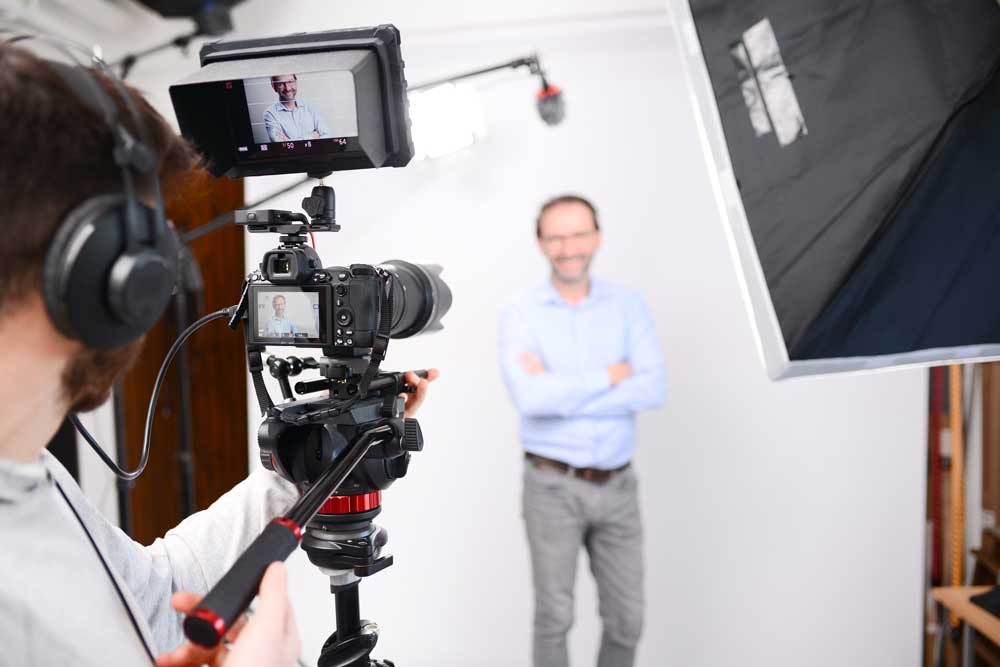
Practical execution: a production checklist
Professional results come from decisions made before filming, as outlined in the corporate video production process. Use this checklist to connect creative choices with measurable website behaviour.
- Define the conversion goal. Decide whether the video should increase enquiries, improve consultation quality, explain a service, or support a campaign landing page.
- Map buyer questions. List the doubts visitors have at that stage, then answer them directly in the script, interview prompts, and visuals.
- Choose the right spokesperson. Use leaders, specialists, project managers, or clients who can speak clearly, credibly, and in practical language.
- Plan proof shots. Capture real work, locations, tools, meetings, products, deliverables, and service moments that support the claims being made.
- Write for the page, not cinema. Use a strong opening, clear sections, useful captions, and a close that points to the next action.
- Prepare multiple edits. Create a main version, shorter page clips, social media cutdowns, and silent versions for visitors browsing without sound.
- Measure behaviour. Review scroll depth, play rate, form completions, call quality, and sales feedback to decide what to refine.
Assumption: your website analytics and enquiry tracking are already configured. If they are not, set up baseline measurement before publishing, so you can compare behaviour after launch.

Placement, accessibility, and page context
A good video can underperform if it sits in the wrong place. Put it close to the decision it supports. On a homepage, that may be near the value proposition. On a service page, it may sit after the pain points and before the enquiry prompt. On a case study, it may introduce the client story before detailed proof.
Do not force autoplay with sound. Many visitors browse at work, on mobile, or in shared spaces. Use captions, a clear thumbnail, and supporting copy that explains why the video is worth watching. If page speed is a concern, use sensible hosting, compressed files, and lazy loading.
Page context matters as much as the edit. Surround the video with concise copy, proof points, trust signals, and one practical next step. Visitors should know what to watch for and what to do after watching.
Example placements
- Homepage overview: position near the opening message, then repeat a relevant call to action after the video.
- Service page process clip: place near objections about cost, timing, risk, or delivery.
- Case story video: use it beside written results, project details, and a contact option.
Risks, mistakes, and how to recover
The biggest mistake is treating video as a polish layer after the website strategy is finished. If the message is vague, higher production value only makes the vagueness more visible. Start with the page objective, then design the video around the decision it must support.
- Overlong edits: cut anything that does not answer a buyer question or build confidence.
- Poor audio: re-record voiceovers or interviews, because unclear sound damages trust quickly.
- Generic scripts: replace broad claims with examples, steps, constraints, and real project language.
- Autoplay with sound: let visitors choose to play, and use captions for silent browsing.
- No landing context: place the video beside supporting copy, proof points, and a clear enquiry path.
Recovery usually means editing, not starting again. Tighten the opening, add captions, move the video higher or lower on the page, create a shorter cut, or add supporting copy that explains what viewers should notice.
Summary and next step
Invest in corporate video production when the buying decision depends on trust, explanation, or perceived risk. If your service is complex, your team is part of the value, or prospects often ask the same questions before enquiring, video can make the website more useful.
Before approving production, check three things: the page has a clear conversion goal, the video has a defined job, and the finished asset will be measured after launch. If any of these are missing, fix the strategy first.
Ready to plan a website video?
Bring your current page, conversion goal, and main objections. Visionair can help shape the message, filming approach, edit versions, and review plan.
About The Author
