

The Corporate Video Production Process: From Brief to Final Delivery
A corporate video production can clarify a message, train a team, support a sales conversation, or launch a brand. It can also become expensive confusion when the brief is vague, approvals are slow, or no one knows what happens next. The outcome you want is a controlled process: clear objectives, efficient production days, useful feedback, and final files that work wherever the video will be used.
This guide explains how Visionair approaches the corporate video production process, from the first conversation through strategy, scripting, filming, editing, review, and delivery. Use it to brief your team, compare video production suppliers, and make better decisions before a camera is booked.

Why the Brief Decides the Production
Most production problems start before production. If the video is expected to do everything, it usually does nothing well. A strong video production brief narrows the job. It states the audience, the desired action, the key message, the required deliverables, and the practical limits, such as locations, spokespeople, brand rules, and timing.
For example, a recruitment film, an investor update, and a product demonstration are different corporate video formats, and each needs a different structure, tone, and measurement approach. Before asking for a quote, review the main corporate video production cost drivers and decide whether success means enquiries, internal alignment, event engagement, onboarding efficiency, or stronger credibility.
A useful brief should include
- Primary audience and what they already know.
- One main message, supported by proof points.
- Mandatory inclusions, exclusions, and brand requirements.
- Preferred length, formats, channels, and deadlines.
- Approval contacts and decision authority.
Pre-Production: Turning Strategy into a Plan
Pre-production is where the idea becomes a practical schedule. The production team develops the creative approach, interview questions, shot list, script or outline, location plan, crew requirements, and risk controls. This stage also confirms what can realistically be achieved within the available budget and timeline.
Decision makers should expect questions. Who is speaking? Are they comfortable on camera? Will approvals involve legal, compliance, or senior leadership? Are offices quiet enough for sound? Are product screens, uniforms, signage, or confidential material visible? These details affect the schedule more than many teams expect.
Recommended pre-production actions
- Approve a concise creative treatment before scripting starts.
- Nominate one project owner to consolidate feedback.
- Confirm locations, access, parking, security, and noise restrictions.
- Prepare contributors with guidance, not memorised speeches.
Production Day: Capturing the Right Material
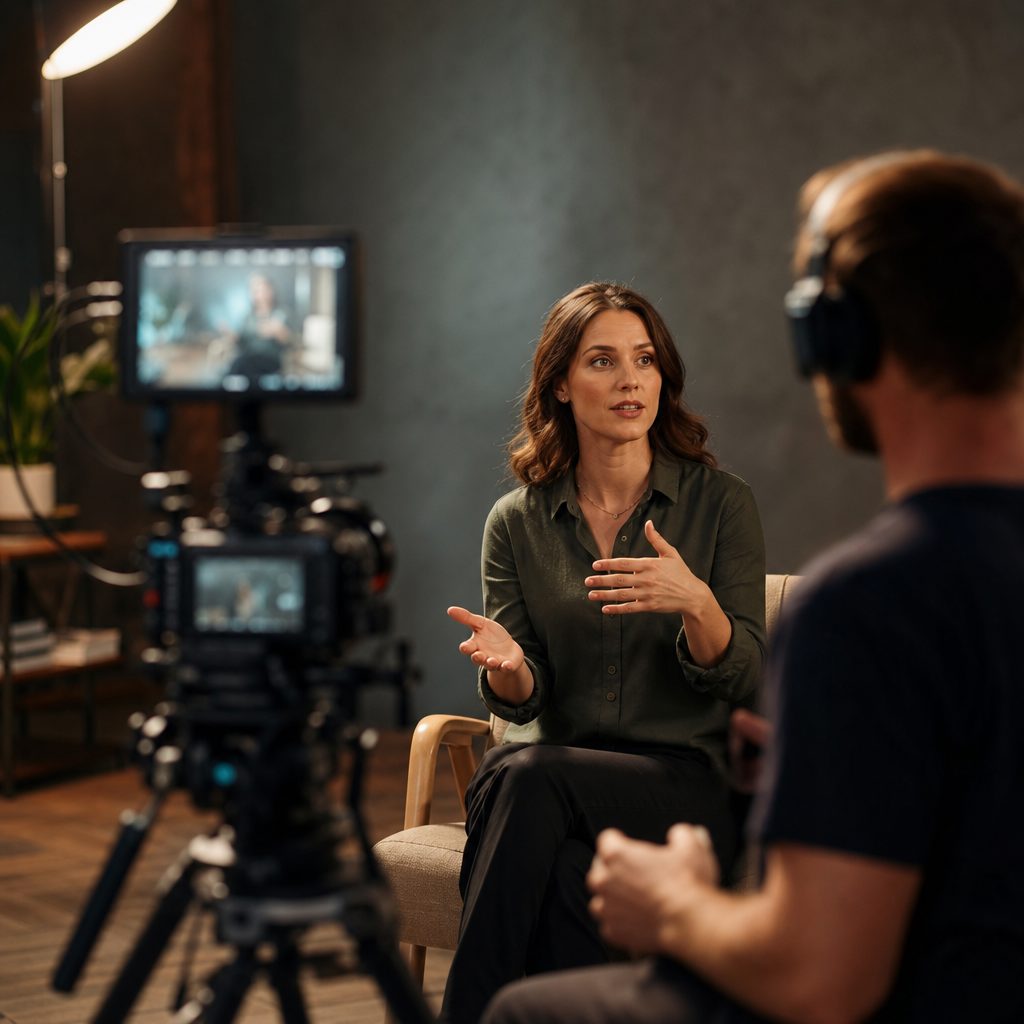
Filming is not only about beautiful images. It is about collecting the right material to build the story promised in the brief. A well-run shoot balances direction with flexibility. Interviews may reveal stronger lines than the script. Cutaway footage may solve an edit problem later. Good producers protect the plan while watching for opportunities.
For business teams, the most useful role on the day is preparation and fast access. Ensure interviewees arrive on time, rooms are cleared, products are ready, and approvals for filming spaces are in place. Avoid adding new objectives during the shoot unless the project owner agrees on the trade-off.
What to check before cameras roll
- Branding, wardrobe, props, and visible screens are appropriate.
- Audio conditions are acceptable and interruptions are managed.
- Interview questions support the approved message hierarchy.
- Backup shots are captured for transitions, context, and pacing.
Post-Production: Editing, Review, and Refinement
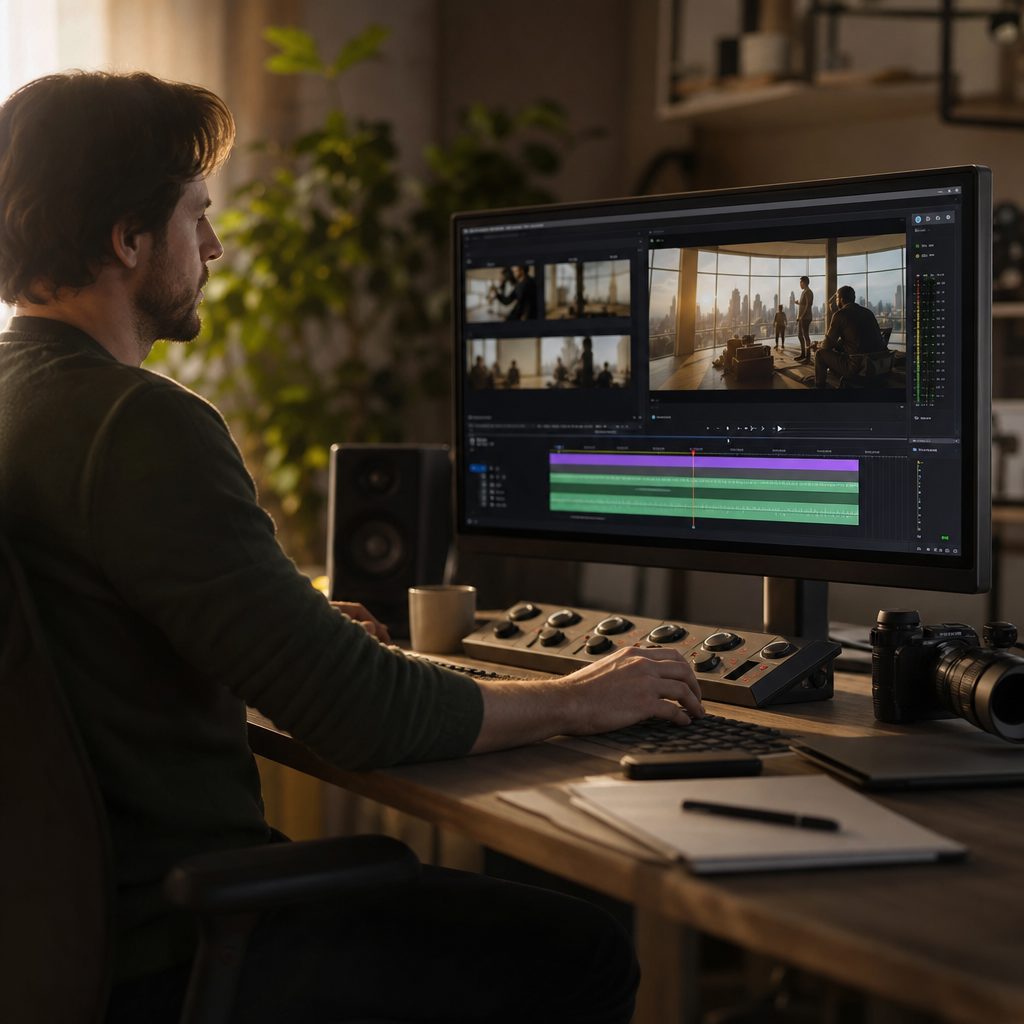
Post-production turns raw material into a clear communication asset. The editor selects the strongest content, shapes the structure, balances pacing, adds music or graphics where appropriate, and prepares the first cut. This is where the brief becomes especially valuable, because it guides what stays, what goes, and what needs emphasis.
A practical review process has stages. First, review the story and message. Next, review factual accuracy, names, titles, and brand details. Finally, review polish, such as colour, sound mix, captions, export settings, and thumbnail options. Mixing all feedback at once can create rework.
Feedback that helps the edit
- Refer to timecodes, not broad impressions.
- Separate factual corrections from preference comments.
- Explain the problem before prescribing the fix.
- Consolidate stakeholder notes into one response.
Delivery: Files That Match the Channel
Final delivery should be planned before editing finishes. A boardroom presentation, website hero video, LinkedIn or social media version, training module, and event screen may need different aspect ratios, durations, captions, file sizes, or audio mixes. If these needs are known early, the project can be edited with versions in mind.
Ask for a delivery list that names each file, its format, resolution, duration, caption requirement, and intended platform. Keep master files organised. Future edits, language versions, campaign cutdowns, or compliance updates are easier when project assets and approvals are stored clearly.
Common Risks and How to Recover
The biggest risks are usually avoidable: unclear ownership, late strategic changes, unavailable speakers, unrealistic timelines, and feedback from people who were not involved earlier. The recovery plan is to return to the brief, identify the decision that changed, and agree whether the impact is scope, cost, timing, or quality.
Do not hide problems until the final review. If an interview did not land, a location was noisy, or a product shot was missed, raise it early and discuss alternatives. How a supplier handles these moments is one of the clearest signs of whether a video production company is reliable. Options may include pickup filming, voiceover, stock or supplied footage, graphics, or a revised edit structure.
A Short Decision Framework
Before committing, ask three questions. Is the objective specific enough to guide creative choices? Are the right people available for approvals and filming? Are deliverables defined for every channel where the video will appear? If the answer is yes, production can move quickly. If not, invest more time in planning.
Ready to Plan Your Corporate Video?
Bring your audience, message, and deadline to Visionair. A focused discussion can turn a broad idea into a practical plan.
About The Author
