
Corporate Video Production Service Costs: What Australian Businesses Should Expect
Corporate video production is often approved late, briefed quickly, and priced with too little context. One supplier may quote a lean half-day shoot; another may include strategy, scripting, crew, lighting, editing, music, revisions, and delivery formats. Both prices can be reasonable, but they are not the same purchase. For Australian businesses, the real question is not “what is the cheapest video?” It is “what level of production will solve the communication problem without wasting budget?” This guide complements our video production pricing information and explains the main cost drivers, common production options, how to brief a supplier, and where budgets usually fail. Use it to compare proposals confidently and decide what to fund, trim, or postpone.
What drives corporate video production costs?
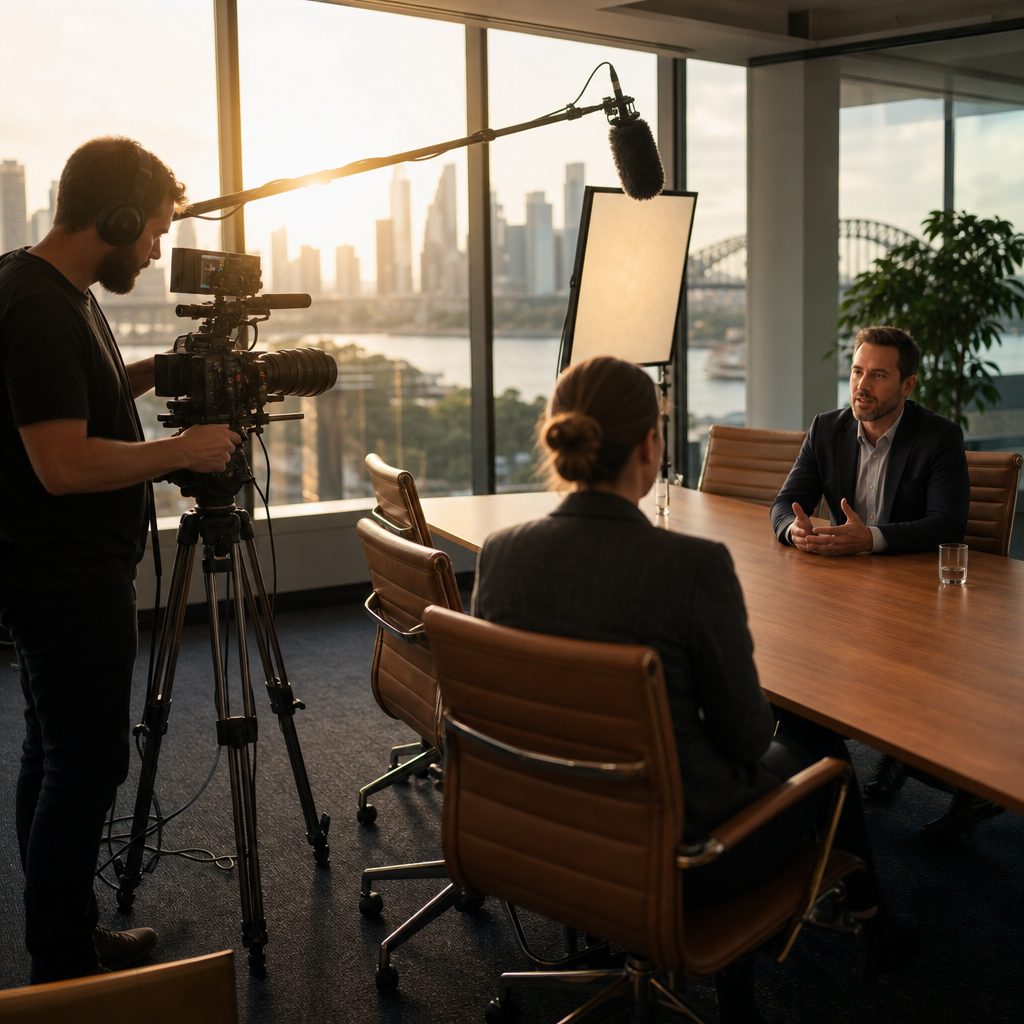
Most quotes are built from time, people, equipment, and complexity. Pre-production covers discovery, creative direction, scripting, scheduling, location planning, permits if required, and call sheets. Production covers crew hours, camera packages, audio, lighting, studio or location costs, talent, travel, and contingency. Post-production covers editing, motion graphics, colour, sound mix, licensing, captions, exports, and revision management. The more decisions a project needs, the more senior time it consumes.
Typical cost factors to compare
- Purpose: internal announcement, recruitment, investor communication, product launch, training, or brand campaign.
- Scope: one finished video, cut-downs, vertical edits, photography, or multiple language versions.
- Crew: solo operator, producer-director with camera crew, or full production team.
- Locations: office, factory, studio, interstate site, or controlled set. Victorian teams can also review our guide to choosing a video production company in Melbourne for local access and logistics considerations.
- Post: simple edit, interview-led story, animation, motion graphics, or complex approvals.
Common production options and budget expectations
Without a verified market survey, specific price bands can mislead. Instead, think in levels. A basic piece suits a message that must be clear, timely, and credible. A mid-range project adds stronger planning, better lighting, more polish, and versions for different channels. A premium production usually involves deeper creative development, larger crews, talent, controlled locations, more graphics, and heavier approval management.
How to choose the right level
Match production effort to risk. If the video will be seen by a small internal team, keep the process efficient. If it will represent your brand to customers, recruits, partners, or investors, fund the areas viewers notice: story clarity, sound, lighting, pacing, and professional delivery. Avoid buying cinematic extras before you have a sharp message.

How to brief for an accurate quote
Good quoting depends on good information. Before asking for a number, define the outcome, audience, channels, approval path, and constraints. A practical video production brief does not need to be long, but it should remove guesswork. If you are unsure about the creative direction, say so; a capable production partner can price discovery or concept development separately.
Quote checklist
- One sentence explaining the business problem and desired viewer action.
- Primary audience and where they will watch the video.
- Required deliverables, including aspect ratios, cut-downs, captions, and thumbnails.
- Preferred shoot dates, locations, interviewees, products, and access limits.
- Brand guidelines, sample references, compliance needs, and internal approvers.
- Budget range or decision threshold, even if it is only an assumption.
Step-by-step process to control spend
- Start with one message. If the video has three goals, costs rise because scripting, shooting, and editing must satisfy all of them.
- Prioritise deliverables. Decide which version matters most, then add shorter social media or sales edits only where they will be used.
- Lock locations early. Familiar workplaces can still need scouting for noise, light, power, safety, and visitor access.
- Nominate one approver. Multiple late-stage opinions create re-edits, duplicated feedback, and delayed delivery.
- Plan revisions. Ask how many edit rounds are included and what triggers additional charges.
- Reuse assets. Capture stills, video testimonials, B-roll, or staff messages during the same shoot when it genuinely supports future work.
Risks, mistakes, and recovery actions
The most expensive mistakes usually happen before the camera arrives. Vague objectives lead to vague scripts. Unavailable stakeholders cause rushed approvals. Choosing on day rate alone can leave gaps in producing, audio, lighting, insurance or post-production support. None of these issues are unusual, but the way they are anticipated and managed helps reveal whether a video production company is genuinely reliable.
What to avoid
- Approving a quote before confirming deliverables and revision limits.
- Assuming raw footage, music licences, or project files are included.
- Booking executives without preparing interview questions and key messages.
- Adding new audiences after the edit has started.
- Treating accessibility captions as an afterthought.
How to recover
If scope changes, pause and re-scope rather than pushing the same quote harder. Ask the producer to separate must-have changes from nice-to-have changes, then approve a written variation. If the first edit misses the mark, return to the brief: audience, message, evidence, and call to action. Clear feedback beats broad comments such as “make it more exciting.”
A simple decision framework
Use three questions. First, what business result must the video support? Second, what level of public visibility and brand risk is attached to it? Third, which production choices directly improve the viewer’s understanding or trust? Fund those choices first. Reduce anything that does not serve the result, such as extra locations, unnecessary animation, or edits for channels your team will not maintain.
Recommended next action
Prepare a one-page brief, gather two or three comparable quotes, and ask each supplier to explain assumptions in plain language. A useful proposal should show what is included, what is excluded, how revisions work, who is responsible for approvals, and how the final files will be delivered. That makes cost a business decision, not a guessing game.
Ready to scope your corporate video?
Speak with Visionair about your objectives, deliverables, constraints, and approval process before you commit budget. You will get clearer options, fewer surprises, and a production plan that matches the value of the communication and your available budget today.
About The Author
