
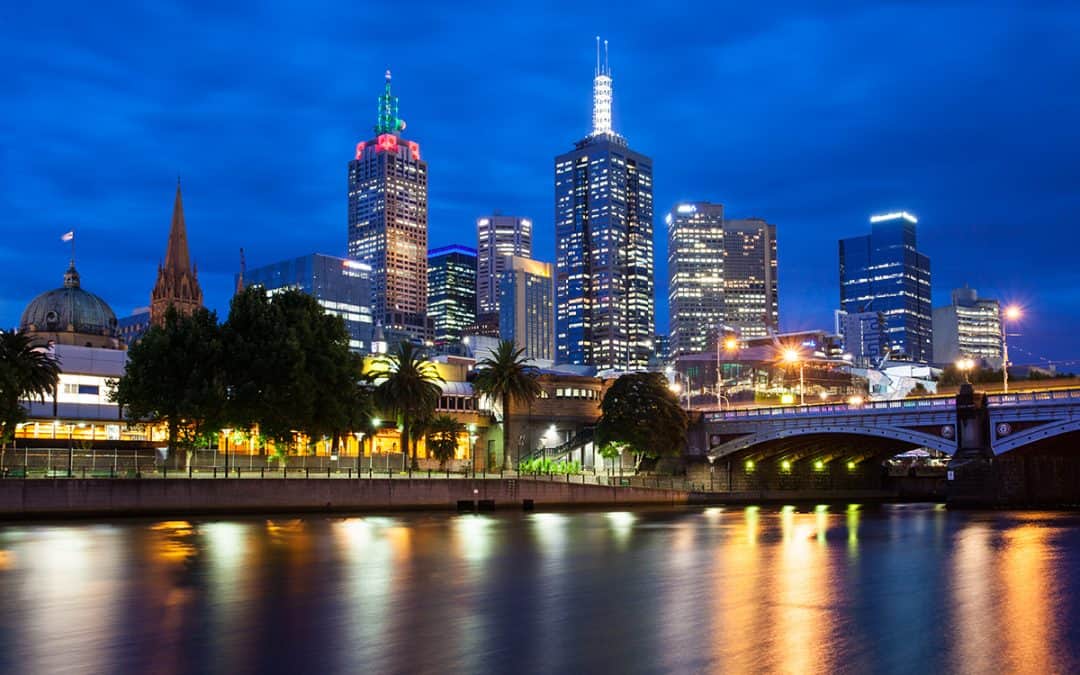
This independent-style buyer guide explains how to assess a Melbourne video production partner before requesting proposals. For corporate, government, communications, HR and marketing teams, the right partner is usually the team that understands the message, plans the job properly, brings suitable crew and equipment, manages approvals, and delivers assets in the formats the organisation needs. If you are ready to discuss a project rather than compare providers, visit Visionair Media’s Melbourne video production service.
At Visionair Media, we view production as a communication exercise first and a technical exercise second. Since 2012, our team has supported organisations with corporate and government video production, commercial photography, licensed drone services, event coverage and live streaming across Melbourne and other Australian cities. This guide explains how to compare providers before you request a quote.
Clear communication goal
Audience, message and business outcome agreed before filming.
Right crew and equipment
A fit-for-purpose team, professional sound, lighting and backup planning.
Controlled review process
Decision-makers, revisions and responsibilities clearly documented.
Useful finished assets
Files prepared for web, social, presentations, events and internal use.
Start with the outcome, not the equipment
Before reviewing proposals, define what success looks like. A recruitment video has different requirements from a ministerial announcement, a property progress update or a customer testimonial. Clarify the audience, the decision you want them to make, the channels you will use, and any internal stakeholders who must approve the work. A good producer will turn those details into a practical filming plan, not just a day rate.
If you are still shaping the brief, Visionair’s guide to communicating your video vision to producers can help you prepare references, messages, mandatories and examples before the first call.
Corporate production is different from event AV
Melbourne has excellent event planners, venues and audiovisual suppliers, but those services are not the same as corporate video production. An event planner coordinates logistics such as run sheets, catering and guests. An AV supplier may provide screens, microphones, staging and playback for a room. A video production company develops the content, captures the footage, directs interviews, records clean sound, edits the story and prepares files for broadcast, web, social, internal communications or archives.
The strongest projects often involve collaboration between these groups. The important point is accountability: know who is responsible for creative direction, who is responsible for live room technology, and who signs off the final video.
What to assess in a Melbourne production partner
Use the checklist below to compare capability, not just price. Owning every possible item of equipment is not the main criterion. Reliability comes from matching the brief with skilled crew, maintained and suitable gear, backup options, clear communication, safe work practices and realistic scheduling.
Interview capability
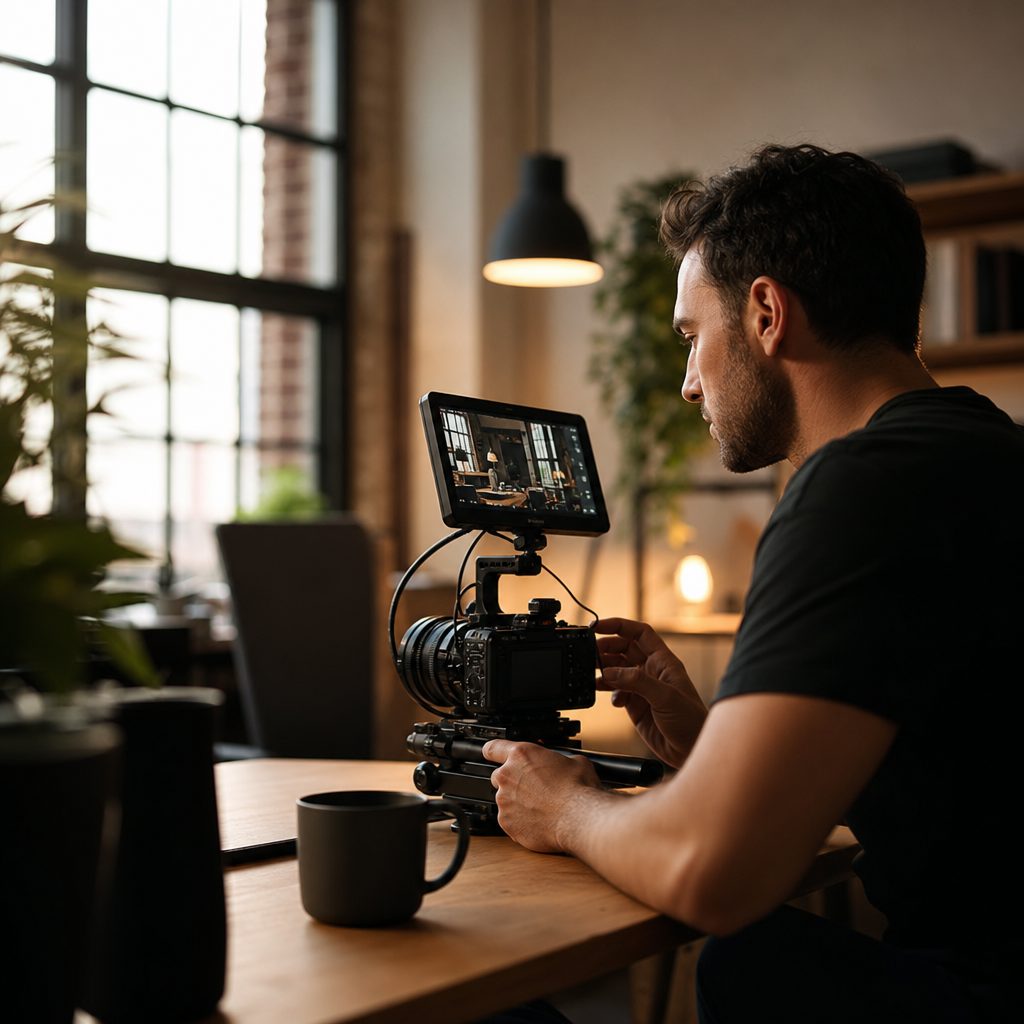
Many corporate videos depend on honest, confident interviews. Ask how the producer prepares talent, prompts natural answers and handles nervous participants. Good interview direction is especially important for testimonial videos, executive updates, case studies and staff stories, where authenticity matters more than a scripted performance.
Sound, lighting and active workplaces
Poor sound is one of the fastest ways to make a professional message feel amateur. Ask how the crew will control background noise, record backup audio and light interviews in offices, factories, schools, construction areas or public spaces. Active workplaces also need site inductions, PPE, traffic awareness and filming methods that do not interrupt operations.
Drone, streaming and specialist needs
Drone footage can show scale for infrastructure, agriculture, construction and property, but it must be planned safely and legally. In Australia, commercial drone operations are regulated by the Civil Aviation Safety Authority, so ask about licensing, airspace checks and risk management. For hybrid events or announcements, ask about live streaming redundancy, internet options and recording backups.
Filming in Melbourne: practical considerations
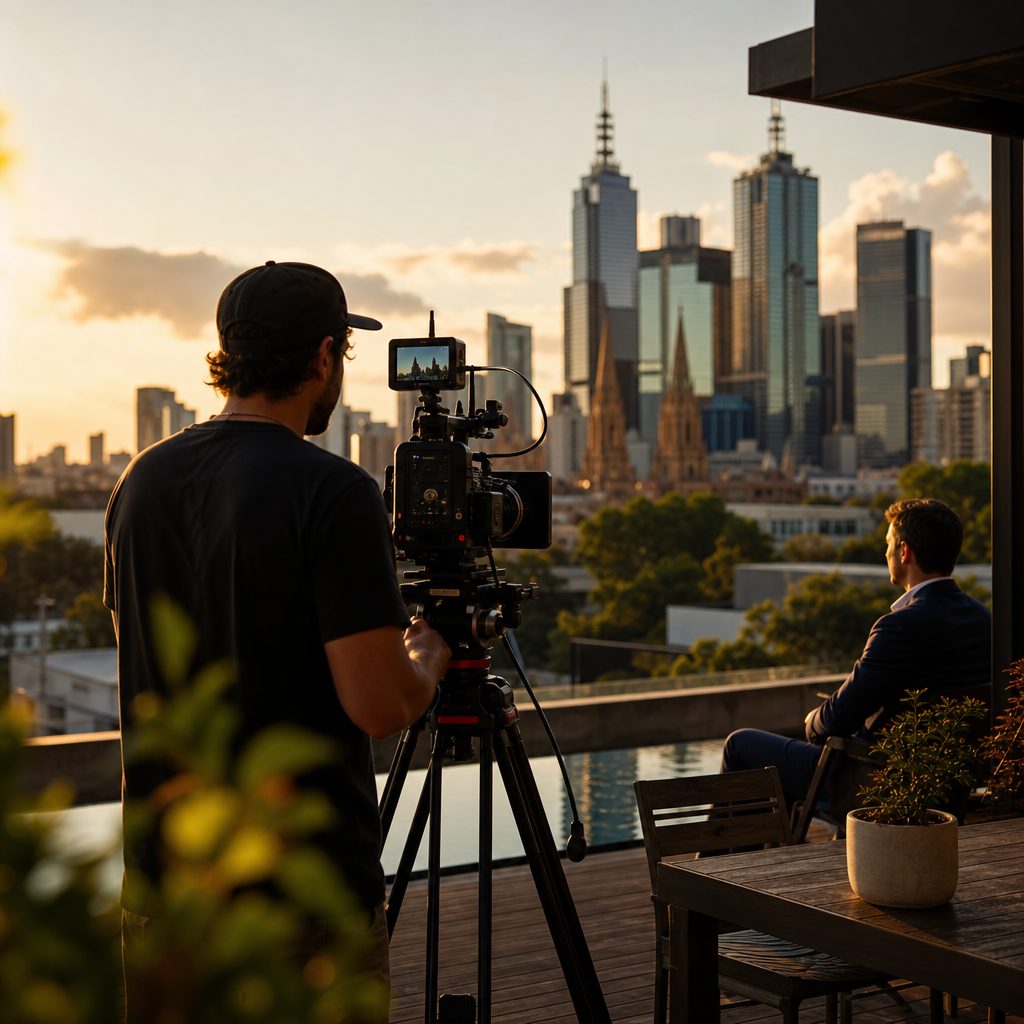
Melbourne production is rarely just turning up with a camera. CBD access, loading zones, parking, lifts, security desks and noise restrictions can shape the schedule. Some locations require permits or building approvals. Regional Victorian shoots may need travel days, earlier call times or accommodation. Weather can affect exterior interviews, drone work and construction coverage, so backup interiors and flexible shot lists are useful.
For multi-location projects, group interviews by geography where possible and confirm decision makers before the crew arrives. A half-day lost to access problems can cost more than careful pre-production. If your project includes staff communication, Visionair’s video production for communications teams service is designed around message clarity, approvals and distribution needs.
Visionair Media’s approach to Melbourne video production
Visionair Media has operated since 2012, with a team that brings decades of combined commercial photography and video production experience. We service Melbourne as part of a multi-city production capability, which is valuable for organisations that need consistent visual standards across Melbourne, Sydney, Brisbane and Canberra. A national approach can simplify briefing, brand guidelines, interview style, file naming and delivery across repeated projects.
Our Melbourne work can include corporate and government video production, commercial photography, licensed drone services, event coverage and live streaming. For organisations ready to plan a substantial business video, our Melbourne corporate video production service explains Visionair Media’s commercial capability and provides the clearest next step for discussing a brief.
Where a project needs stills as well as motion, combining crews can create consistent portraits, workplace images and campaign assets. See our commercial photographer Melbourne service if your deliverables include photography for websites, reports, tenders or media.
Pricing, approvals and delivery
Video quotes vary because the work behind the scenes varies. A transparent proposal should state what is included: pre-production meetings, scripting or interview preparation, crew size, filming hours, equipment, travel, editing time, music, graphics, captions, revision rounds, delivery formats and archive arrangements. It should also explain exclusions such as overtime, extra locations, rush edits or additional cutdowns.
For a realistic planning framework, review our guide to Australian corporate video production costs. It will help procurement teams compare scope, not just totals. You can also review the corporate video production process to understand the stages from brief to final delivery.
Discuss captions and accessibility early. Captions support viewers watching without sound and can assist internal compliance requirements. Confirm who owns the finished files, whether raw footage is available, how long masters are retained and which formats are needed for LinkedIn, YouTube, intranet, presentations or broadcast.
Common warning signs
Be cautious if a provider cannot explain the creative approach, offers a vague one-line quote, avoids discussing revisions, ignores sound, treats drone footage as an add-on without compliance planning, or promises unrealistic turnaround times. Other risks include unclear usage rights, no backup plan for key interviews, no named producer, and little interest in your approval process.
A strong partner will ask informed questions, identify limitations, explain trade-offs and document assumptions. Sometimes the right answer is a leaner shoot with tighter messaging; sometimes it is a larger crew because safety, time or stakeholder needs demand it.
Useful video types for Melbourne organisations
Different formats solve different problems. The right company should recommend a format because it fits the goal, not because it is fashionable.
- Case study videos: show how a project was delivered, what changed and why the work mattered.
- Testimonial videos: build trust through credible client, customer, student or staff voices.
- HR and recruitment videos: explain culture, roles, safety expectations and employee value propositions.
- Internal communications videos: help leaders explain change, strategy, policy or operational updates clearly.
For deeper planning, compare case study videos, HR video production and other formats against the decision your audience needs to make.
Frequently asked questions
How early should we book a Melbourne video production company?
Book as soon as dates, locations and key stakeholders are known. Simple shoots can be arranged quickly, but projects involving executives, permits, drones, travel or multiple approval layers need more lead time.
Should we choose the cheapest quote?
Not automatically. Choose the quote that best matches the scope, risk and required quality. A cheaper proposal may exclude planning, sound, lighting, captions, revisions or travel.
Do we need a script?
Sometimes. Explainers, announcements and training content often benefit from scripting. Interviews usually work better with planned questions, key messages and gentle direction rather than memorised answers.
Can one shoot produce several assets?
Yes, if planned in advance. A single filming day may produce a main video, short social edits, still images, vertical crops, quote grabs and internal cutdowns, but the brief must specify them.
Will Visionair work with our internal team or agency?
Yes. We can collaborate with communications, marketing, HR, procurement, design, media and agency teams, aligning production with existing brand guidelines, campaign plans and approval workflows.
Discuss your Melbourne corporate video project
If you need a video production company in Melbourne for a corporate, government, communications, HR, property, education or professional-services project, speak with Visionair Media. We will help clarify the brief, recommend a practical production approach and identify the information needed for an accurate quote. You can also ask how the footage could support future campaigns, tenders, recruitment activity or internal updates before committing to a production schedule or final budget.
About The Author
