
01 Direct answer: custom video or stock footage?
Choose custom video production when the message, people, place or product must be unmistakably yours. Choose stock video when you need fast, low-cost supporting visuals for a broad idea. Combine both when stock can cover generic context while filmed scenes carry the proof, personality and trust.
For most corporate, government and professional services campaigns, original filming is the safer choice for brand-critical content: website videos, executive messages, recruitment stories, case studies and customer testimonials. Stock footage is useful for mood, pace and background, especially in early concepts, social edits and budget-sensitive projects. The right decision depends on risk, budget, timing and how specific your message needs to be.
02 What custom video production gives you
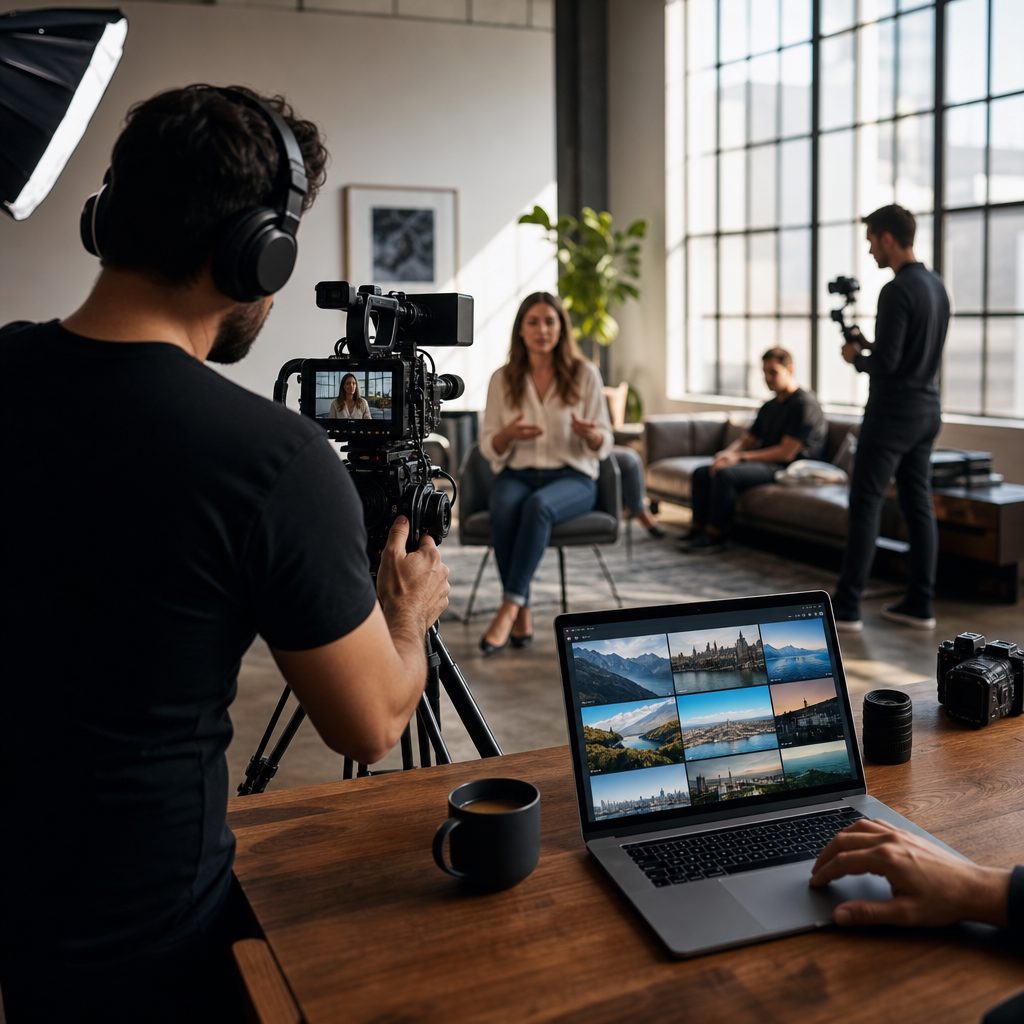
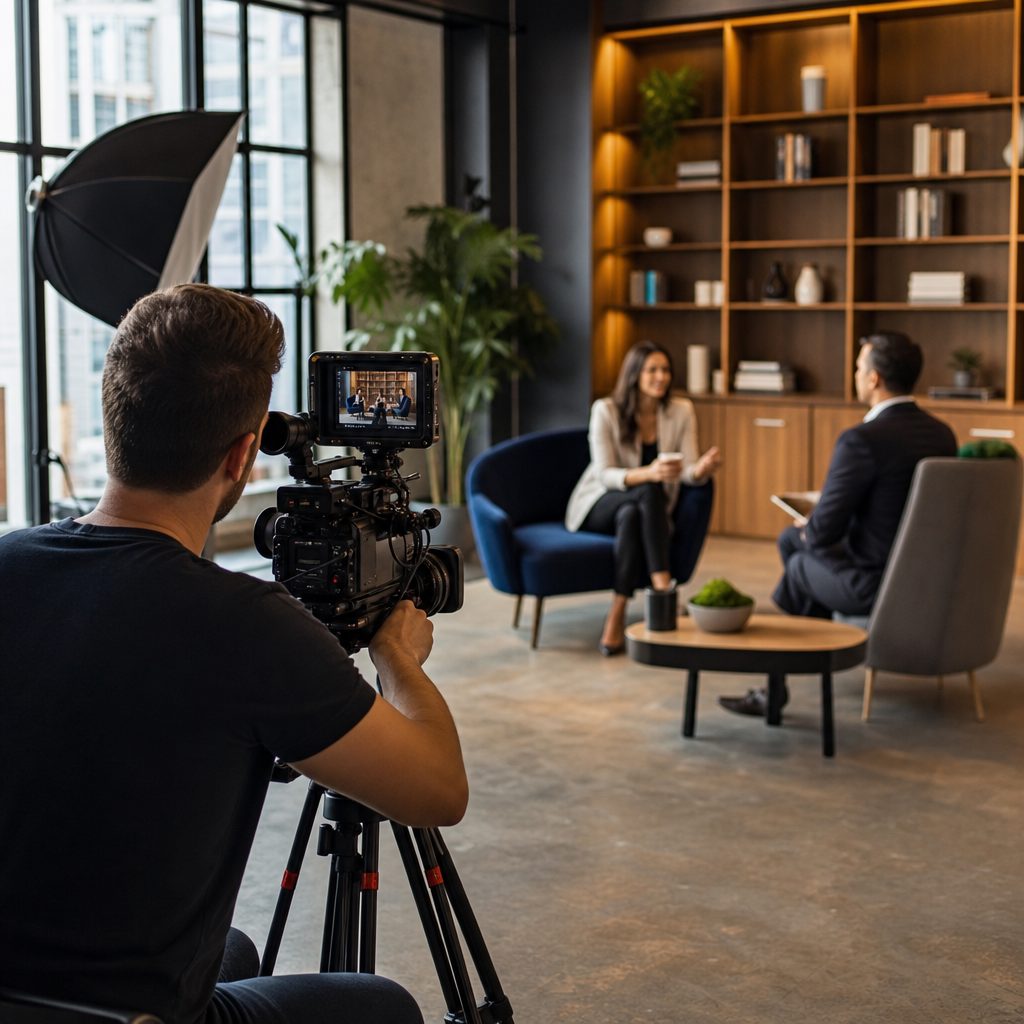
Professional production gives you control: locations, talent, interviews, lighting, sound, scripting, approvals and final delivery are shaped around a defined communication goal. That control matters when filming a factory, campus, project site, clinic, boardroom or field operation where real people and processes build credibility. A planned shoot also captures reusable assets for future edits, presentations and stills.
Visionair Media, headquartered in Sydney with offices in Melbourne, Brisbane, Canberra and Auckland, provides corporate video production services for organisations that need planned, brand-safe content. Its work spans corporate, government, infrastructure, health, education, agriculture and professional services environments, where logistics and stakeholder confidence often matter as much as the finished edit.
Brand ownership
Every frame can reflect your sites, staff, values and standards rather than someone else’s workplace.
Message precision
Scripts, interviews and cutaways can be built around one audience, not a generic theme.
Approval control
Production planning supports legal, safety, brand and stakeholder reviews before footage reaches the edit.
03 Where stock video works well
Stock video can be a practical option when the visual requirement is generic: city skylines, people using devices, abstract technology, travel, weather or lifestyle moments. It can help explain an idea without organising a crew, securing locations or waiting for weather. It is also useful for temporary campaigns where the content will not carry a long shelf life.
The trade-off is distinctiveness. Your competitor may license the same clip. Locations may not match Australia, uniforms may look wrong, and workplace safety details can undermine credibility. Licensing terms also need careful checking, particularly for advertising, paid media, talent releases and duration of use. For copyright basics, the Australian Copyright Council provides general guidance for Australian users.
04 Cost, speed and risk compared
Stock is usually faster at the start, but speed can disappear when teams spend hours searching, comparing licences and trying to match clips that were never designed to sit together. Custom production takes longer to plan, yet it can reduce revision cycles because the footage is captured against an agreed brief.
When comparing budget, include more than the first invoice. Consider scripting, crew, travel, talent, editing, music, captions, accessibility requirements, versioning and where the video will be used. Visionair’s guide to video production pricing in Australia is a useful starting point for understanding what affects production scope and cost.
05 When to use each option
Use custom production when trust is central. Examples include a chief executive update, a project case study, an induction sequence, a school enrolment film, a health service explainer, a product demonstration or a recruitment campaign where candidates need to see the real workplace. For organisations based in New South Wales, professional video production in Sydney can also simplify location planning and local crew coordination.
Use stock when the subject is intentionally broad. A finance presentation might need a simple city time-lapse. A training module may need a neutral shot of someone opening a laptop. A social teaser may need a textured background behind text. In these cases, the audience is not judging the reality of the location; they are following an idea.
A blended approach often works best. Film interviews, workplaces and proof points, then use stock only for transitional or conceptual moments. The broader advertising and video production guide explains how creative concepts and production choices connect before filming begins. If credibility depends on results or process, consider case study video production rather than relying on unrelated library clips.
06 How to compare providers
Before choosing a production company or a stock library, assess the same fundamentals: understanding of your audience, clarity of licensing or ownership, safety processes on location, edit workflow, accessibility options, revision stages and ability to deliver formats for web, social, events and internal channels. Ask to see relevant project examples, not just attractive showreels. Visionair’s projects and portfolio page can help buyers review the range of work produced across sectors.
Ask practical questions: Who owns the footage? Are music and stock licences documented? Who manages filming permissions? What happens if a location changes? How are approvals handled? Strong providers should explain constraints early, not promise that every option is equally suitable.
07 Summary and next step
The simplest rule is this: use custom video when the audience must believe your specific story; use stock when the image only needs to illustrate a general idea. Stock can save time and money, but it carries limits around originality, accuracy and licensing. Custom production requires more planning, yet it gives you control over message, people, locations and long-term reuse.
If you are weighing budget, timing or creative options, prepare a short brief covering audience, purpose, channels and required approvals. Visionair Media can then recommend whether filmed production, stock footage or a blended edit is most appropriate for your project and timeline before production starts.
About The Author
