

The short answer
The best case study video interview questions are open, specific and arranged as a story: what life looked like before, why the client chose a solution, what changed, and what they would tell others. Ask for moments, examples and feelings rather than polished claims. Then listen closely and use short follow-up prompts. This approach gives editors complete, credible answers while helping clients sound like themselves, not like people reciting marketing copy.
For most productions, prepare eight to twelve core questions, but do not treat the list as a script. A skilled interviewer adapts the order, leaves room for silence and asks the client to restate context inside each answer. That matters because the interviewer will usually be removed from the final edit. Visionair Media’s case study video production approach combines interview planning with relevant supporting footage so the finished story can show, not merely assert, the client’s experience.
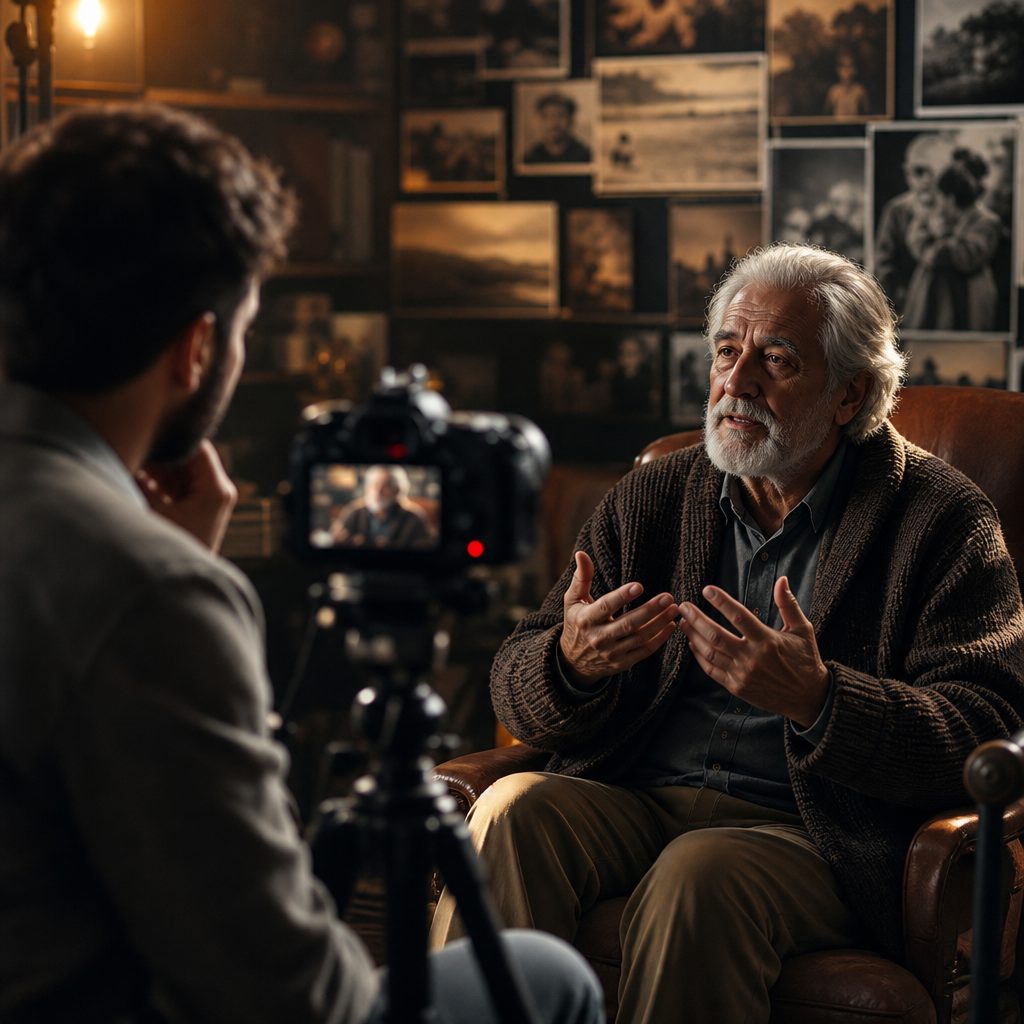
Questions that build a genuine story
A useful sequence follows the client’s real decision journey. Start broadly, move towards evidence, and finish with reflection. The following prompts work across corporate, government, infrastructure, health, education, agriculture and professional services contexts, with appropriate wording and approvals.
Before: establish the starting point
Begin with: “What was happening before you started looking for a solution?” Follow with: “Who was affected?”, “What made the issue important?” and “Can you describe a typical day?” These questions create stakes without putting negative words in the client’s mouth.
Decision: uncover the choice
Ask: “What options did you consider?”, “What mattered most when comparing them?” and “Why did this approach feel suitable?” Avoid asking, “Why are we better?” It invites praise, but rarely produces a believable or differentiated explanation.
Experience: reveal the working relationship
Try: “What happened after you decided to proceed?”, “How did the team communicate?” and “Was there a moment that gave you confidence?” Request one concrete example. Specific recollections usually feel more authentic than general statements about service or professionalism.
Outcome: capture change and recommendation
Ask: “What is different now?”, “Which result matters most to you?”, “Who noticed the change?” and “What would you say to someone facing the same problem?” If numbers are commercially sensitive, seek observable changes, saved effort, reduced uncertainty or improved experience instead.
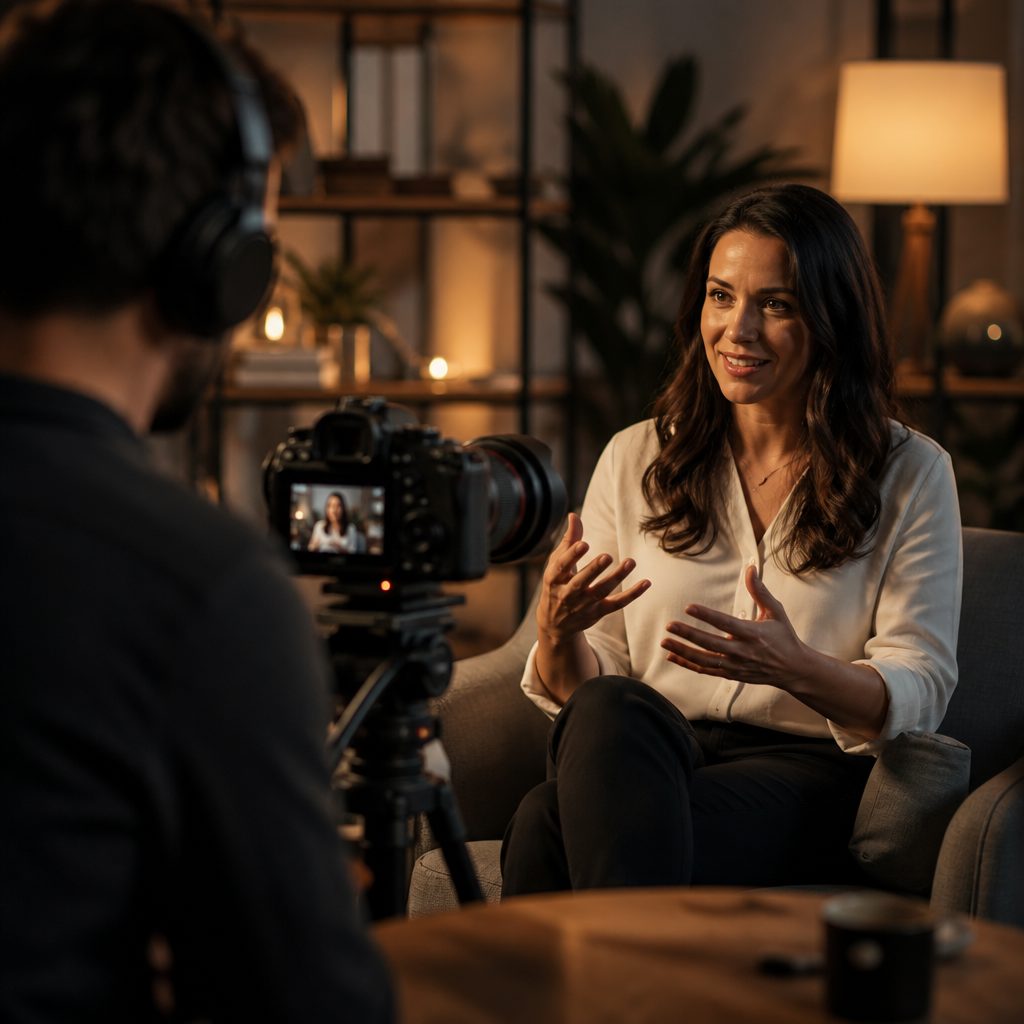
How to ask questions without scripting the client
Send themes beforehand, not a request for memorised answers. Clients should understand the topics, filming purpose, audience and likely distribution, yet still discover their wording in the conversation. If legal or communications teams require pre-approved language, identify the essential facts and boundaries rather than prescribing every sentence. Fully scripted delivery can be appropriate for formal announcements, but it generally weakens a personal case study.
Use follow-up prompts that deepen an answer
Strong follow-ups are simple: “Can you give me an example?”, “What did that mean for you?”, “How did that feel?”, “What happened next?” and “Could you answer that once more as a complete sentence?” Do not interrupt an emotional pause. Silence often allows the interviewee to move beyond a rehearsed first response.
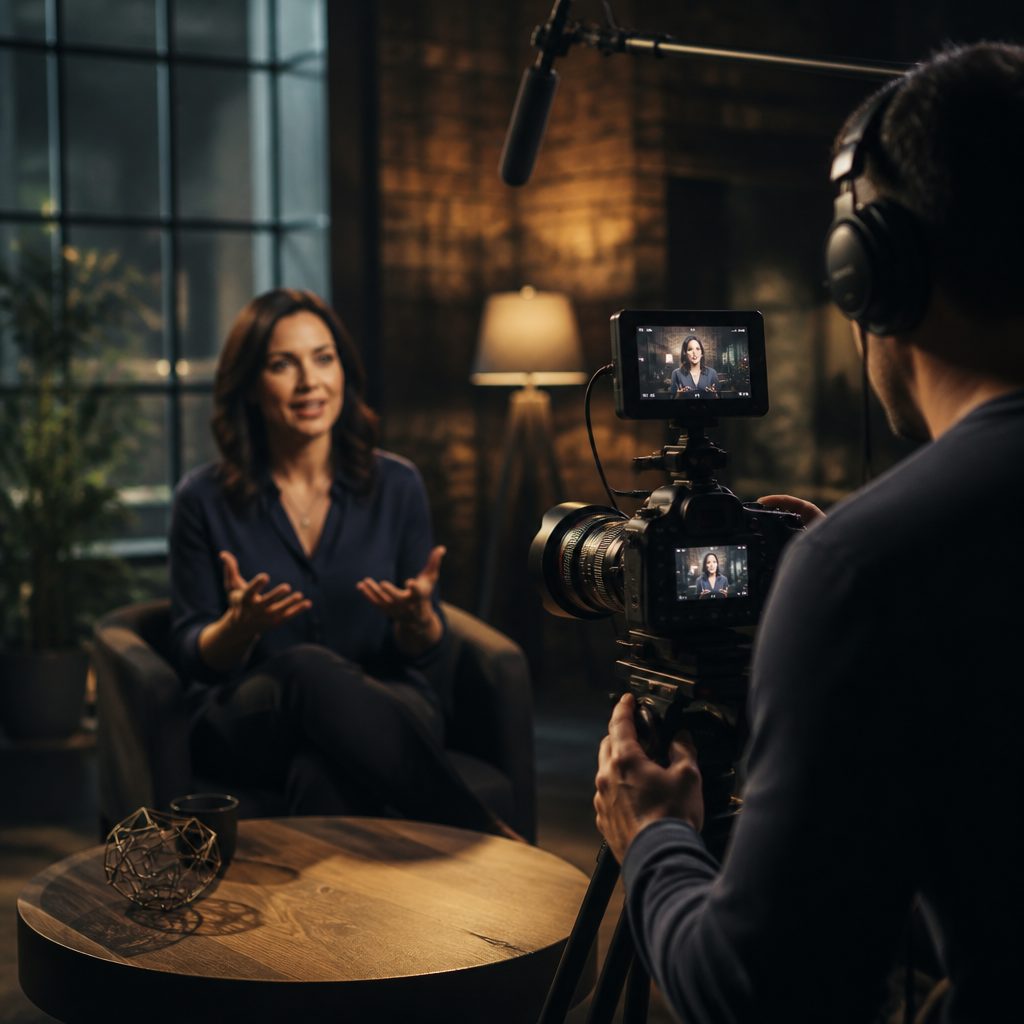
Production choices that protect authenticity
Good questions cannot compensate for an uncomfortable set. Keep the interview crew small where possible, position the interviewer beside the lens, minimise room noise and allow enough time for conversation before recording key answers. Explain that pauses and retakes are normal. For people without media experience, reassurance is more productive than demanding energy.
Plan supporting footage around claims you expect to hear: the workplace, product in use, team interactions, process details or relevant locations. This coverage gives the editor visual evidence and avoids holding on a talking head. Visionair Media’s broader video production services can integrate interviews, B-roll, commercial photography and, where appropriate, drone footage within one production plan.
Consent and accuracy still matter. Confirm where the video may appear, whether the participant can speak for their organisation and how factual claims will be checked. Obtain releases through the production’s agreed process. When filming health, education, government or sensitive workplaces, privacy, access, safety and brand approval may constrain what can be recorded.
Common interview mistakes to avoid
- Leading every answer. Questions that contain the desired compliment produce predictable footage and can undermine trust.
- Combining several ideas. A long, multi-part question confuses interviewees and makes concise editing difficult. Ask one thing at a time.
- Chasing superlatives. “Amazing”, “perfect” and “best” are less persuasive than a specific action, decision or result the audience can understand.
- Ignoring edit needs. Answers such as “yes” or “last year” lack context. Prompt the participant to include the subject in their response naturally.
Another mistake is promising that every positive comment will appear. The final story must fit its intended duration and audience, so useful material may be omitted. Agree on review stages and decision-makers before filming. A realistic schedule and scope can be explored through Visionair Media’s video production pricing information and production FAQ.
How to compare case study video providers
Compare suppliers on process, not showreel polish alone. Ask how they prepare nervous participants, shape questions, record clean sound, capture supporting footage and manage reviews. Relevant sector experience helps, although a provider should never assume one organisation’s approval or safety process matches another’s.
Review complete examples in a projects portfolio, not just a fast montage. Look for natural speech, coherent structure, varied participants, readable captions and visuals that substantiate the interview. Also ask who will conduct the interview and edit the piece; those roles strongly influence tone and continuity.
Practical questions before filming day
How many questions should we record?
Eight to twelve core questions is usually manageable, with follow-ups guided by the answers. Fewer may suit a short social edit; more may be needed when several themes or stakeholders must be covered. Prioritise the questions that the audience needs answered rather than filling a fixed interview duration.
Should clients see questions in advance?
Usually, sharing themes and sample questions reduces anxiety. However, requesting written answers can make delivery rigid. For high-risk or regulated subject matter, exact claims may need approval; preserve spontaneity in personal observations while keeping approved facts accurate.
Can remote interviews feel authentic?
Yes, when the participant has clear guidance, a quiet room, stable connectivity and suitable recording equipment. Remote production can reduce travel, but inconsistent lighting, sound and eye-lines may limit visual consistency. Test the setup and connection before the scheduled conversation.
Turn good questions into a credible client story
In summary, authentic case study interviews begin with an open story arc, neutral wording and attentive follow-ups. Prepare the participant without scripting them, make the set comfortable, and capture footage that supports what they say. Balance warmth with proper consent, factual checking and organisational approvals. The result should sound recognisably like the client while giving viewers enough context to judge the experience for themselves.
Visionair Media produces interview-led stories for organisations across Australia from offices in Sydney, Melbourne, Brisbane and Canberra. To discuss objectives, locations, participants, deliverables and approval needs, request a tailored production quote before planning filming begins.
About The Author
