
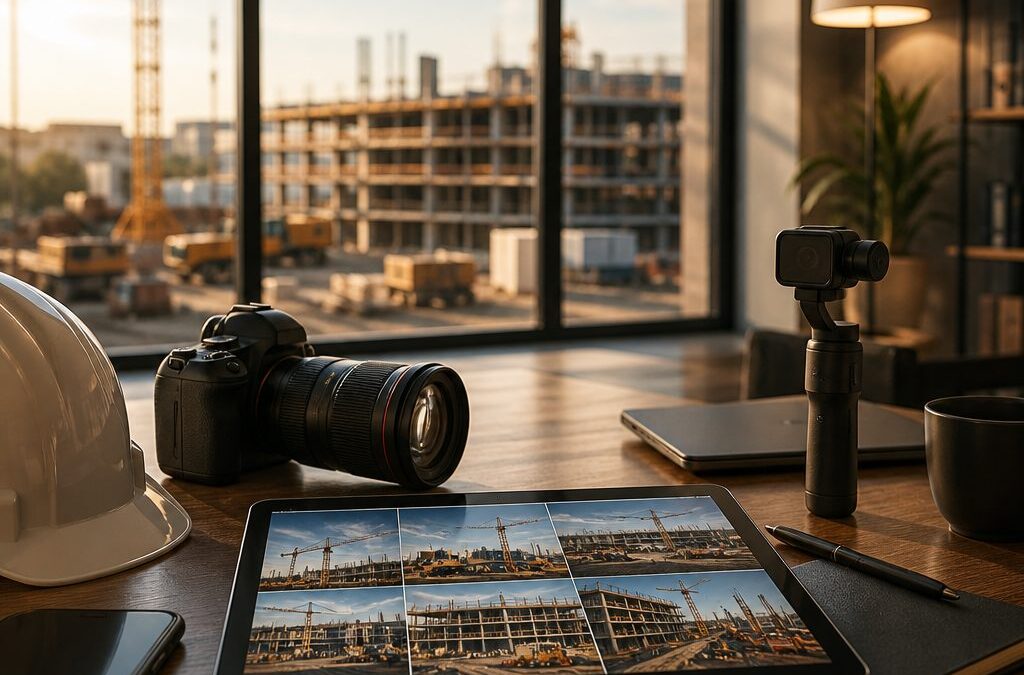
The short answer
At every construction stage, capture three things: the whole site from repeatable viewpoints, the work completed since the previous visit, and concealed details before they disappear. Combine consistent ground photography, short video sequences, labelled detail shots and, where lawful and useful, aerial coverage. Start before works begin, document each milestone, and finish with completed assets, handover features and a visual record of the site’s transformation.
The strongest record is planned before mobilisation. Agree on shot lists, fixed camera positions, visit frequency, file naming, approvals and site access with the project team. Professional commercial photography services can then produce comparable images rather than an attractive but disconnected collection. Video adds movement, sequencing, commentary and scale, while still photographs preserve fine detail for reports, stakeholder updates and future reference.
Plan the record before construction starts
Treat progress capture as project documentation, not an occasional marketing exercise. Mark fixed viewpoints on a site plan and record lens direction, height and framing. Include wide views, mid-range work zones and close details. Set a realistic cadence around milestones; weekly visits may suit fast-changing works, while monthly capture can be sufficient when visible progress is slower.
Before mobilisation and existing conditions
Photograph boundaries, neighbouring properties, roads, footpaths, landscaping, utilities, existing defects, access routes, signage and surrounding context. Record all elevations and areas likely to be disturbed. Slow, steady video walk-throughs clarify spatial relationships that isolated photographs cannot. Date and label files promptly; imagery without reliable location and stage information loses much of its practical value.

Capture every construction milestone
Each visit should show context, activity, quality and change. Capture the same baseline views first, then document milestone-specific work. Ask the site manager what will be covered, removed or inaccessible before the next visit.
Site establishment and earthworks
Record hoarding, amenities, environmental controls, temporary access, survey set-out, demolition, excavation, stockpiles and ground conditions. Show plant operating safely without obstructing crews. Aerial views can explain site layout, haul routes and earthwork extent, but drone photography and aerial video require suitable weather, permissions, airspace checks and site controls. Ground coverage remains essential.
Structure and envelope
Capture foundations before pours, reinforcement, penetrations, embedded services, waterproofing, structural connections, slabs, columns and framing. During envelope works, document roofing, façades, glazing, insulation, membranes and interfaces where water ingress could later be investigated. Film selected installation processes from safe positions, using short locked-off shots and controlled pans rather than rapid handheld movement.
Services, interiors and fit-out
Before ceilings and walls close, record mechanical, electrical, hydraulic and fire-service routes, risers, plant rooms, cable trays, pipework, valves and identification labels. Add room and level references. Later, photograph joinery, finishes, fixtures, accessibility features, testing activity and sample areas. Check reflective surfaces, temporary lighting and mixed colour temperatures, which can make interiors look inconsistent.
Use photography and video for different jobs
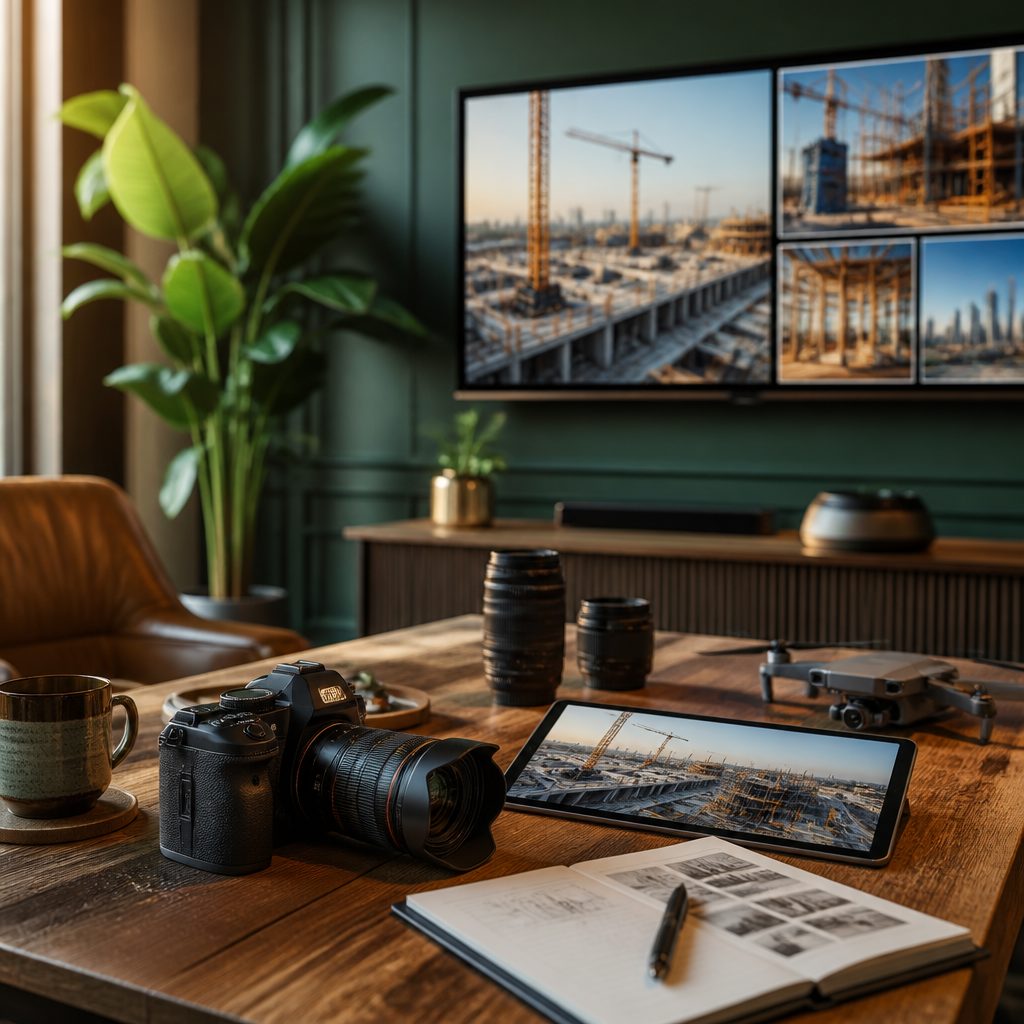
Photography is best for precise comparison, reports, defect context, publication and archives. Video is better for movement, construction methods, guided explanations and the relationship between spaces. A balanced deliverable might include fixed-view photographs, details, a short progress edit, organised raw clips and a small selection formatted for communications.
Still photography
Prioritise repeatability, resolution and complete metadata. Shoot wide, medium and detailed frames so viewers can understand both location and workmanship.
Progress video
Record stable establishing shots, active work and brief expert commentary. Capture clean ambient sound where useful, but expect machinery, wind and site restrictions to limit live audio.
Aerial context
Use repeatable flight paths or positions to reveal scale and logistics. Drones are not suitable in every location, weather condition or active work zone, so plan a ground-based alternative.
For stakeholder films, interviews or narrated updates, a broader video production team can coordinate scripting, safety inductions, audio, editing, graphics and approvals alongside routine site capture.

Handover, completion and long-term value
At practical completion, repeat every original viewpoint and capture clean exteriors, entrances, public areas, key rooms, plant, signage, landscaping and operational features. Remove avoidable clutter where site rules permit, but do not misrepresent unfinished work. Record defects separately from polished communications imagery, with clear identifiers and restricted distribution where appropriate.
Capture the handover story
Film completed spaces in a logical route and demonstrate significant systems only with authorised personnel. Collect concise comments from project leaders, designers or users when approvals allow. If the project will become a formal story, case study video production can combine progress archives, interviews and final imagery into a coherent account of challenges, decisions and outcomes.
Common mistakes that weaken the record
The most common failure is inconsistency: changing angles, missing milestones or relying on dramatic footage that cannot be compared. Avoid these problems through a simple capture protocol shared by the photographer, videographer and site representative.
How to compare construction media providers
Compare providers on their ability to deliver a reliable record, not just a glossy showreel. Review complete construction examples in a projects portfolio and ask how they manage repeated viewpoints, metadata, backups, site inductions, safety coordination, approvals and changing schedules. Confirm who owns the files, what usage rights apply and how long archives are retained.
- Relevant experience: Look for infrastructure, commercial or government work with comparable access and stakeholder complexity.
- Production method: Ask for a sample shot list, naming convention, delivery structure and process for missed or weather-affected visits.
- Technical consistency: Check stabilisation, colour matching, audio quality, resolution and the ability to reproduce fixed viewpoints.
- Commercial clarity: Request itemised scope, travel, drone contingencies, editing rounds, music licensing, captions and turnaround assumptions. Published video production pricing guidance can help frame questions, although construction access and frequency materially affect cost.
Choose a team that communicates limitations honestly and can scale coverage without compromising continuity. Visionair Media is an Australian corporate video production and commercial photography company headquartered in Sydney, with offices in Melbourne, Brisbane, Canberra and Auckland, and experience across corporate, government and large-scale infrastructure environments.
Build a useful record from day one
Effective construction progress photography and video begins with a baseline, follows repeatable viewpoints, records concealed and milestone work, and ends with a thorough completion set. Use stills for detail and comparison, video for process and spatial context, and aerial coverage only when it adds information safely and lawfully. Keep documentary masters organised separately from edited communications content.
For a useful proposal, provide the project location, programme, expected visit frequency, key milestones, access constraints, intended audiences, required deliverables and any drone considerations. Visionair Media can scope coordinated ground photography, video and aerial capture around live-site requirements. Request a construction media quote to discuss a practical schedule, consistent outputs and an archive structure that supports both project documentation and stakeholder communication from commencement through handover and completion. Maintain confidence, clarity and reliable visual continuity.
About The Author
