
Photography and video can strengthen a construction tender
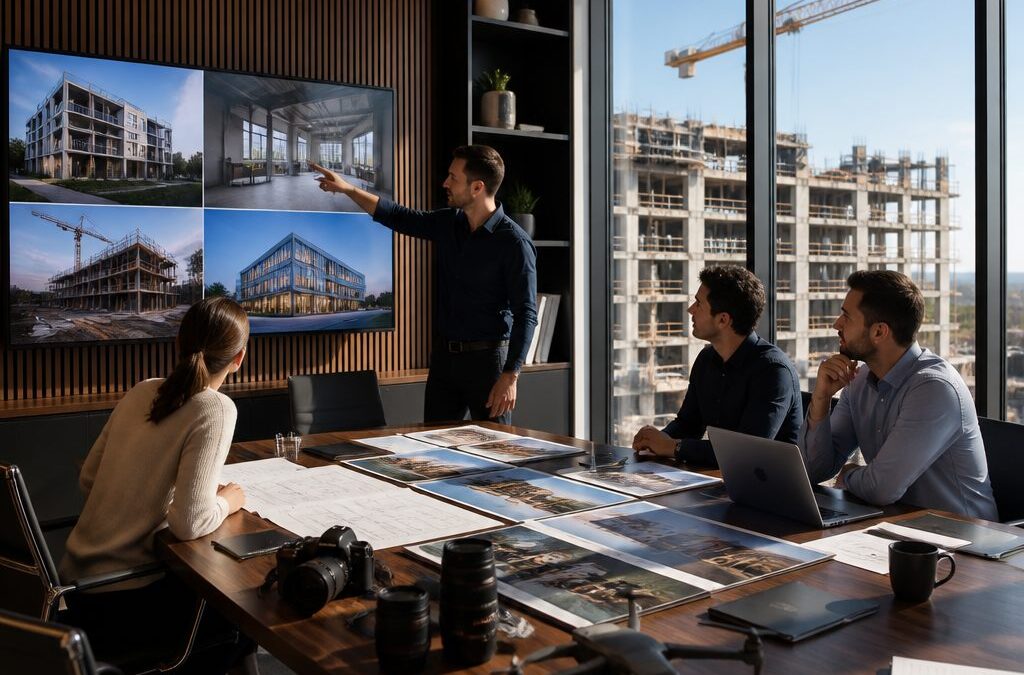
Construction companies can use photography and video to make tender claims visible, specific and credible. Strong imagery shows completed workmanship, operating scale, safety practices and relevant project experience, while concise video helps evaluators understand the team, methodology and proposed outcome. The material must answer evaluation criteria, not merely look polished. Plan it around likely bids, capture evidence throughout delivery, label assets carefully and obtain permissions so tender teams can retrieve approved content quickly and use it accurately.
Used well, visual evidence reduces the effort required to grasp capability. It cannot replace compliant schedules, pricing, methodology or references, but it can make those elements easier to assess and remember.
Build an evidence library before the tender arrives
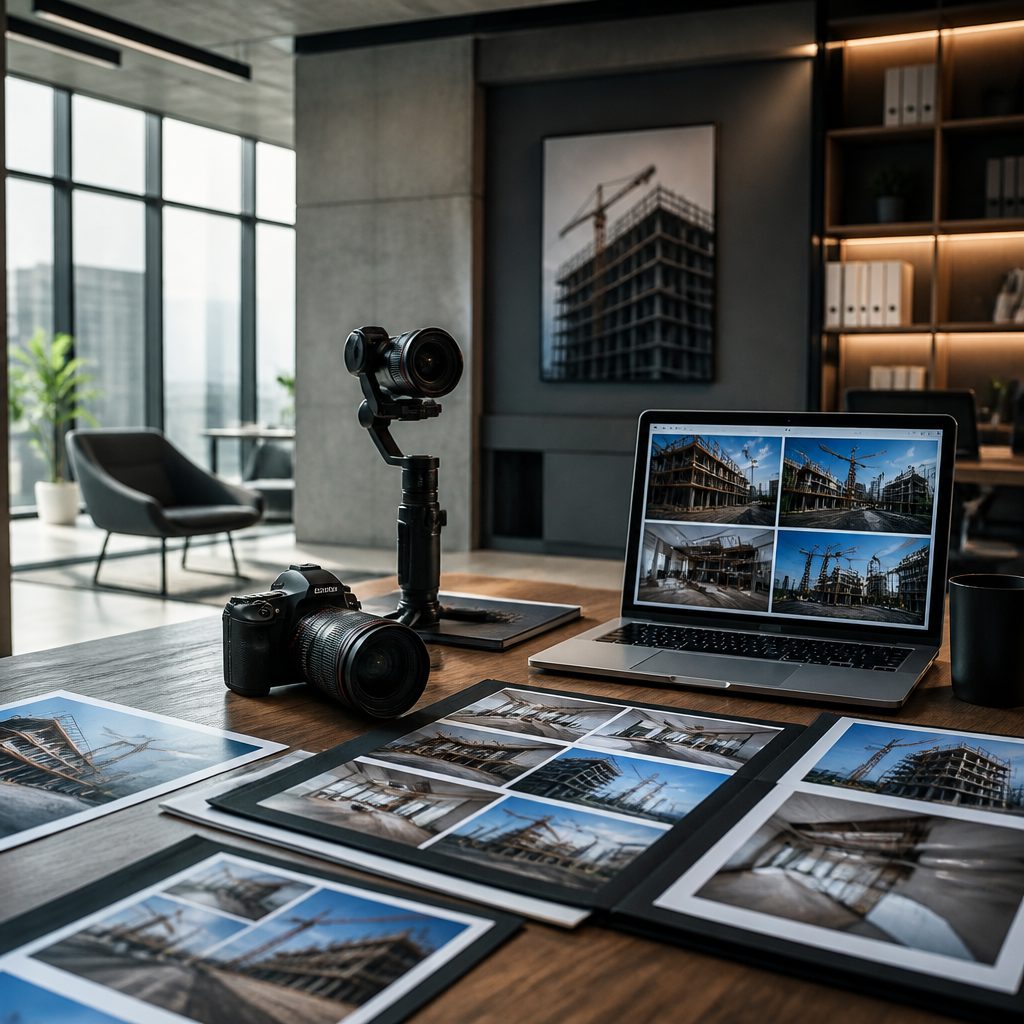
The strongest tender library is created during normal project delivery, not assembled from phone folders on deadline day. Brief site teams and production partners against a repeatable shot list: wide views establishing context, details of finishes, people performing skilled work, plant in operation, progress milestones and final outcomes. Record the project name, date, location, work package, consent status and a plain-English description with every asset. This metadata prevents attractive but irrelevant images being used for the wrong claim.
Capture proof, not decoration
A dramatic crane shot may establish scale, yet a procurement panel may need evidence of staging, traffic management, stakeholder coordination or quality control. Capture sequences that explain a process: the condition before work, the team completing the task, inspection or testing, and the finished result. Professional commercial photography services can create consistent stills for capability statements, project sheets and executive summaries, while preserving enough resolution for print layouts.
Match every visual to an evaluation criterion
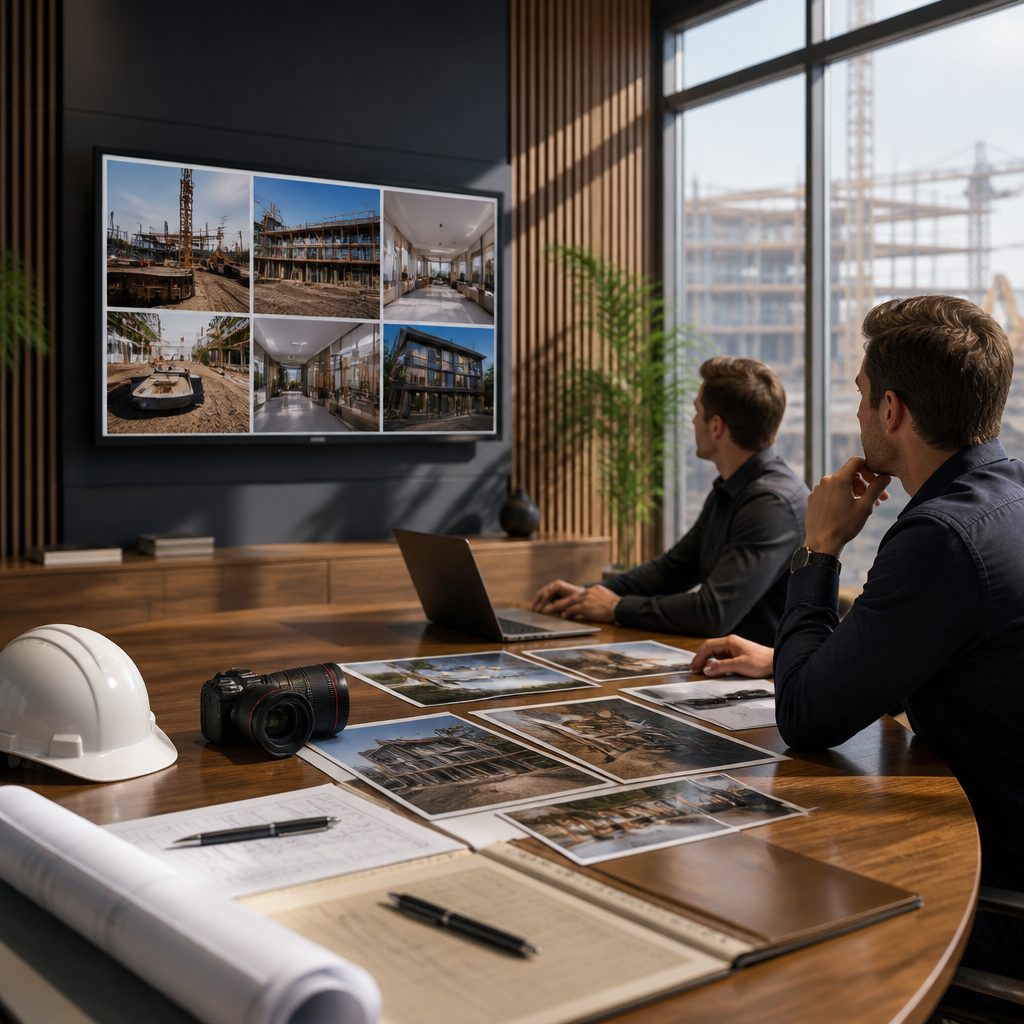
Tender evaluators score against stated requirements. Start with the response matrix, then nominate a visual that supports each important claim. If the criterion concerns similar experience, show a comparable environment and explain your scope. If it concerns personnel, introduce key leaders and their responsibilities. For methodology, combine diagrams, site footage and restrained motion graphics to clarify sequencing. Always add a caption stating what viewers are seeing and why it matters.
Relevant experience
Use project photographs alongside scope, constraints and delivered outcomes. Select genuinely comparable work rather than the biggest project in the archive.
Delivery methodology
A short video can combine a project leader’s explanation with locations, plans and work sequences. Keep it focused on the buyer’s problem, not company history.
People and culture
Show nominated personnel working in relevant environments and speaking naturally about responsibilities. Avoid scripted superlatives that add no evidence.
Safety and quality
Document visible controls, pre-starts, inspections, testing and completed details only where filming is permitted and does not disrupt work.
For richer submissions, case study video production can structure a challenge, response and outcome into a compact proof story. Review Visionair Media’s projects and portfolio to assess how varied industries and production situations are represented.
Use video where movement and explanation matter
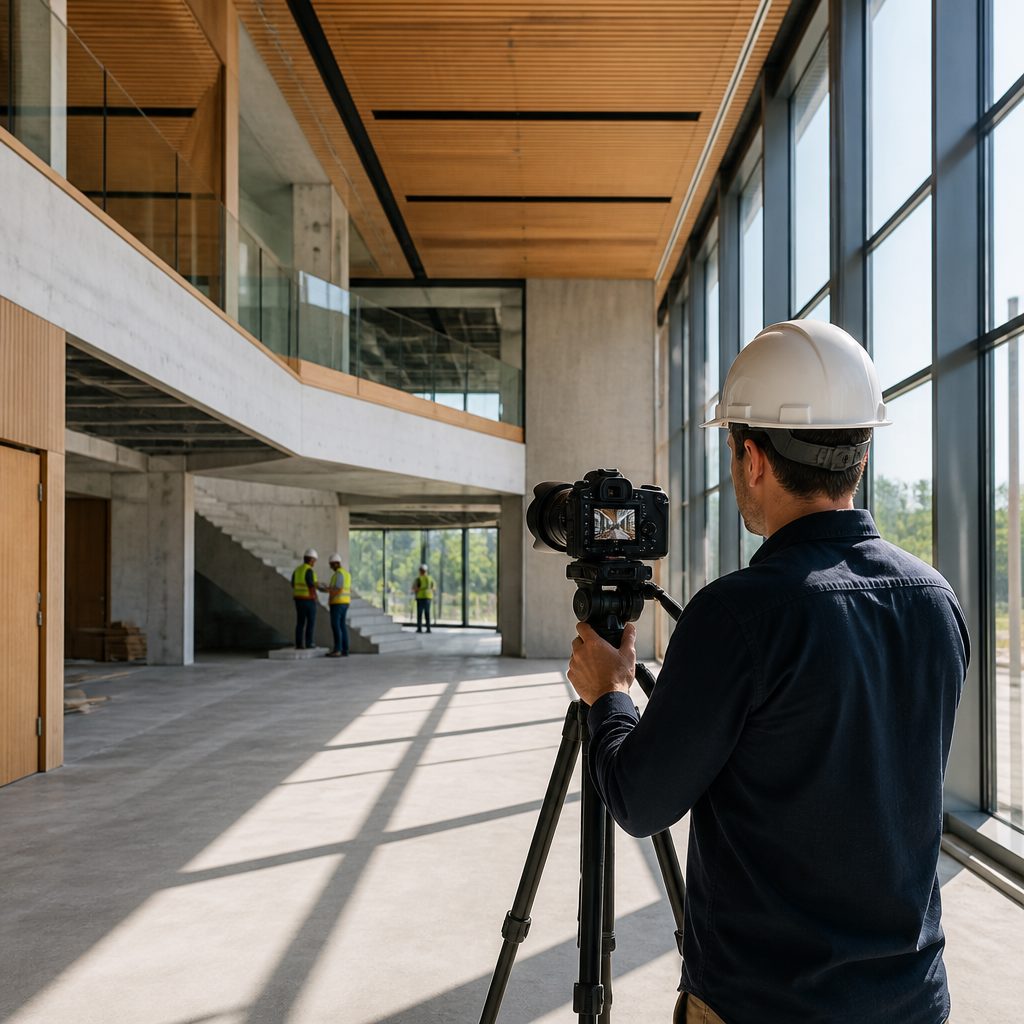
Video is valuable when a still image cannot show sequence, interaction or complexity. A tender film might include a 20-second leadership introduction, a concise methodology explanation and selected evidence from comparable sites. A longer corporate reel is rarely better; evaluators may have limited time and should not need to hunt for the relevant point. Use chapter headings, burned-in captions and a transcript so content remains usable without sound and can be referenced in the written response.
Choose formats that survive procurement workflows
Confirm file size, portal rules and permitted links before production. Some procurement systems block external media or impose upload limits; in that case, submit compressed files or approved hosted links and repeat essential information in the document. Never allow video to become the only source of a mandatory answer. General video production support can cover scripting, filming, editing, accessibility and delivery versions. For bids based in New South Wales, a Sydney video production team may also reduce travel complexity for local filming.
Protect credibility, safety and consent
Tender imagery can weaken a submission if it reveals unsafe behaviour, confidential information or another client’s branding without approval. Establish a review workflow involving project, safety, communications and bid owners. Check personal protective equipment, exclusion zones, plant movement, licences or registrations visible in frame, location restrictions and statements made on camera. Remove sensitive drawings, screens and identifying details where necessary.
Consent is not merely a production formality. Workers, subcontractors, landowners and clients may have different permissions governing capture, storage and tender use. Confirm these conditions in writing and make withdrawal or expiry information searchable. Site inductions and production plans should also account for crew movement, equipment placement and operational disruption. When safe access is impossible, use existing approved material, animation or diagrams rather than forcing a shoot.
Common mistakes to avoid
- Using generic stock imagery that does not prove the company’s own capability.
- Publishing an impressive montage with no captions, scope or connection to criteria.
- Filming during critical operations when a crew would introduce unacceptable risk or delay.
- Over-editing colours, skies or site conditions until the record becomes misleading.
- Leaving capture until bid week, when access, approvals and suitable personnel are unavailable.
How to compare photography and video providers
Compare providers on their ability to gather usable evidence, not showreel style alone. Ask how they plan around live construction environments, manage site documentation, brief interviewees, record accurate captions and deliver a searchable asset library. Their insurance, risk controls, crew competencies and subcontracting arrangements should suit your site and procurement requirements.
Request a written scope showing pre-production, crew numbers, travel, revisions, music licensing, captions and usage rights. Comparing this against published video production pricing guidance can expose omissions between quotes. Ask who owns original footage and photographs, how long files are retained and whether project files cost extra. A provider should explain limitations and trade-offs plainly, rather than promise that visual polish will win a non-compliant bid.
A practical tender-content plan
Begin by auditing upcoming sectors, likely criteria and existing permissions. Build a gap list, then schedule photography and video around milestones that demonstrate those capabilities. Before each shoot, prepare a shot list, interview prompts, site contacts and approval pathway. Afterwards, tag every asset, create print and web versions, and record where each item has been used.
Measure usefulness, not views
Tender content is business evidence, so assess whether bid teams can find it quickly, whether captions answer common reviewer questions, and whether files meet submission requirements. After each tender, ask writers and reviewers which visuals clarified claims and which created extra work. Update the library and capture plan from that feedback. Avoid treating public view counts as the main measure; tender assets may be valuable precisely because they serve a small, authorised audience.
Turn project delivery into tender evidence
In summary, purposeful photography proves capability and video explains people, process and complexity. Tie both to criteria, capture them safely during delivery and maintain accurate permissions, captions and formats. This creates a credible, reusable tender resource for your team.
Request a tailored production quoteFor a relevant example of our work with a construction client, see ADCO Constructions' North Kellyville Public School project. Consider which project stages, people and capabilities your own tender evidence needs to show.
About The Author
