
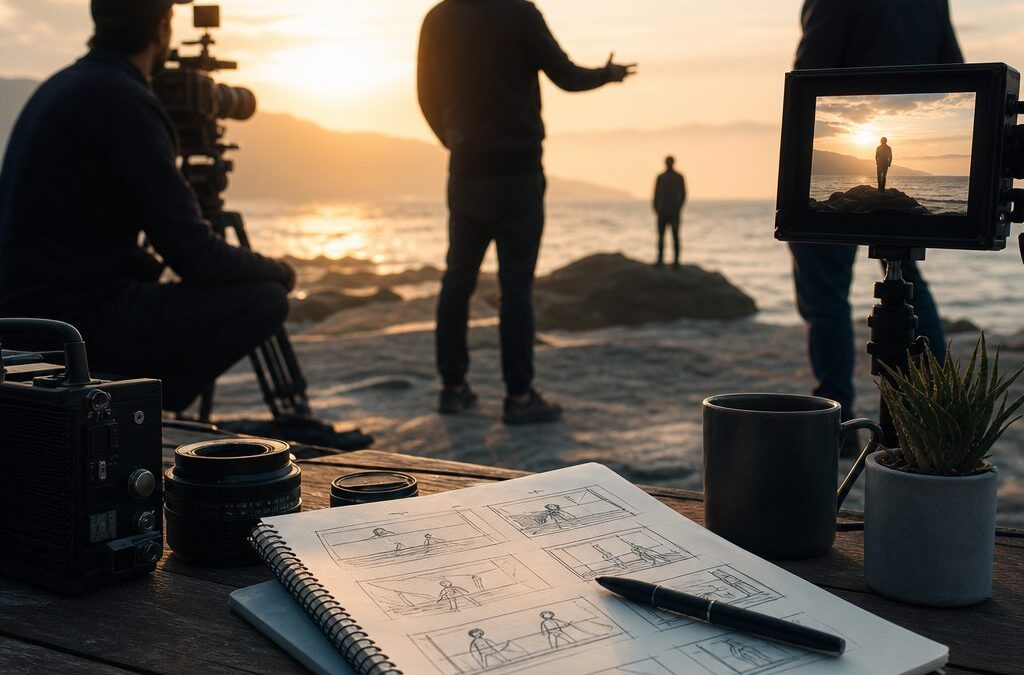
What realistic video production expectations look like
Realistic video production expectations start with a clear purpose, an agreed audience, a practical budget and enough time for planning, filming, editing and approvals. A strong video can improve understanding, build trust and support sales or communications, but it cannot fix an unclear message, replace strategy or deliver every possible outcome at once. The best goal is specific: who should watch, what should they understand, and what action should they take next?

Start with business goals, not camera gear
Before choosing locations, talent or equipment, define the job the video must do. For example, a recruitment video may need to reduce candidate uncertainty, while a safety induction needs consistent instruction and compliance with internal procedures. A product overview may be judged by qualified enquiries, not views alone. This is why a professional briefing process matters. Visionair Media’s video production services are typically shaped around the audience, message, delivery channels and approval requirements before creative concepts are finalised.
Useful goal statements
Replace broad aims such as “make us look good” with practical statements such as “explain the new process to frontline staff in under three minutes” or “give procurement managers confidence to book a demonstration”. Clear goals help the production team recommend the right format, duration, crew size, scripting approach and review process.

Set expectations for budget, time and scope
Video production is a series of decisions. Increasing one area often affects another. A tight deadline can limit concept development or location options. A small budget may require fewer filming days, simpler lighting, in-house talent or a shorter edit. A complex approval pathway can extend delivery even when filming is complete. Reviewing video production pricing in Australia can help buyers understand which cost drivers matter before asking for quotes.
A practical expectation framework
As a guide, avoid treating one video as a website banner, sales presentation, training module, event recap and advertisement all in one. Multiple objectives can work, but only when they are prioritised and budgeted as separate deliverables.

Understand what video can and cannot do
A well-made video can simplify complex information, create emotional connection and make organisations feel more accessible. It can support a launch, explain a policy, document a case study or help leaders communicate consistently across locations. However, it will not automatically go viral, guarantee sales, compensate for weak distribution or solve internal disagreement about the message.
For government departments, infrastructure programs, health, education, agriculture and professional services organisations, realism often means balancing clarity, accuracy, access, safety and brand governance. If the subject matter is sensitive, approvals and consultation may be as important as filming craft.
Examples of achievable goals
Clarify
Explain one complex idea in plain language, using interviews, overlays and simple visuals.
Build trust
Show real people, places and processes without overpromising outcomes or scripting every moment.
Support decisions
Give buyers or stakeholders enough context to take a next step confidently.
Document proof
Capture a project, testimonial or case study in a way that can be reused responsibly.
Plan for production stages and approvals
Most expectation problems appear because pre-production is rushed. A script cannot be approved if stakeholders have not agreed on the message. A shoot day cannot run smoothly if access, parking, safety induction, talent availability and weather contingencies are unresolved. Editing slows down when reviewers provide conflicting comments or request new ideas that were not in scope.
For internal communication programs, dedicated internal communications video production can be useful because the format, tone and review pathway are different from a public brand film. For recruitment, training or culture content, video production for human resources may need extra care around consent, employee comfort and long-term relevance.

Choose the right format for the goal
Not every goal needs a large brand film. Sometimes a direct interview, short social cut-down, animated explainer, case study video production or simple piece-to-camera is more effective. Case study video production suits organisations that need to show a problem, solution and practical context. Video testimonials can be useful when trust and peer credibility matter, provided participants are authentic and properly briefed.
Location also shapes expectations. A Sydney head office interview has different logistics from a regional site shoot, a live event or an active construction environment. Buyers needing professional video production in Sydney should discuss access, noise, permits, safety and backup plans early, especially when senior people or operational sites are involved.
When bigger production is not the answer
Higher production value can help when the video represents a major brand, investor presentation or public campaign. It may be unnecessary for a quick internal update, urgent announcement or narrowly targeted training clip. The right level is the one that serves the audience without wasting resources.
How to compare video production providers
Compare providers on evidence, process and fit rather than showreel polish alone. Ask whether they understand corporate approvals, safety requirements, multi-location scheduling and brand governance. Review their projects and portfolio for similar complexity, not identical subject matter. A strong provider should explain options, limitations and trade-offs clearly, including what is not included.
Questions to ask before appointing a team
- Who will manage briefing, scripting, production and post-production?
- How are revisions, file versions and approvals handled?
- What assumptions are included in the quote?
- How will risk, weather, access and safety be managed?
- Can the team scale across offices, cities or specialist sites?
Set goals before you request a quote
Realistic expectations make video production more productive, less stressful and easier to measure. Start with the audience, message, budget, timeline and approval pathway, then choose the format that best supports the outcome. If you are planning a corporate, government or commercial video, share your objectives through Visionair Media’s request a quote page so the scope can be shaped around practical goals.
A focused brief is the simplest first step toward better results.
About The Author
