

The short answer
For most corporate videos, post-production takes between one and six weeks after filming, depending on the length, complexity, stakeholder approvals and delivery requirements. A simple interview edit may be ready in a few business days, while a campaign film with motion graphics, multiple versions, subtitles, music licensing and several approval rounds can take a month or more. The actual editing time is only part of the schedule; review time often determines the final delivery date.
If you are planning a project, the safest approach is to treat post-production as a structured process rather than a single edit session. At Visionair Media, an Australian corporate video production and commercial photography company headquartered in Sydney with offices in Melbourne, Brisbane, Canberra and Auckland, timelines are usually discussed before filming so expectations are realistic from the start.

What happens during post-production?
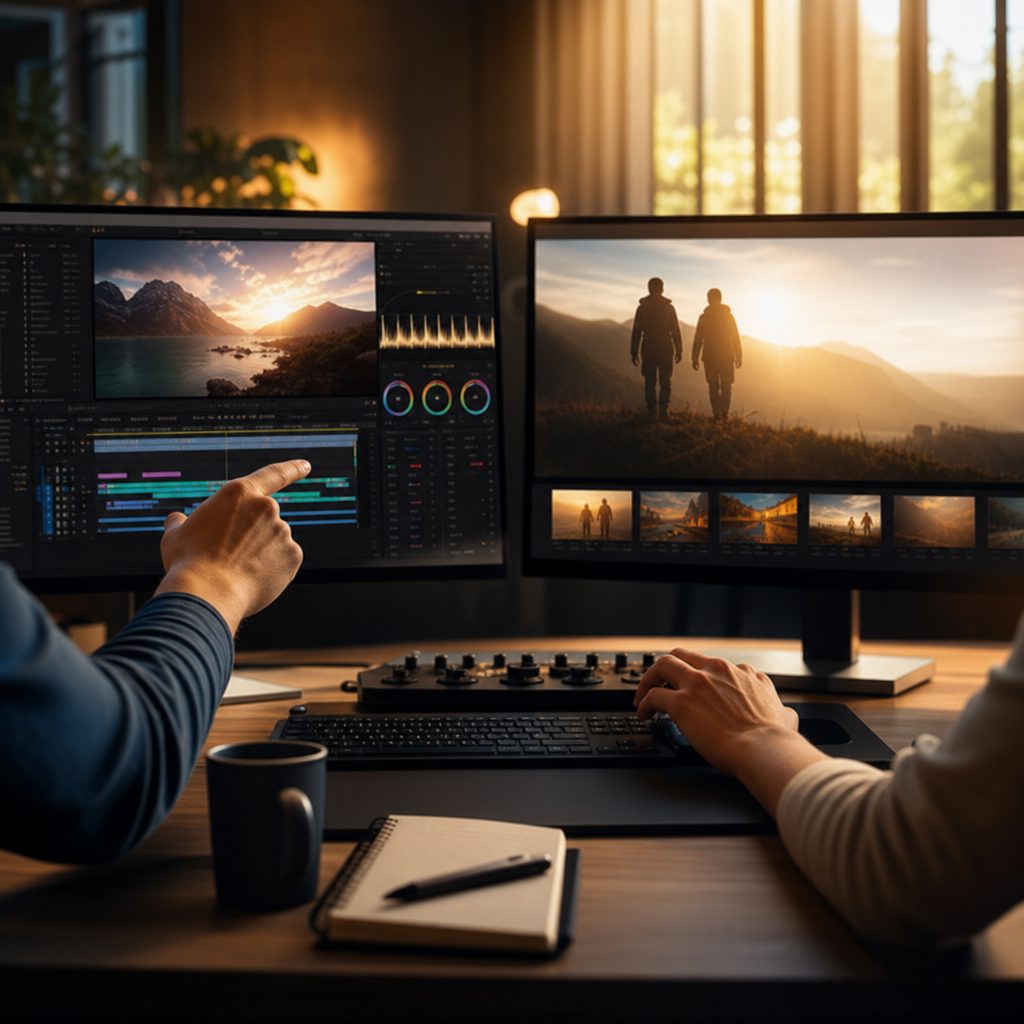
Post-production begins when the footage, audio and project assets are safely backed up and organised. The editor reviews the material, selects the strongest moments, builds the story, refines pacing, balances sound, grades colour and prepares the final files. Depending on the brief, the process may also include animation, titles, logo treatments, captions, translations, music selection, voice-over recording, stock footage, compliance checks and accessibility versions.
For broader planning, Visionair’s video production services outline how pre-production, filming and editing connect. That connection matters because decisions made before the shoot, such as interview questions, shot lists and creative direction, directly affect how quickly an edit can be assembled.
Typical stages
- Ingest and organisation of footage, audio, releases and brand assets.
- Assembly edit to establish narrative structure and key messages.
- First cut review for internal feedback and direction changes.
- Fine cut, including pacing, graphics, music, sound mix and colour.
- Final exports, platform-specific formats, captions and archive files.
“Post-production is fastest when the brief is clear, the footage is well planned and the approval path is simple.”
How long different video types usually take
The following ranges are a practical guide, not a guarantee. They assume footage has already been captured and that feedback arrives promptly. Urgent edits are possible, but fast turnarounds usually require tighter creative choices, fewer decision-makers and limited revision rounds.
| Video type | Typical post-production timeframe | Why it varies |
|---|---|---|
| Short social cut-down | 2 to 5 business days | Often uses existing footage and simple captions. |
| Interview or talking-head video | 3 to 10 business days | Complexity depends on transcript length, B-roll and brand graphics. |
| Corporate brand or explainer video | 2 to 6 weeks | Requires story shaping, approvals, graphics, music and multiple versions. |
| Case study or testimonial video | 2 to 4 weeks | Needs careful narrative editing and often client or participant review. |
| Training or internal communications series | 3 to 8 weeks or more | Multiple modules, accessibility requirements and stakeholder input add time. |
The factors that add time
The biggest schedule drivers are rarely mysterious. Post-production takes longer when there is more material to review, more people approving the work, or more technical finishing required. A half-day interview shoot might generate hours of footage; a drone and multi-camera project may require synchronising, stabilising and careful shot selection. If aerial footage is involved, planning may also need to account for CASA drone rules before the shoot, which can affect the overall production schedule.
Common time additions include:
- unclear messaging, requiring the edit to solve strategy issues;
- large volumes of footage without a shot log;
- legal, brand or government approvals;
- animated diagrams, maps or technical explainers;
- captioning, audio description or multiple aspect ratios;
- late changes after the edit has been mixed, graded or exported.
If budget is also being planned, Visionair’s guide to video production pricing in Australia explains how editing, revisions and deliverables can influence cost as well as time.
Why approvals matter as much as editing
A two-day edit can become a two-week delivery if feedback is slow or contradictory. Post-production works best when one person collects comments, removes duplication and provides clear, consolidated direction. That person does not need to make every creative decision, but they should understand the brief and have authority to resolve conflicting opinions.
In corporate, government, health, education and infrastructure environments, approvals may involve communications, legal, safety, HR, subject matter experts or external partners. That is normal, but it should be allowed for. For internal campaigns, the approach to video production for comms often includes extra planning around message accuracy and stakeholder sign-off.
“The edit suite is not the only bottleneck; the approval chain can be just as important as the software.”

Can post-production be rushed?
Yes, but there are trade-offs. A rush edit may prioritise speed over exploration, meaning fewer music options, simpler graphics and reduced polishing time. This may be suitable for an event recap, urgent executive update or media response. It is less suitable for a brand film, safety-critical training video or high-profile campaign where accuracy and craft matter.
A good production partner will explain what can be accelerated and what should not be compressed. For example, exporting a shorter cut-down may be quick once the master edit is approved, but rewriting the structure after final colour and sound can create avoidable rework.
How to compare post-production providers
When evaluating suppliers, look beyond the showreel. Ask how they manage revisions, file backups, brand assets, music licences, captions, version control and delivery formats. Review relevant work in their projects and portfolio, and ask whether they have handled similar approval environments or technical subject matter.
If your video depends on interviews, evidence and customer stories, experience with case study video production or video testimonials can be more useful than general editing speed. For location-specific filming and editing support, teams planning shoots in New South Wales may also compare professional video production in Sydney with national coverage needs.
Practical ways to keep editing on schedule
- approve the brief before filming starts;
- limit feedback to one consolidated document per round;
- provide brand guidelines, logos and supers early;
- agree on music direction before the first cut;
- separate essential changes from personal preferences;
- confirm every final format before export.
Summary
In short, allow days for simple edits and weeks for complex work; for a realistic schedule, request a quote before filming begins today.
About The Author
