

The practical answer
A reliable healthcare shot list should cover people, place, process, technology, and trust. Capture an establishing view, staff at work, patient interactions, clinical details, equipment, portraits, and clean environmental footage. For video, add movement, natural sound, interviews, transitions, and several framing options for every important action. Plan each scene around consent, infection control, privacy, clinical accuracy, and minimal disruption. The best list is not merely comprehensive; it is prioritised by purpose, location, subject, format, and available time.
Use the checklist below as a production baseline, then tailor it with clinical leaders, communications staff, and the crew before filming begins.
Build the list around the communication goal
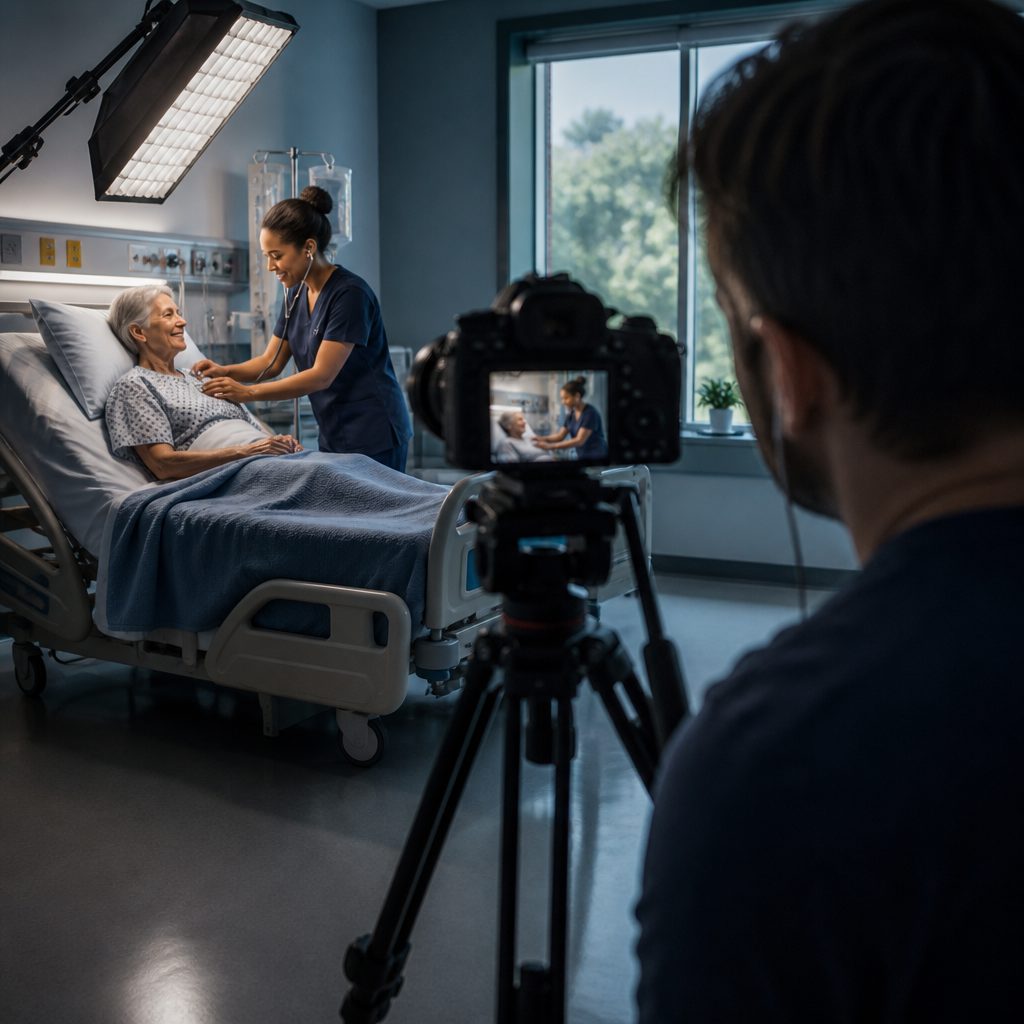
Before naming shots, define what viewers should understand, feel, or do. A recruitment film may emphasise teamwork, learning, and workplace culture; a patient story needs empathy, clarity, and lived experience; a service overview must explain access, facilities, and care pathways. Identify the primary audience and delivery channels because a website banner requires different composition from a widescreen case study or vertical social clip.
Convert the goal into three to five visual messages. For example: “specialist expertise,” “welcoming environment,” and “coordinated care.” Every planned shot should support at least one message. Mark essential, useful, and optional scenes so the crew can protect the story if appointments change, a room becomes unavailable, or consent is withdrawn.
The master healthcare photography and video shot list
Organise coverage in the following groups. For each setup, record a wide view, a medium action, and close details where appropriate. That sequence gives editors context, continuity, and emotional texture.
1. Place and arrival
- Exterior signage, building approach, entrance, reception, corridors, waiting areas, consultation rooms, treatment spaces, staff areas, and accessibility features.
- Patients or visitors arriving, checking in, receiving directions, and moving naturally through the facility.
- Clean empty-room frames for opening slides, titles, service pages, or location identification.
2. People and relationships
- Warm staff greetings, listening, eye contact, reassurance, collaborative discussions, handovers, and multidisciplinary meetings.
- Clinicians performing authentic tasks with safe technique, correct personal protective equipment, and realistic room preparation.
- Individual and team portraits, including formal camera-facing options and relaxed environmental portraits.
3. Patient journey and care process
- Key steps from booking, arrival, assessment, consultation, diagnosis explanation, treatment, recovery, discharge, and follow-up.
- Over-the-shoulder views of conversations, hands demonstrating instructions, educational materials, and supportive reactions without exposing private data.
- Representative sequences rather than staged procedures that could mislead viewers about the actual service.
4. Technology and clinical detail
- Equipment in context, controls being adjusted, diagnostic screens with approved content, sterile packs, labelled spaces, and relevant tools.
- Macro or tight shots of hands, materials, samples, and workflow details that make the edit specific.
- Always confirm displays, labels, dates, names, records, and reflections before capture.
5. Video-specific coverage
- Interview soundbites from clinicians, patients, carers, leaders, or partners, with approved questions and quiet room tone.
- Movement such as walking consultations, doors opening, equipment preparation, staff crossing frame, and deliberate camera moves.
- Cutaways of nodding, listening, hands, room details, exteriors, and transitions to cover edits without false continuity.
Consent, privacy, and clinical safety come first
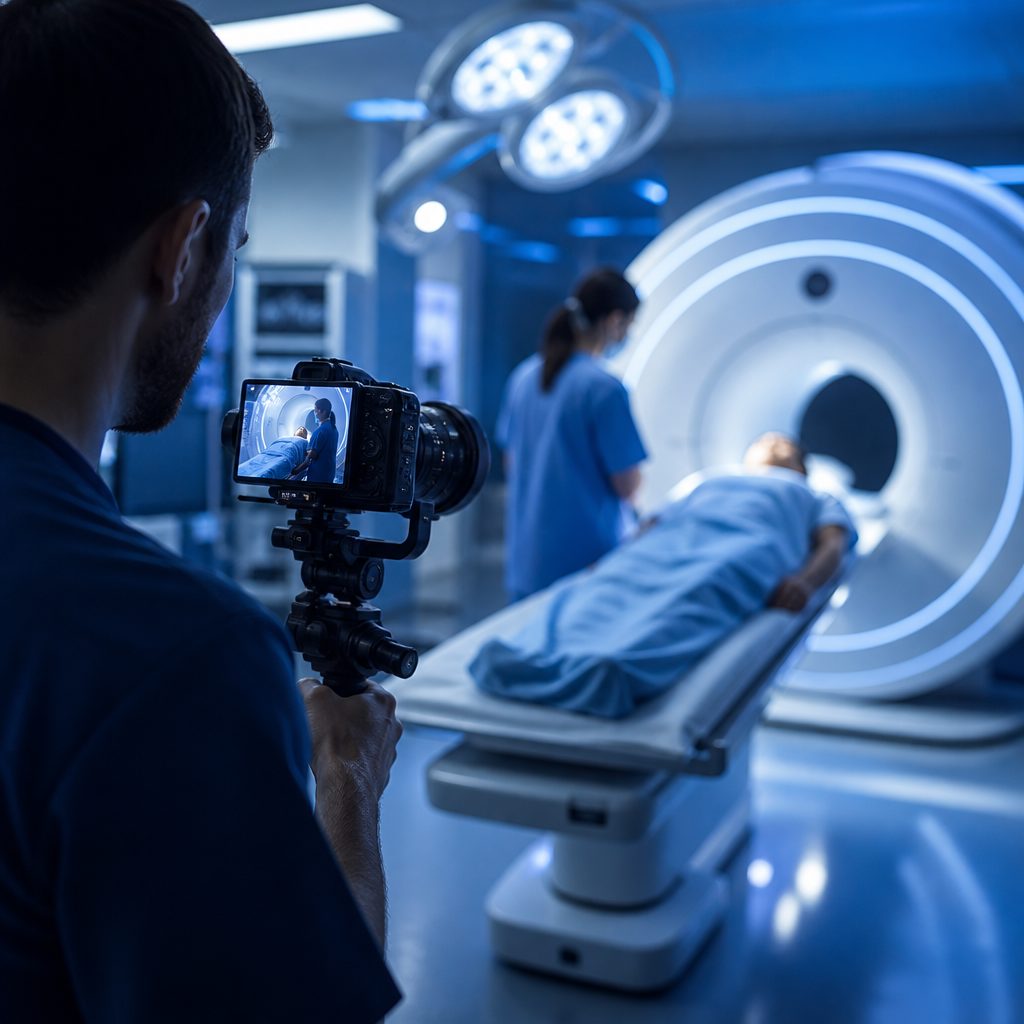
Obtain documented consent through the organisation’s approved process, and make participation genuinely voluntary. Confirm whether permission covers photography, video, audio, social media, advertising, internal communications, and future edits. For children, people with impaired decision-making capacity, or sensitive services, seek guidance from the responsible healthcare team rather than assuming standard consent is sufficient. Keep a clear record linking each identifiable person to their release status.
Protect patient information on monitors, paperwork, whiteboards, wristbands, prescriptions, appointment screens, and reflections. Use prepared dummy data where possible; blurring later is a fallback, not the plan. Never ask someone to repeat unsafe technique for aesthetics. A clinical representative should review setups, attire, equipment, terminology, and the final selects for accuracy.
Turn the shot list into a workable schedule
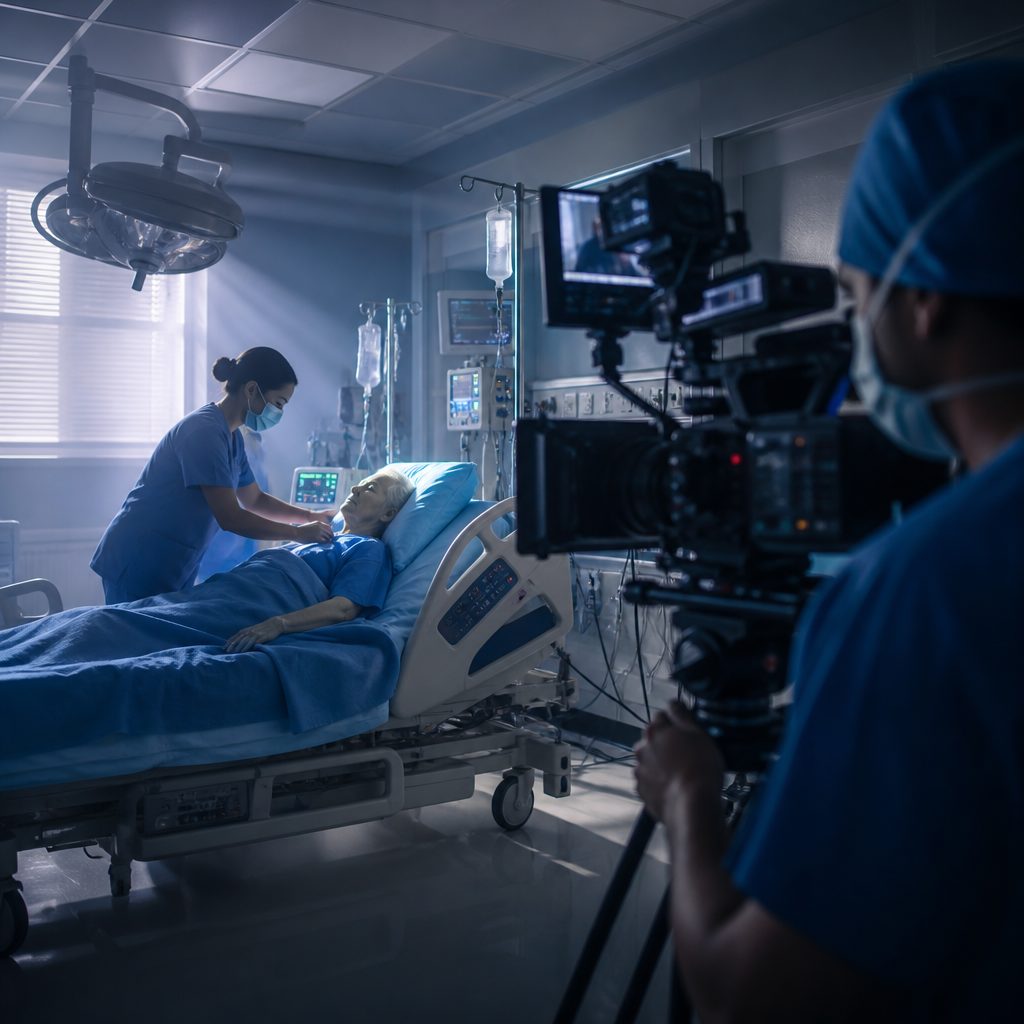
Group shots by location, subject, equipment, and clinical availability instead of following the finished story order. Schedule sensitive or difficult-to-access scenes first, then collect flexible details and empty spaces around them. Add setup, cleaning, consent checks, room resets, staff breaks, and movement between departments. A compact crew and pre-approved lighting positions can reduce disruption in active environments.
Create one row per setup with columns for priority, location, people, action, framing, orientation, audio, props, consent, clinical reviewer, and status. Beside each interview, list the supporting footage it needs. A surgeon discussing coordinated care, for instance, might require team briefing, corridor movement, imaging review, patient explanation, and close-ups of relevant equipment.
A simple capture formula
For every essential scene, aim for one establishing frame, one human interaction, one close detail, one clean variation with negative space, and one motion option for video. Also record room tone and a few seconds before and after each action to give the editor breathing room.
Direct authentic scenes without making them feel staged
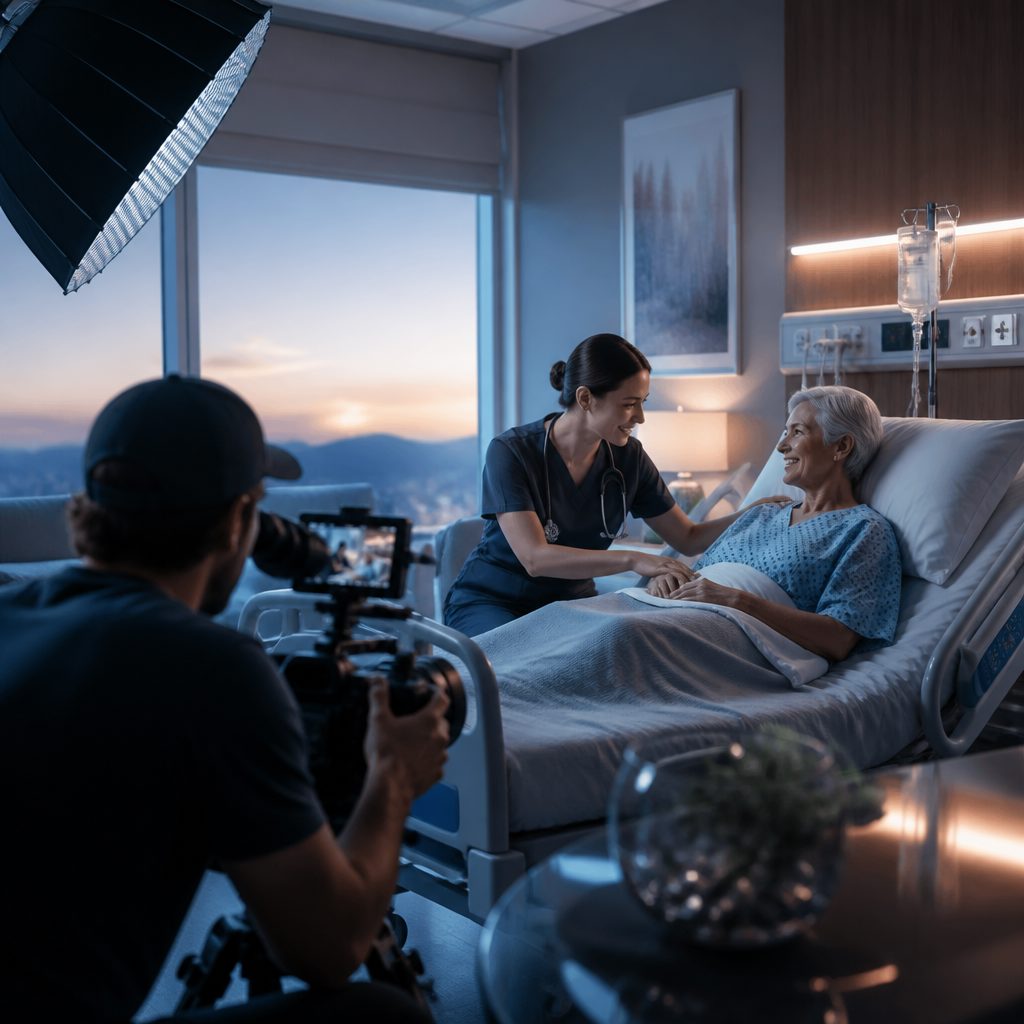
Ask people to perform familiar actions rather than “act natural.” Give one clear prompt at a time: walk to reception, explain the scan, review the image together, or prepare the room as usual. Keep conversations real where privacy allows, but avoid capturing confidential audio. If dialogue matters, obtain specific permission and monitor sound carefully.
Watch for details that break credibility: empty gloves, incorrect uniforms, obsolete signage, untidy cables, reversed sequences, inappropriate physical contact, or equipment used by the wrong role. Take both smiling and neutral expressions so the library suits celebratory, informative, and serious communications. Avoid depicting every patient as visibly unwell; healthcare imagery should represent prevention, routine care, recovery, disability, ageing, and diverse experiences respectfully.
Plan for common healthcare production edge cases
- If a patient withdraws consent, stop using their material and follow the organisation’s process for identifying affected files. Capture non-identifiable alternatives early.
- If schedules collapse, prioritise the establishing shot, core interaction, interview, and details needed to edit a complete sequence.
- If real patients cannot participate, use clearly authorised staff or talent and avoid implying a fictional scene is documentary evidence.
- If a procedure is graphic or emotionally sensitive, agree on viewing audience, framing boundaries, and approval before recording.
- If the facility remains operational, nominate a crew contact and a clinical contact who can pause production immediately.
Build a backup list of hands, architecture, equipment, signage, staff-only demonstrations, and exterior movement. These shots can keep the day productive without pressuring anyone to appear.
Final pre-shoot check and next step
Before arrival, circulate the approved schedule, shot priorities, consent method, call sheet, parking instructions, access requirements, wardrobe guidance, interview prompts, and emergency contacts. Confirm who can approve clinical accuracy and who has final communications sign-off. Brief the crew on restricted zones, hand hygiene, personal protective equipment, noise limits, and where cases may be stored securely.
After filming, reconcile consent records with file names, back up media securely, and flag anything requiring masking or review. Build selects around the intended message, not simply the most attractive images. Ask clinical reviewers to check safety and accuracy while communications reviewers assess tone, privacy, brand fit, and accessibility.
In summary, a useful healthcare shot list combines comprehensive visual coverage with firm ethical controls and realistic scheduling. It captures environments, relationships, processes, technology, interviews, sound, and edit-friendly details while preserving dignity and care. For a smoother project, give Visionair the objectives, audiences, locations, approvals, formats, and must-have scenes during the brief. The production team can then turn this framework into a tailored shot plan, schedule, and efficient capture strategy.
About The Author
