

Healthcare video ideas that build trust and improve understanding
Healthcare video production can help clinics, hospitals and allied health providers explain care, prepare patients and introduce their people before an appointment. The most useful ideas include clinician introductions, procedure explainers, patient journey videos, service overviews, frequently asked questions, recruitment stories and short educational clips. Each video should answer one clear audience need, use reassuring language and protect patient privacy.
A strong programme does not begin with cameras. It begins by identifying who needs information, what action they should take and where they will watch. A waiting-room screen, website service page, social feed and staff portal require different edits, captions and calls to action. Plan those versions before filming so one carefully managed shoot creates a practical content library.
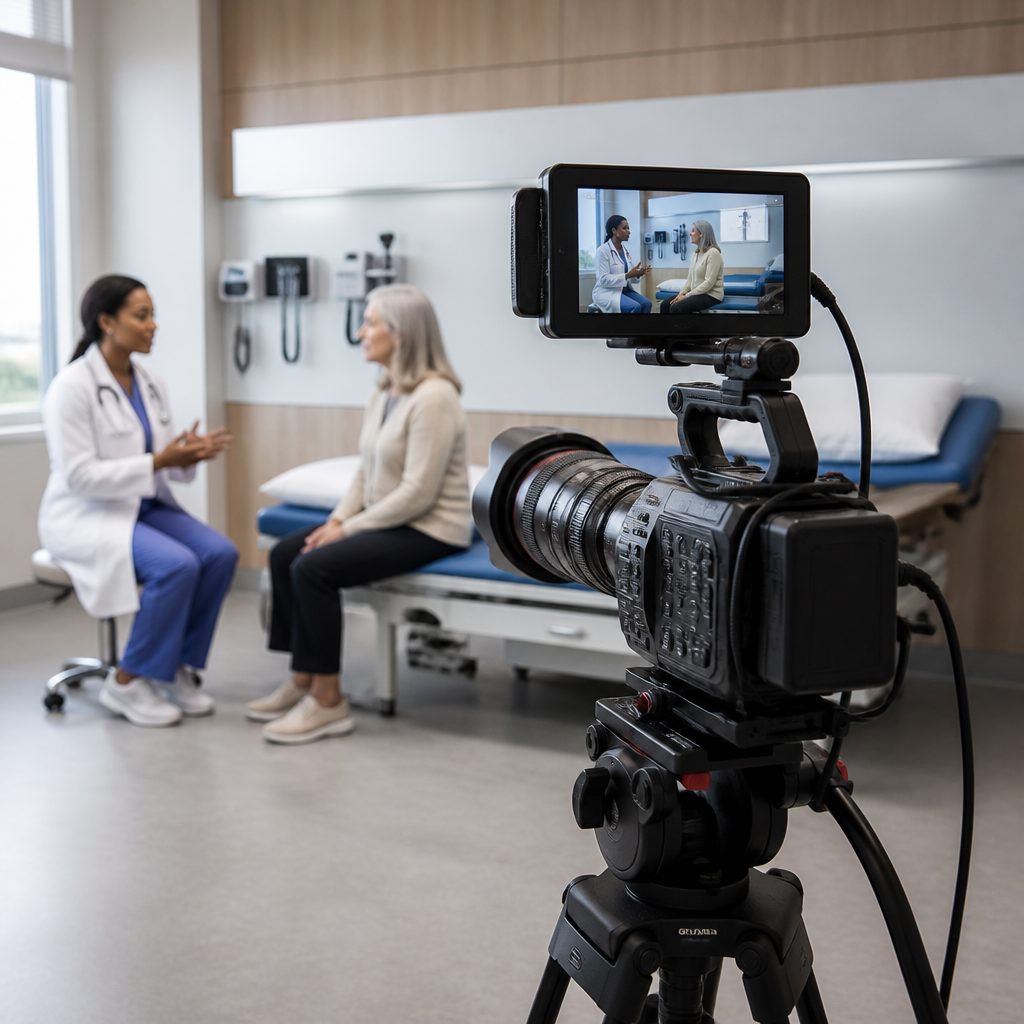
Ten practical healthcare video production ideas
Choose formats according to the audience’s decision, not simply what looks impressive.
Clinician and practitioner introductions
Let viewers meet the person behind the qualification. Cover clinical interests, approach to care, languages spoken and what a first consultation feels like, while avoiding promises about outcomes.
Procedure and treatment explainers
Use simple visuals to show preparation, major steps, expected sensations, recovery guidance and escalation pathways. Separate general education from personalised medical advice, and have the appropriate clinician approve every claim.
Patient journey walkthroughs
Follow the experience from arrival and check-in to consultation, discharge and follow-up. This format is especially valuable for children, anxious patients, people with disability, interpreters and anyone visiting a complex hospital campus.
Frequently asked question videos
Record concise answers about referrals, fees, parking, telehealth, appointment length and what to bring. Keep each clip focused on one question so it remains easy to find, update and share.
Patient stories and case studies
With informed written consent, patient stories can explain lived experience and the human impact of care. Never pressure participation; discuss withdrawal, distribution, sensitive details and whether names, faces or locations should appear.
Recruitment and culture stories
Show real teams, work environments, learning opportunities and values in practice. Include varied roles rather than only senior leaders, and describe the realities of the position accurately to support informed applicants.
Allied health exercise demonstrations
Physiotherapists, occupational therapists, dietitians, speech pathologists and other practitioners can demonstrate general techniques safely. State who the activity suits, common mistakes, stopping points and when viewers need individual assessment.
Facility and technology tours
Orient viewers to treatment rooms, accessible entrances, diagnostic equipment or rehabilitation spaces. Explain the patient benefit without turning the video into a technical showcase or implying that equipment guarantees results.
Community health education
Create seasonal, preventive or condition-specific explainers that answer genuine local needs. Use plain English, define unavoidable terminology and provide a sensible next action, such as contacting a clinician or emergency service.
Leadership and service updates
Use executive messages for meaningful changes: new services, redevelopment, safety initiatives or organisational priorities. Pair leadership with frontline voices and practical details, avoiding corporate language that does not help patients or staff.

Plan one shoot for many useful assets
Start with a message map that assigns one audience, objective and call to action to every video. Then build a shot list covering interviews, consultations staged with staff or actors, exterior access, equipment, hands at work and natural team interactions. Capture horizontal footage for websites and presentations, plus compositions that can be cropped vertically for social channels.
Record clean sound, room tone and several versions of key statements. Obtain b-roll that can hide edits, but never film identifiable records, screens, labels or bystanders without clearance. Photography captured during the same session may also support staff profiles and campaign materials, provided consent covers both uses.
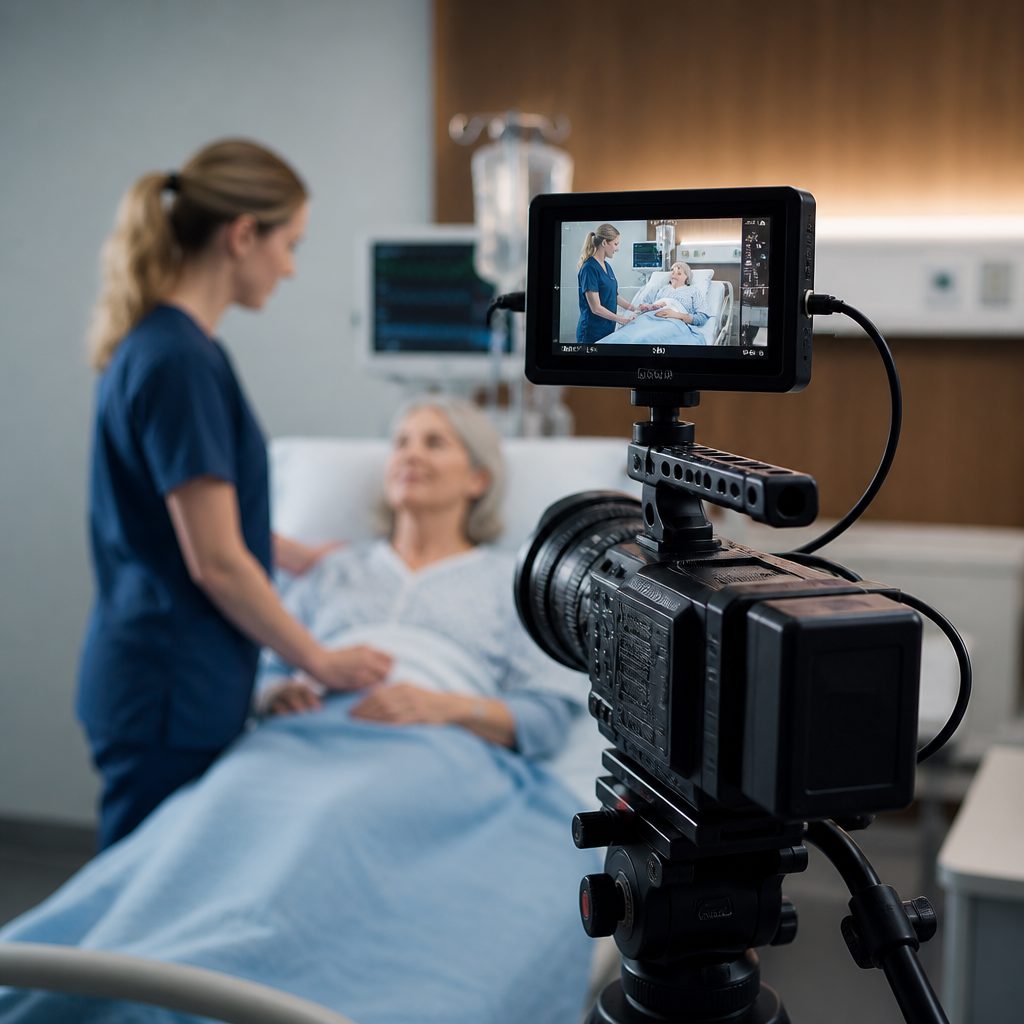
Protect privacy, accuracy and patient dignity
Healthcare production needs a stricter workflow than a typical brand shoot. Confirm location permissions, infection-control requirements, staff availability, restricted areas and the organisation’s consent process before arrival. Use separate releases for patients, staff, actors and guardians where relevant, and record exactly which channels and time periods each person approves.
Clinical review should happen at script, rough-cut and final approval stages. Check terminology, medication references, demonstrations, subtitles and on-screen text. Include qualifications only as currently held, avoid guaranteed outcomes, and add disclaimers when general information could be mistaken for personal advice.
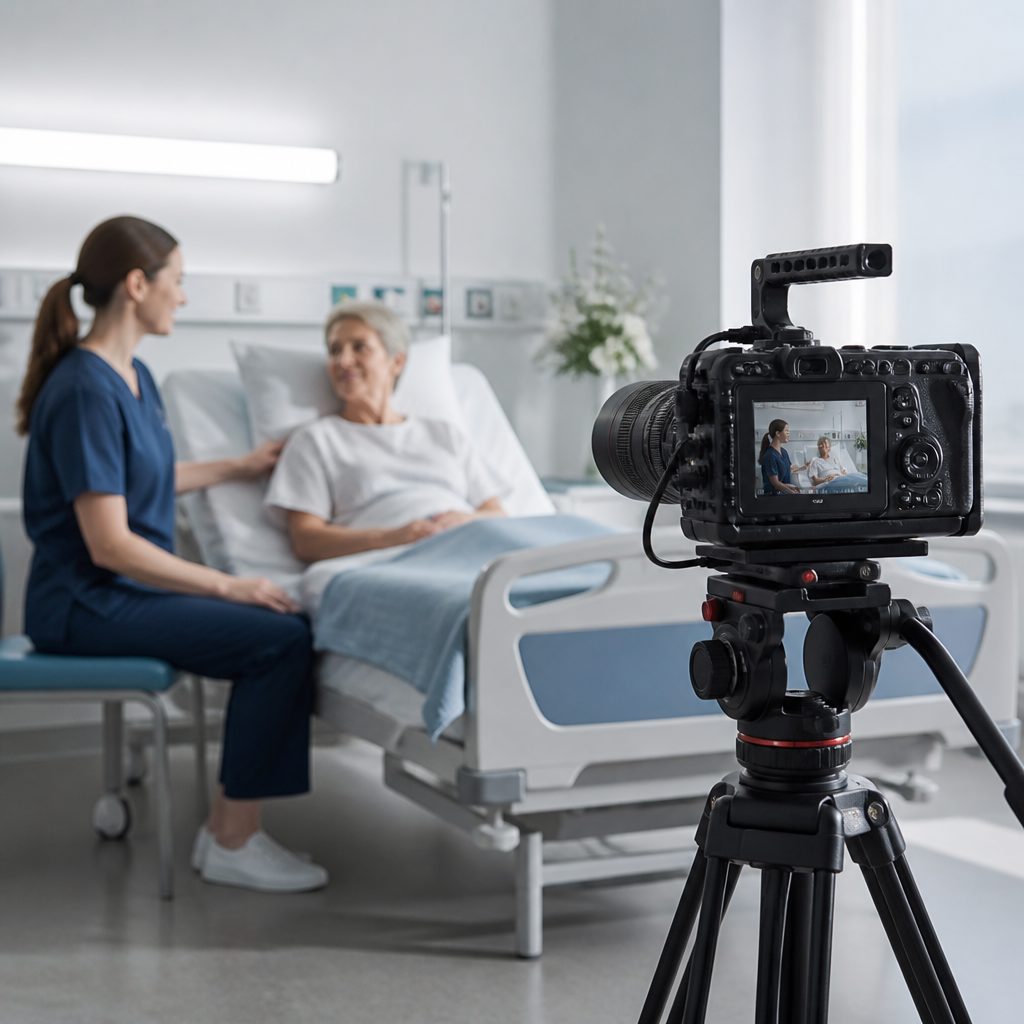
Make healthcare videos accessible and easy to find
Assume many people will watch without sound, on a small screen or while stressed. Add accurate captions, readable on-screen text, strong audio contrast and meaningful visual descriptions. Consider translated subtitles, interpreters or separate language versions for priority communities. Avoid rapid edits, distracting music and unexplained clinical imagery.
Publish each asset where its answer is needed. A preparation video belongs beside appointment instructions; a clinician introduction belongs near the relevant service and booking pathway; recruitment content belongs with the role description. Use descriptive page headings, transcripts and filenames, then review analytics alongside reception questions, completion rates and booking behaviour.
A practical production workflow
Define the outcome
Choose a measurable action: understand preparation, request an appointment, follow discharge guidance, apply for a role or recognise a service.
Prepare people and place
Brief contributors in plain language, schedule around clinical operations, remove confidential material and allow extra time for nervous or vulnerable participants.
Film for flexibility
Capture complete answers, multiple framings, room details, access points and genuine interactions. Keep lighting, sound and clinical presentation consistent across takes.
Review with the right people
Give clinical, legal, brand and accessibility reviewers defined responsibilities. Consolidate feedback so editors receive one clear, prioritised response rather than conflicting comments.
Budget should account for planning, filming, editing, captions, graphics, music licensing, review rounds and alternate formats. Complexity rises with multiple locations, actors, animation, specialist equipment, translation or urgent delivery. A detailed brief lets a production partner recommend where to invest and where a simpler approach is sufficient.
Healthcare video production questions
How long should a healthcare video be?
Use the shortest duration that answers the question properly. A single FAQ may need less than a minute, while a patient journey or complex service overview may need several minutes and chapters. Clarity matters more than an arbitrary runtime.
Can real patients appear in marketing and education videos?
Yes, when participation is voluntary and documented through an appropriate consent process. Explain the intended edit, platforms, paid promotion, likely audience and withdrawal limits before filming. Offer an actor, staff demonstration, animation or voice-only story when identification is unnecessary or potentially harmful.
Turn useful healthcare knowledge into confident next steps
The best healthcare videos reduce uncertainty without oversimplifying care. Begin with real audience questions, select one purpose per asset, involve clinicians early and design accessibility into production rather than adding it at the end. Film enough adaptable material to support service pages, appointment communications, social education, recruitment and internal channels.
Before requesting a quote, prepare your priority audience, core message, locations, contributors, approval team, desired formats and launch date. Visionair can then shape an efficient production plan around clinical operations, privacy obligations and the content your organisation will genuinely use. Bring examples of questions, existing brand guidance and any access constraints, so creative recommendations remain realistic, compliant and aligned with the patient experience from day one.
About The Author
