

How to plan a commercial photography shoot for your website
A successful website photography shoot starts with a clear brief, a realistic shot list, prepared locations, agreed usage requirements and a schedule that respects the people being photographed. Before anyone picks up a camera, decide what each image must do for your website: build trust, explain a service, show scale, humanise your team, support recruitment or improve conversion. The planning matters because commercial photography is not just decoration; it is visual evidence of who you are, what you do and why a visitor should keep reading.
For organisations planning a refresh, product launch or capability page, investing time in pre-production usually saves cost on the day. It also helps your photographer capture images that work across hero banners, service pages, case studies, social posts and tender documents, rather than a folder of attractive but unusable files.
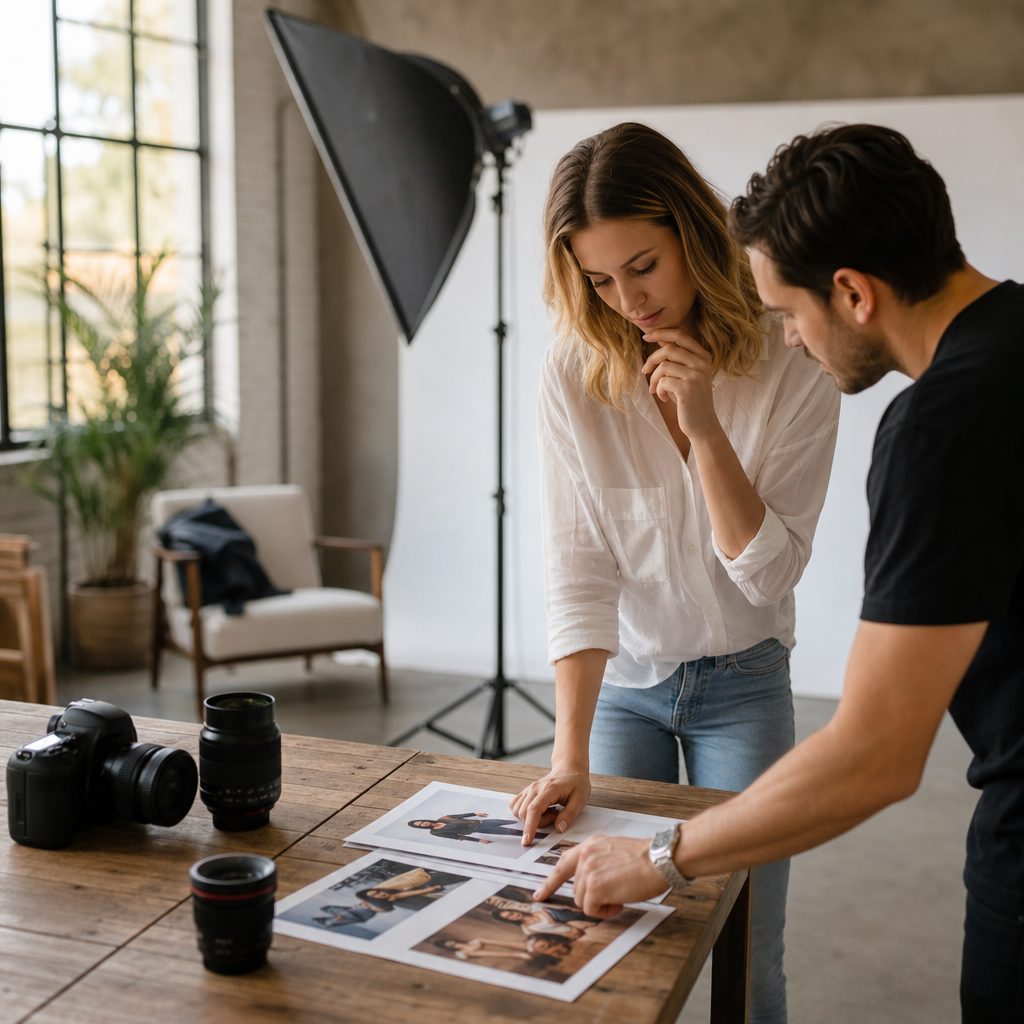
Define the business purpose before the shot list
Start with the pages the images need to support. A homepage may need broad, polished brand imagery, while a service page may need process details, equipment, staff interaction or finished outcomes. An About page might require approachable portraits, and a careers page may need candid workplace moments that feel believable.
Write a short creative brief covering the audience, key messages, brand personality, preferred image style, must-have pages and any images that must be avoided. If the site is being redesigned, ask the web team for crop ratios, banner dimensions and content priorities. This prevents discovering later that a strong portrait cannot fit a narrow website header.
Build a practical shot list
A strong shot list should separate essential images from nice-to-have options. Include:
- hero images for primary landing pages
- team portraits, leadership images and candid workplace scenes
- service, process or product details
- location, equipment and environmental context
- horizontal and vertical versions for responsive layouts
- negative space where copy, buttons or page headings will sit.
Do not make the list so rigid that it kills useful opportunities. The best plans provide structure while leaving room for genuine moments, changing light and ideas that appear once everyone is on site.
“The most useful website images are planned for specific pages, not collected as general marketing assets.”
Choose the right photography approach
Different website goals require different styles. Corporate portraits need consistency and careful direction. Industrial or infrastructure work may require site access planning, safety inductions and controlled movement around operational areas. Product and service imagery may need styling, props, lighting and extra time for small adjustments.
If you need elevated site context, building scale or outdoor operations, consider whether drone photography and aerial video belongs in the plan. It can be valuable for property, infrastructure and agriculture, but it is not always suitable where airspace, weather, privacy, safety or site restrictions limit flying.
For organisations in New South Wales, a local team familiar with corporate sites and production logistics can simplify planning. Visionair Media’s commercial photographer Sydney service is relevant when your shoot involves Sydney-based offices, facilities, events or executive teams.

Prepare people, locations and approvals
Commercial shoots often succeed or fail before the photographer arrives. Confirm who will appear, what they should wear and when they are available. Give people enough notice to prepare, but avoid over-scripting candid scenes. Staff should understand the purpose of the shoot and what will be expected of them.
For workplaces, check branding, uniforms, personal protective equipment, visitor access, cleaning, parking, power, loading areas and rooms that can be reserved. If customers, patients, students or members of the public may be identifiable, obtain appropriate permissions. Australian organisations handling personal information should also consider privacy obligations; the Office of the Australian Information Commissioner provides guidance on privacy principles.
Time the shoot realistically
Allow setup time, lighting tests, travel within the site, breaks and delays. A rushed half day may be enough for simple portraits in one room, but it may not suit multiple locations, operational scenes or large groups. If the website needs seasonal imagery or outdoor scenes, build weather flexibility into the schedule.
Plan for website usability, not just image quality
A technically excellent photograph can still be poor for a website if it cannot be cropped, compressed or placed beside text. Ask for a mix of wide, medium and tight compositions. Leave clean space for headlines. Capture variations with different expressions, orientations and backgrounds.
Discuss file delivery before the shoot. Your website may require optimised JPEG or WebP files, but your marketing team may also need high-resolution originals for print, bids or presentations. Clarify naming, folder structure, retouching level, colour grading and whether images will be licensed for all intended uses.

Compare commercial photography providers objectively
When comparing providers, look beyond the lowest quote or the nicest portfolio image. Ask whether they understand your sector, can manage stakeholders, provide production planning, work safely on your site and deliver files that suit web and campaign use.
Useful comparison criteria include:
- relevant commercial portfolio, not only weddings or lifestyle work
- clear briefing, scheduling and risk management process
- experience with corporate, government, education, health, infrastructure or professional services environments
- ability to coordinate photography with video, drone or live production if needed
- transparent usage, retouching and delivery terms.
Visionair Media provides commercial photography services alongside corporate video production, drone filming and related production services. The advantage for some website projects is continuity: one team can plan a visual content day around photography, video interviews, aerial assets and social cutdowns where that is efficient. For smaller websites, a focused stills-only shoot may be the better value.
Review examples in a provider’s projects and portfolio to see whether the work feels relevant to your industry and level of complexity.
Final pre-shoot checklist
Before the shoot, confirm the brief, shot list, schedule, address, parking, access contacts, talent list, wardrobe notes, permissions, safety requirements, weather plan and delivery expectations. Send one final document to everyone involved so there is a single source of truth.

Summary and next step
Plan from the website backwards, then brief the photographer. If you are preparing a website shoot, request a quote from Visionair Media to discuss scope.
About The Author
