
What makes a case study video convert?
A high-converting case study video turns a real customer problem into clear evidence that your organisation can solve a similar problem for someone else. It works when the story is specific, credible and easy to follow: the challenge, the approach, the result, and the human reason it mattered. Production quality helps, but structure, authenticity and relevance do most of the heavy lifting.
For Visionair Media, this means treating a case study video less like a sales pitch and more like a well-edited business story. The viewer should recognise the context quickly, trust the interviewees, understand the evidence, and know what to do next. If any of those elements are weak, the video may look polished but fail to move the buyer forward.
Start with the buyer’s decision, not the camera
The best case studies begin in pre-production. Before interviews are booked, define the commercial question the video must answer. Is the audience assessing risk, comparing suppliers, seeking internal approval, or trying to understand implementation? A procurement manager, communications director and school principal will each need different proof.
A useful planning brief should identify the featured client, the problem solved, the audience segment, the main objection to overcome, the proof available, the intended distribution channels, and the desired next action. This is also where consent, brand approvals and any sensitive operational details should be discussed early, particularly for government, health, infrastructure and education projects.
“A case study converts when the viewer can see both the problem and the proof without being pushed.”
The essential story arc
Most effective case study videos follow a simple arc. Simple does not mean shallow; it means the viewer is never forced to guess why the story matters. In a two-to-four-minute video, every section should earn its place.
1. The opening context
Open with who the client is, what they needed and why the issue mattered. Avoid long corporate histories unless they directly affect the decision. A strong opening might be: “We needed to roll out training across multiple regional sites without disrupting operations.” That sentence gives scale, urgency and a practical problem.
2. The tension or obstacle
Conversion depends on believable friction. If the problem sounds too easy, the solution feels unimportant. Explain constraints such as time, stakeholder alignment, technical complexity, compliance, geography or trust. The aim is not drama for its own sake, but clarity about what made the project difficult.

3. The solution in action
Show what was done, not just what was promised. This may include interviews, workplace footage, product demonstrations, site activity, screen captures or supporting graphics. For organisations planning broader corporate content, Visionair’s corporate video production services explain how strategy, filming and post-production fit together.
4. Evidence and outcome
Evidence can be qualitative or quantitative, but it must be honest. Use approved metrics only when they are available and meaningful. Otherwise, show outcome through the client’s language: reduced confusion, smoother adoption, improved stakeholder confidence or a more consistent message. Never invent numbers to make a video sound stronger.
5. The next step
A case study video should close with a calm, relevant action. That might be visiting a service page, starting a conversation, watching related proof, or sharing the video internally. The call to action should suit the buyer’s stage rather than forcing an immediate sale.
Interviews: where credibility is won
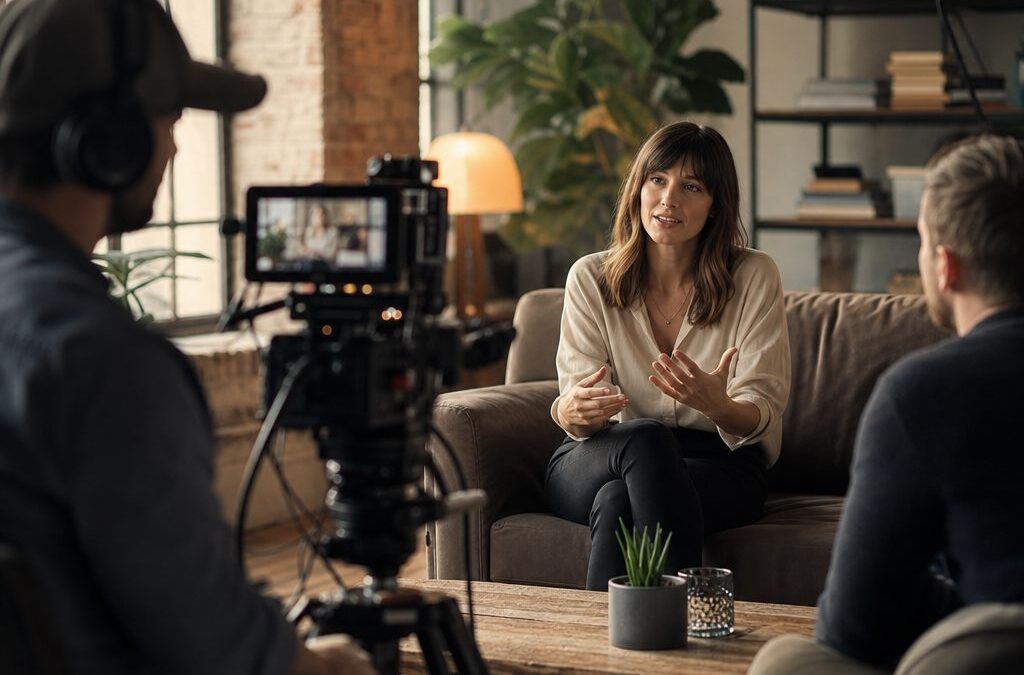
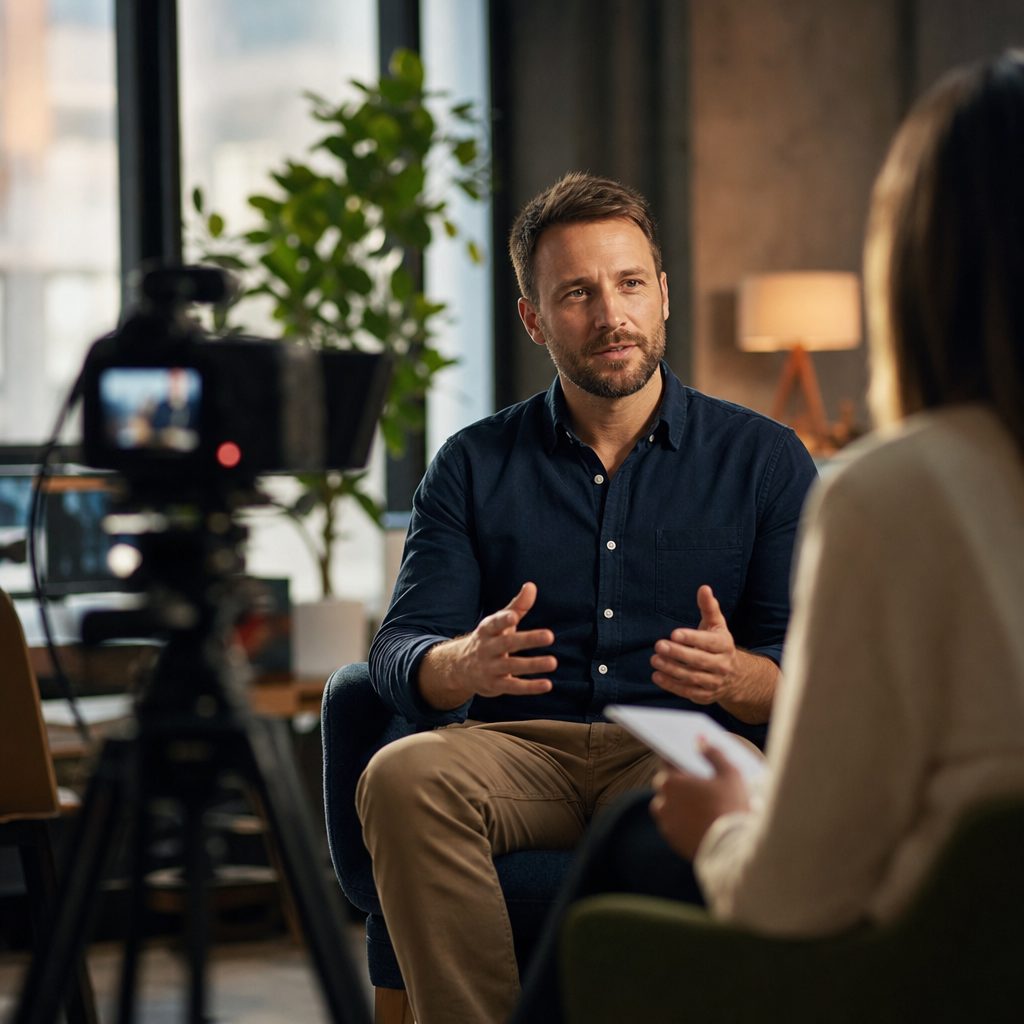
The interview is usually the heart of a case study video. Good questions invite specific answers, not rehearsed slogans. Ask what the client was dealing with before the project, why they chose the approach, what changed, and what advice they would give someone in the same position.
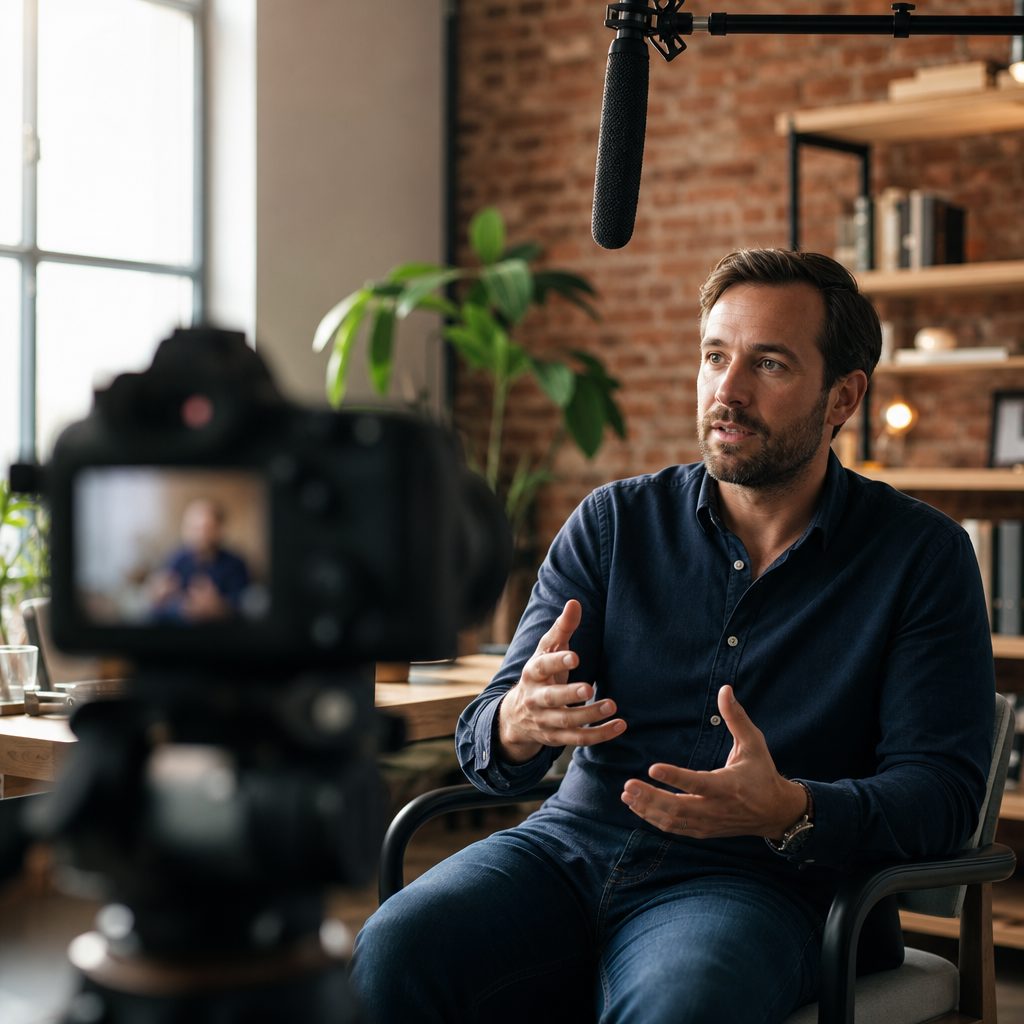
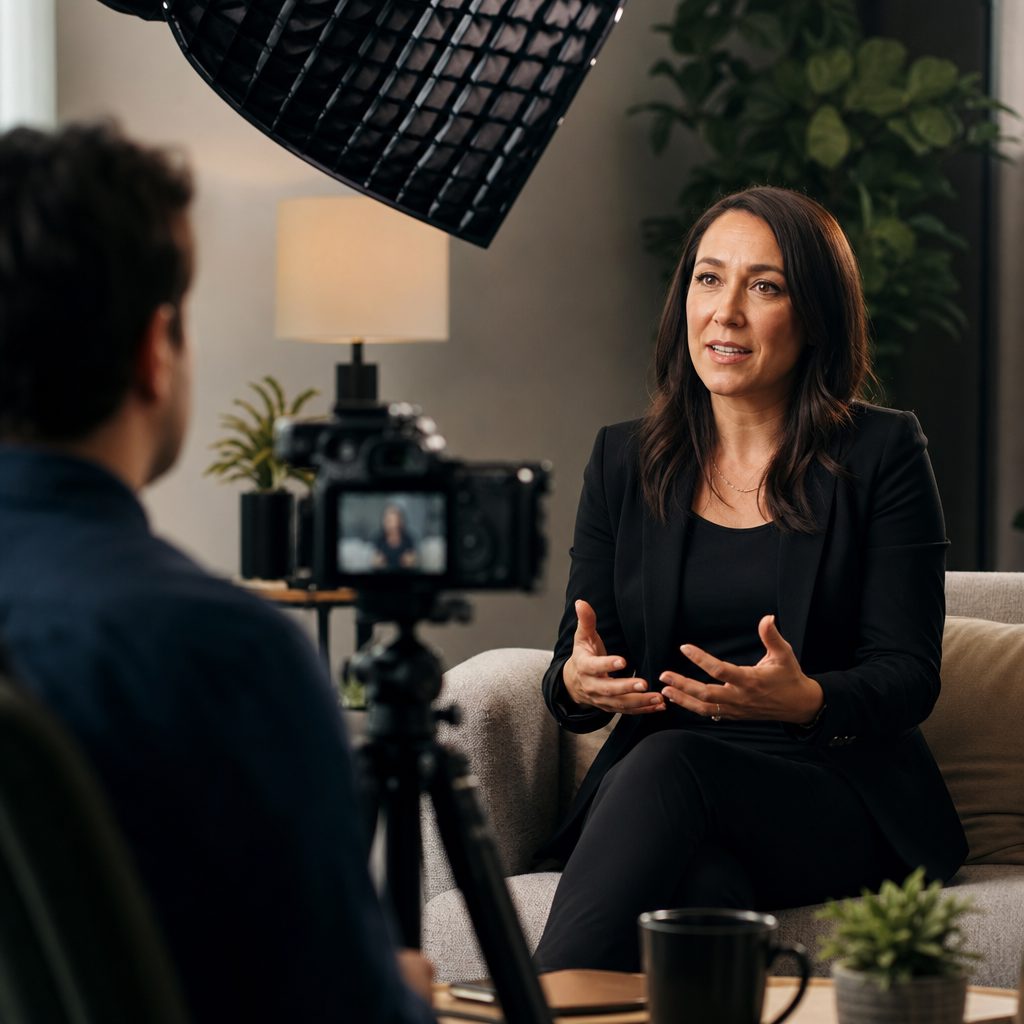
Authenticity also depends on production choices. A relaxed eyeline, clean audio, considered lighting and enough time for follow-up questions can make a senior stakeholder sound natural. Over-scripting often has the opposite effect. It may protect messaging, but it can remove the small details that make testimony believable.
Visual proof matters, but only when it supports the story
Cutaway footage gives the viewer context and prevents the edit from becoming a static talking head. For a construction or infrastructure story, this might include safe site activity, drone footage where permitted, equipment, teams collaborating and finished works. For professional services, it might be workshops, client interactions, documents, locations or digital processes.
The limitation is that not every story can be filmed visually. Sensitive workplaces, confidential data, remote sites, safety restrictions and client privacy can all narrow the shot list. In those cases, use controlled interview setups, approved stills, motion graphics and carefully selected b-roll. For testimonial-led projects, Visionair’s video testimonial production page outlines a related approach to capturing client voices clearly.
Editing for conversion, not just style
Editing determines whether the viewer feels guided or lost. A strong edit removes repetition, preserves nuance and builds momentum. Use lower thirds to identify speakers, restrained graphics to clarify points, and music that supports rather than overwhelms. Captions are important for accessibility and silent viewing; the Australian Government’s Digital Service Standard offers useful principles for accessible digital content.
Consider creating more than one version. A full case study may suit a website, sales presentation or tender response, while shorter edits can support LinkedIn, email campaigns or internal briefings. If budget is a concern, review video production pricing in Australia early so scope, locations and deliverables are realistic.
Common mistakes that reduce trust
Even well-funded case studies can underperform when they feel vague or over-managed. Watch for these issues:
- leading with brand claims before the customer problem is clear
- using interviews that sound scripted or approved by committee
- showing beautiful footage that does not explain the work
- relying on unverified metrics or unclear before-and-after claims
- making the video too long for the audience’s attention and context
Choosing a production partner
Compare providers by their interview process, sector experience, safety awareness, editing judgement and ability to show relevant case study video production examples or a broader project portfolio. If you are planning a client story, request a quote with audience, approval needs and timelines.
About The Author
