
What makes a hybrid event broadcast work in Australia?
A hybrid event broadcast connects an in-person venue with remote speakers, viewers or both through a professionally managed live stream. In Australia, a reliable result depends on more than cameras and an internet connection: it requires coordinated audio, vision, platform management, venue logistics, accessibility planning and redundancy. The best approach treats online participants as a genuine audience rather than passive observers. That means clear sound, purposeful camera coverage, readable presentations, moderated interaction and a tested backup path.
In practical terms, hybrid broadcasting is one production serving two rooms: the physical room and the digital room. Each needs its own audience journey and technical plan.
How hybrid broadcasting differs from a simple livestream
A basic livestream may send one camera and a presentation feed to viewers. A hybrid production adds switching, graphics, remote contribution, audience questions, playback and communication between venue staff and the broadcast crew. Speakers joining from another city need confidence monitoring, a return view and clear instructions about when they are live.
For a national staff briefing, for example, employees in Sydney might attend physically while teams in Melbourne, Brisbane and Canberra watch and submit questions. A producer can combine stage cameras, slides, pre-recorded packages and remote presenters into one coherent program. Visionair Media’s live streaming services cover this type of planned broadcast workflow.
Core production layers
🎥Professional camera coverage
Wide, medium and close camera angles give remote viewers context without distracting the room.
🎤Dedicated broadcast audio
A dedicated mix balances microphones, videos, remote guests and room sound for online listeners.
📊Vision and clear graphics
Slides, names, captions and holding screens must remain legible on laptops and mobile devices.
💡Managed online participation
Moderation turns chat, polls and questions into structured contributions that presenters can address.
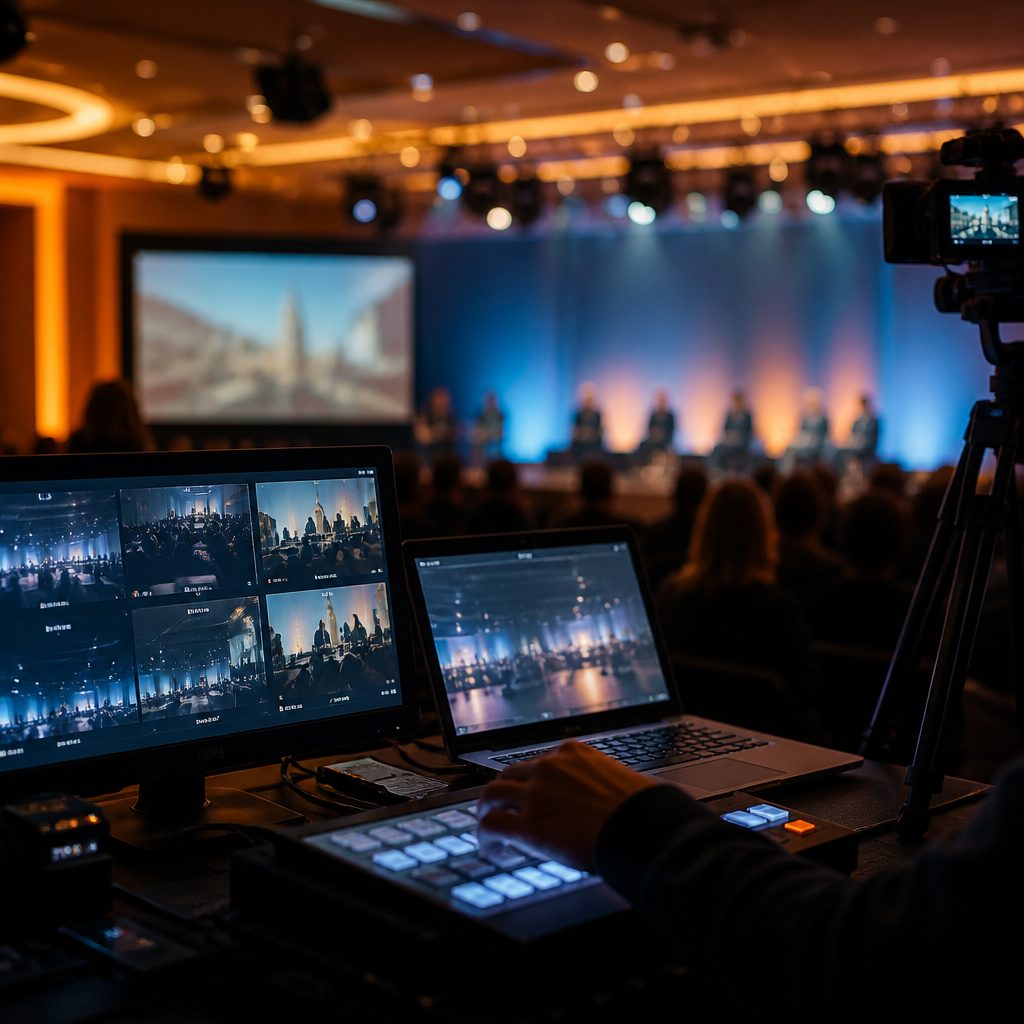
Plan the broadcast before choosing equipment
Start with outcomes, audiences and format. Decide whether remote attendees only watch, contribute questions or appear live. Confirm event timing, venue access, stage layout, presentation sources, speaker locations and recording requirements. Then map every signal and responsibility, including who approves graphics, advances slides, moderates comments and contacts a remote presenter if their connection fails. Ensure every operator follows the same documented production plan.
The venue’s advertised Wi-Fi should not be assumed suitable. Broadcast connectivity should be assessed for upload capacity, stability, network restrictions and exclusive access. Where practical, a wired primary service and an independent backup reduce a single point of failure. Power, audio feeds and platform permissions also need checking during a technical rehearsal.
A useful pre-production checklist
- Define the physical and remote audience experience.
- Choose the streaming platform and confirm administrator access.
- Collect slides, videos, names and pronunciation notes early.
- Schedule remote speaker tests using their actual location and device.
- Agree on recording, editing, captioning and file-delivery requirements.
Budgeting should reflect crew time, equipment, travel, connectivity, platform features, rehearsals and post-event deliverables. The video production pricing in Australia page explains the broader factors that influence production scope, although a hybrid event still needs a tailored technical assessment.
Build reliability into the technical design
No live broadcast is risk free. Internet outages, damaged cables, flat batteries, late slides and unavailable speakers can still disrupt a program. Good production does not promise perfection; it identifies likely failures and provides proportionate alternatives. For a high-stakes announcement, that may include redundant encoders, duplicate recordings, backup playback devices, spare microphones and a secondary communications channel.
Audio deserves priority. Viewers may tolerate a brief imperfect shot, but unintelligible speech quickly undermines the session. A dedicated audio operator should manage stage microphones, playback, remote callers and the return feed while preventing echo between the meeting platform and venue system.
💡Important practical tip: Record isolated camera and presentation feeds when the project warrants it. These files can support a cleaner edited replay if the live program contains a temporary interruption.
The public stream should also be protected appropriately. Access may range from an open webcast to registration, password protection or an embedded corporate portal. For internal events, internal communications video production planning can align content, approvals and distribution with organisational communication needs.
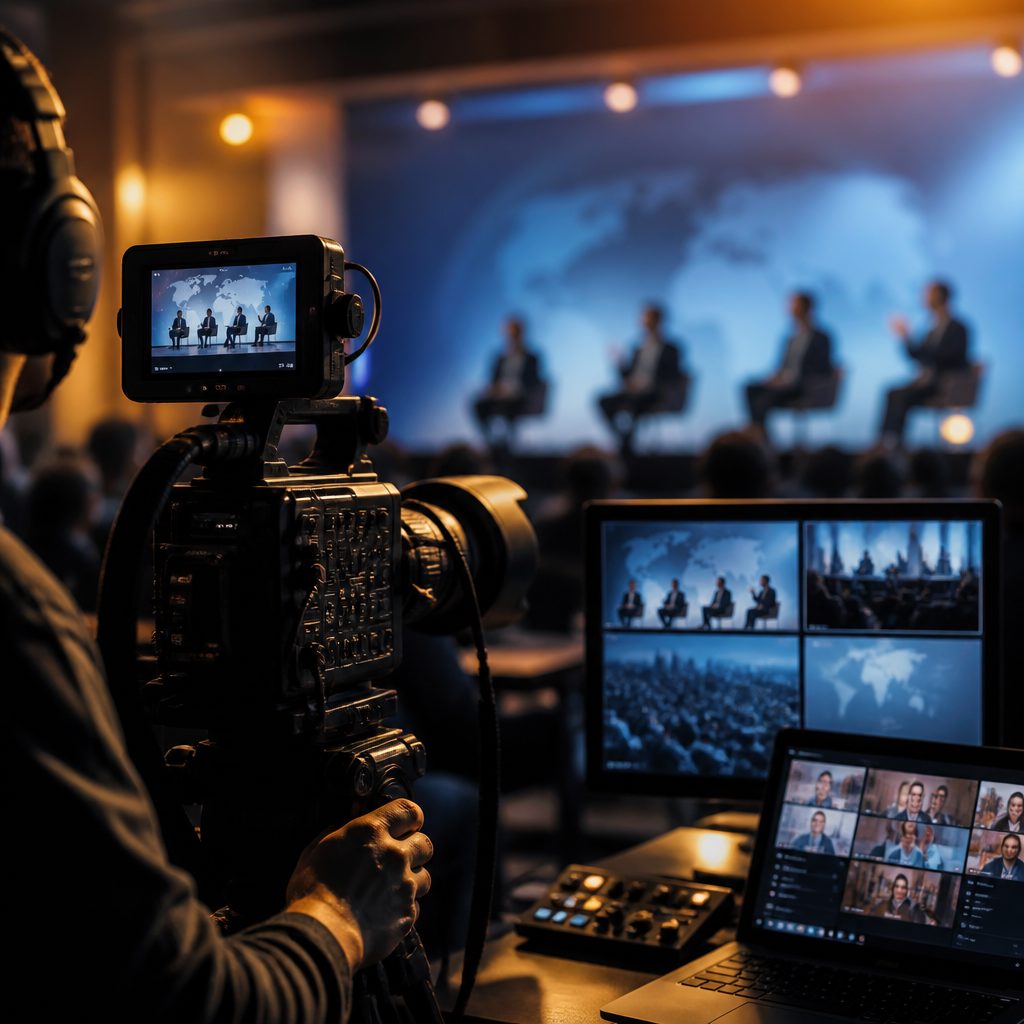
Design for the remote audience, not just the room
Remote viewers cannot see what happens outside the selected shot. The host should acknowledge them, explain breaks and repeat questions asked without a microphone. Graphics need safe margins and readable type, while videos should be supplied as original files rather than played from an untested laptop. A moderator can filter repeated questions, report technical issues and keep online interaction moving without interrupting the stage unnecessarily.
Accessibility should be discussed during planning, not added at transmission time. Options may include live captions, Auslan interpretation, transcripts and accessible presentation documents. Requirements vary by audience, platform and organisation, so confirm responsibilities and test how each element appears in the final viewer interface.
How to compare hybrid event broadcast providers
Compare providers on their proposed workflow, not only the camera list or headline price. Ask who owns overall technical responsibility, how venue audio will reach the stream, how remote contributors are supported and what happens if the primary connection drops. The answer should be specific to your event, venue and risk profile. Also confirm communication channels used during setup and transmission.
Request a written scope that states inclusions, assumptions, overtime, travel, internet responsibilities and cancellation terms. Reviewing a supplier’s projects and portfolio can show the range of production environments they handle. For broader budgeting context, compare the event proposal and consult the advertising and video production guide for useful commissioning questions.
Visionair Media is an Australian corporate video production and commercial photography company headquartered in Sydney, with offices in Melbourne, Brisbane, Canberra and Auckland. Its work includes live streaming and related production services for government departments, major corporate organisations and large-scale infrastructure and commercial clients. This background is relevant where approvals, stakeholder coordination and operational environments add complexity.
Common questions about hybrid events
How much internet upload speed is required?
There is no universal number. Requirements depend on resolution, bitrate, platform, encoder, concurrent feeds and desired redundancy. A provider should test the actual connection and leave suitable headroom rather than relying on a venue speed claim. Where consequences are significant, ask about an independent backup route.
Should the event be recorded as well?
Usually, yes, when consent, confidentiality and content rights permit. A recording provides an archive and can be edited into shorter internal updates, speaker segments or an on-demand program. Confirm whether the recording is the switched program only or includes isolated sources.
When is a hybrid format unsuitable?
Hybrid delivery may be poor value for a highly confidential discussion, a small workshop requiring intensive face-to-face exercises, or a venue where stable connectivity and safe production space cannot be secured. In those cases, an in-person event with a later edited video may be simpler.
Plan a dependable hybrid broadcast
A successful hybrid event begins with a clear brief, venue information and realistic decisions about audience participation, accessibility and backup systems. Visionair Media can scope the cameras, audio, streaming, remote contribution and production team around your event’s actual needs. Review the frequently asked questions for additional process details, then share your date, venue, audience numbers and platform preferences to receive a practical production recommendation and a clearly defined written production scope.
About The Author
