
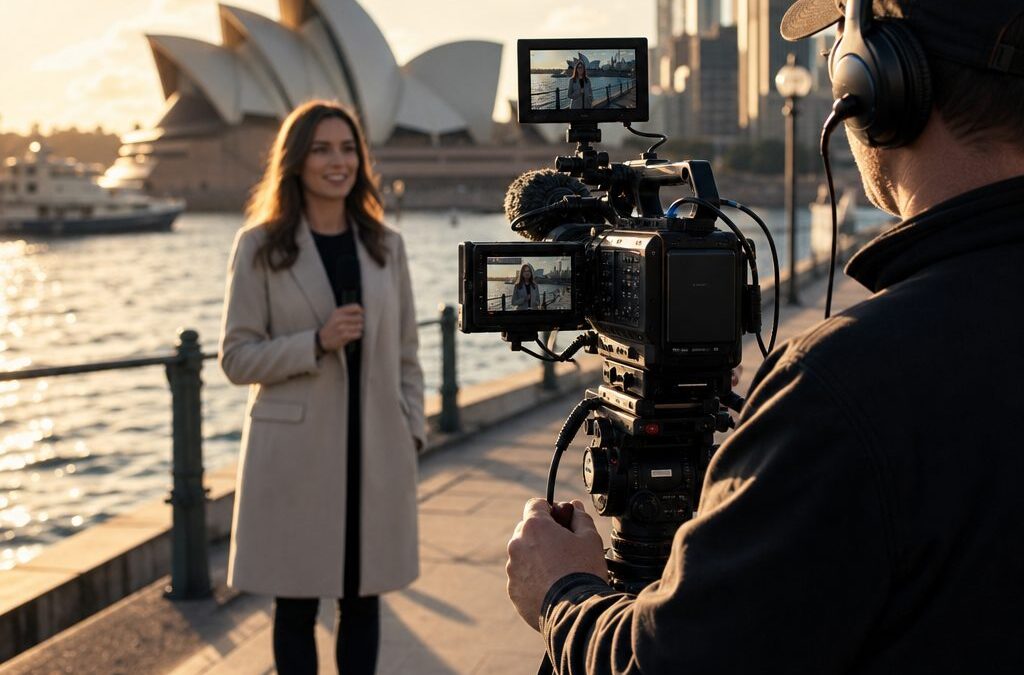
What a mobile live broadcast crew does
To hire a mobile live broadcast crew in Sydney, you need a production team that can bring cameras, audio, lighting, switching, streaming hardware and reliable internet management to your venue. The right crew plans the run sheet, tests the signal, manages contributors and delivers professional live streaming services to platforms such as YouTube, Vimeo, LinkedIn or a private event page. For businesses, councils, schools and associations, it is usually faster and safer than assembling freelancers and equipment separately.
Mobile broadcast is useful when an event cannot move into a studio: conferences, awards nights, town halls, investor briefings, training days, launches and hybrid events. In Sydney, the extra challenge is logistics: loading access, parking, venue internet, acoustics and strict timing. A location crew should solve those issues before doors open.
“A good live broadcast feels calm because the difficult parts have been planned, rehearsed and quietly managed off camera.”
When hiring a crew makes sense
You do not need a full outside crew for every webinar. A small internal meeting with one presenter may only require a laptop, a quality microphone and a stable connection. Hiring a mobile broadcast crew makes sense when the audience matters, the content has reputational value, or the event includes multiple speakers, rooms, cameras or remote participants.
Common examples include an annual general meeting with floor questions, an education conference with paid online access, a launch streamed to interstate staff, or a briefing that must be captured clearly for later viewing. If you also need edited highlights, a broader video production workflow may be worth discussing early.
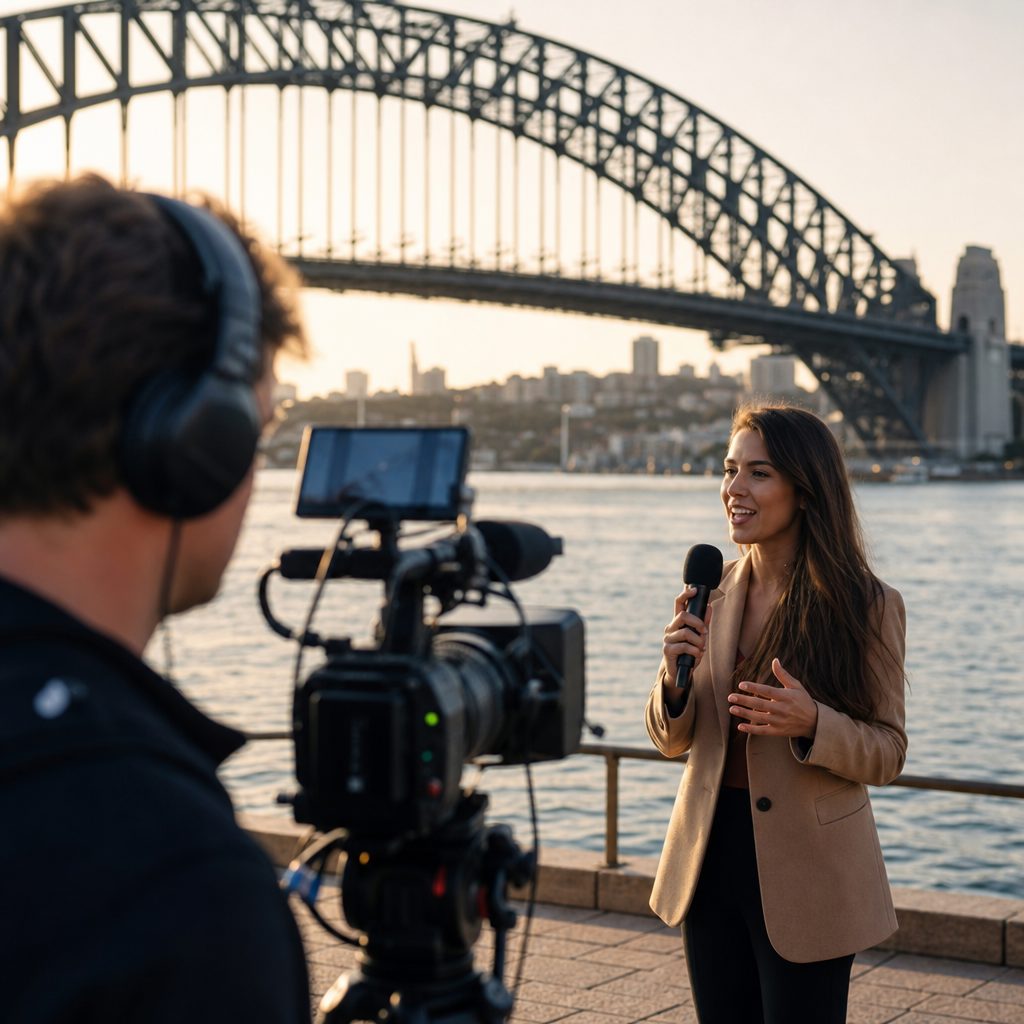
What should be included in the crew
The crew size depends on the programme. A simple single-room stream might use a director-streaming technician, camera operator and audio operator. Larger events may add extra camera operators, vision switcher, producer, graphics operator, comms technician and a floor manager. What matters is not the number of people, but whether each critical task has an owner.
Core technical roles
- Producer or director: keeps the broadcast aligned with the agenda, speakers and client priorities.
- Camera operators: frame presenters, audience questions, panels and demonstrations consistently.
- Audio operator: manages microphones, levels, room sound, playback and remote contributions.
- Streaming technician: configures encoders, platform settings, redundancy and monitoring.
- Graphics or playback operator: inserts titles, slides, sponsor loops, videos and holding screens.
For a polished result, ask how the team will manage rehearsals, speaker microphones, audience questions, recording quality, accessibility needs and backup plans. For staff announcements, Visionair’s video production for internal communications services can connect live segments with pre-recorded content afterwards.
“The best crew is not the largest crew; it is the crew with the right roles, clear responsibilities and tested backups.”
Planning, testing and internet reliability
Live production is unforgiving because small problems become public quickly. Before the event, the crew should review the floor plan, agenda, speaker list, slide format, platform access, branding and approvals. A technical call is especially valuable in older buildings, hotels, theatres and waterfront venues where connectivity can vary widely.
Internet is the most common risk. Venue Wi-Fi is rarely enough for a professional broadcast, particularly if guests are also using it. Better options include a dedicated wired connection, bonded mobile data, or a failover combination. The Australian Communications and Media Authority provides general information about communications and broadcasting in Australia, but suppliers should give event-specific technical advice.
Testing should cover upload speed, latency, audio sync, slides, remote calls, permissions, recording and the destination platform. A private test stream before the event is often the simplest way to find login issues, blocked networks or incorrect aspect ratios while there is still time to fix them.
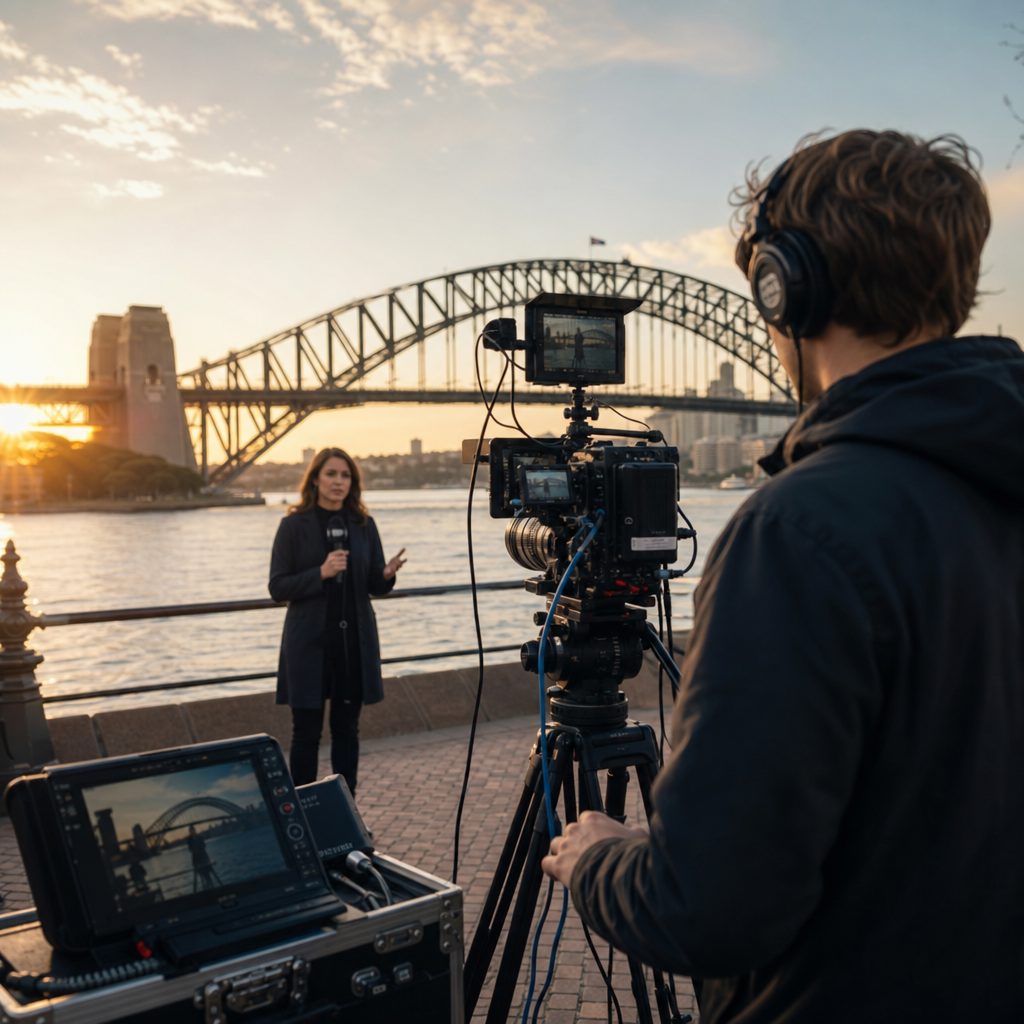
Key questions to ask before you book
When comparing providers, do not judge only by camera count. Ask practical questions that reveal whether the crew understands live risk, audience experience and post-event deliverables.
- Which platforms can you stream to, including private viewing options?
- How many cameras, microphones and crew are included?
- What backup internet, power, audio and recording options exist?
- Who prepares graphics, lower thirds, slides and sponsor assets?
- Can clean recordings be supplied for editing afterwards?
- What bump-in time, access and parking are required?
Budget should be discussed early. Costs vary with crew size, equipment, pre-production, travel, rehearsal time, streaming platform needs and editing after the event. Visionair’s guide to video production pricing is a useful starting point for understanding how scope affects production costs, even though live broadcast quotes need their own event-specific breakdown.
Sydney venue considerations
Sydney venues range from boardrooms and university theatres to hotels, warehouses, galleries and outdoor spaces. Each brings different constraints. A CBD hotel may have loading docks but limited bump-in windows. A heritage venue may restrict cabling paths. An outdoor event may need weather and power planning.
For public spaces or outdoor activations, confirm permits, power, safety responsibilities and location restrictions with the organiser. If drone footage is part of the wider production package, separate planning is required; CASA outlines Australian drone rules for operators and businesses.
If the event needs both live coverage and edited content for marketing, recruitment or stakeholder reporting, a Sydney-based partner can simplify approvals and logistics. Visionair’s professional video production in Sydney page explains related location production services beyond the live stream.
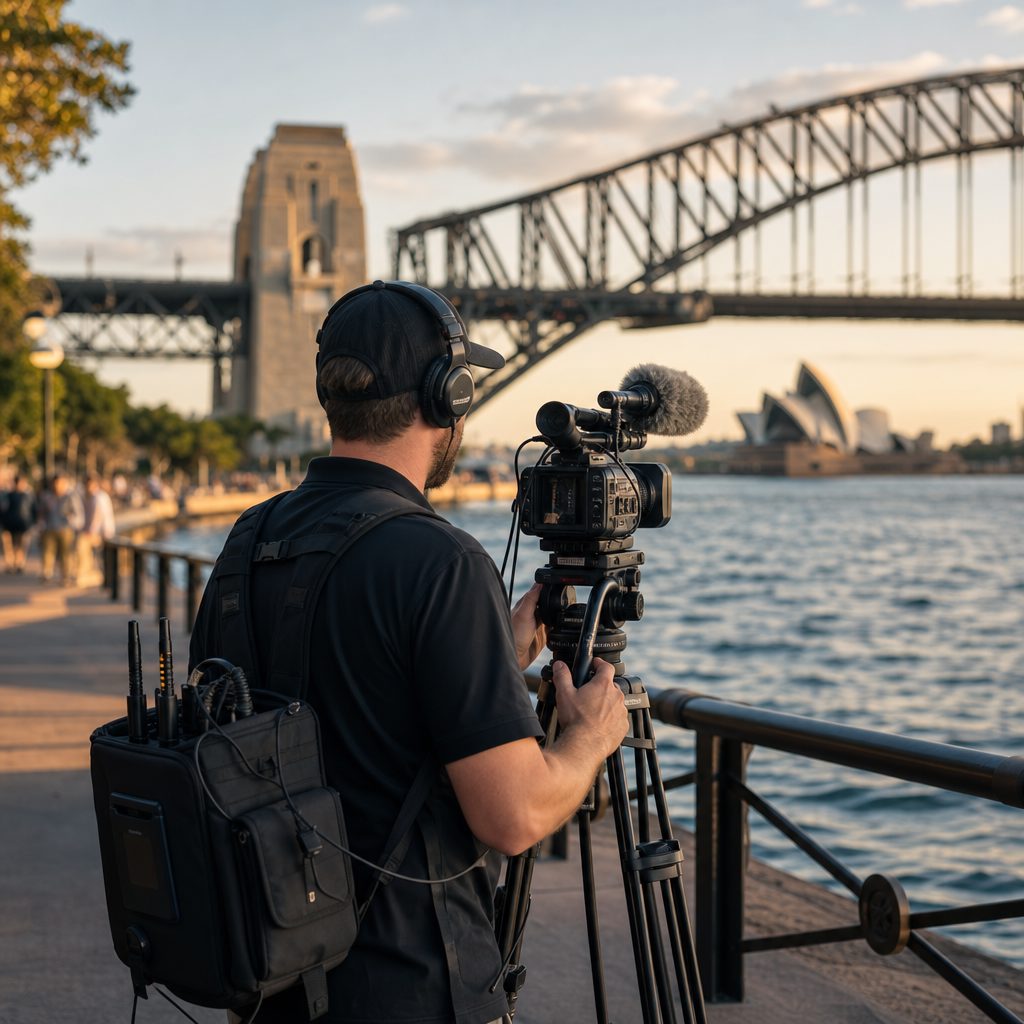
Getting more value from the broadcast
A live stream can be more than a one-off event. With planning, recordings can become training modules, short social edits, media assets, stakeholder updates or case study material. Decide before the event which sessions need clean recordings, whether captions are required, and who will approve edited versions later.
Reviewing recent projects can help you judge style, scale and production fit. Visionair’s projects and portfolio show examples of completed work, while case study video production may suit organisations that want the event story developed into a more structured post-event asset.
Summary and next step
In short, hire a mobile broadcast crew when your audience needs dependable sound, vision, switching and delivery. To scope the event, request a quote with the date, venue, agenda and platform details.
About The Author
