

The short answer
Case study videos turn customer success into sales when they present a credible buyer story: a recognisable problem, a considered solution and specific evidence of change. The strongest videos focus on the customer, not the supplier; use a well-prepared interview supported by real workplace footage; and finish with a practical next step. Plan the sales purpose before filming, then create several edits for different stages of the buying journey.
That approach makes the film useful as proof, not merely a polished testimonial. A prospective client should be able to see their own challenge in the story, understand how the work was delivered and judge whether the result is relevant to them. This guide explains the process from brief to distribution.
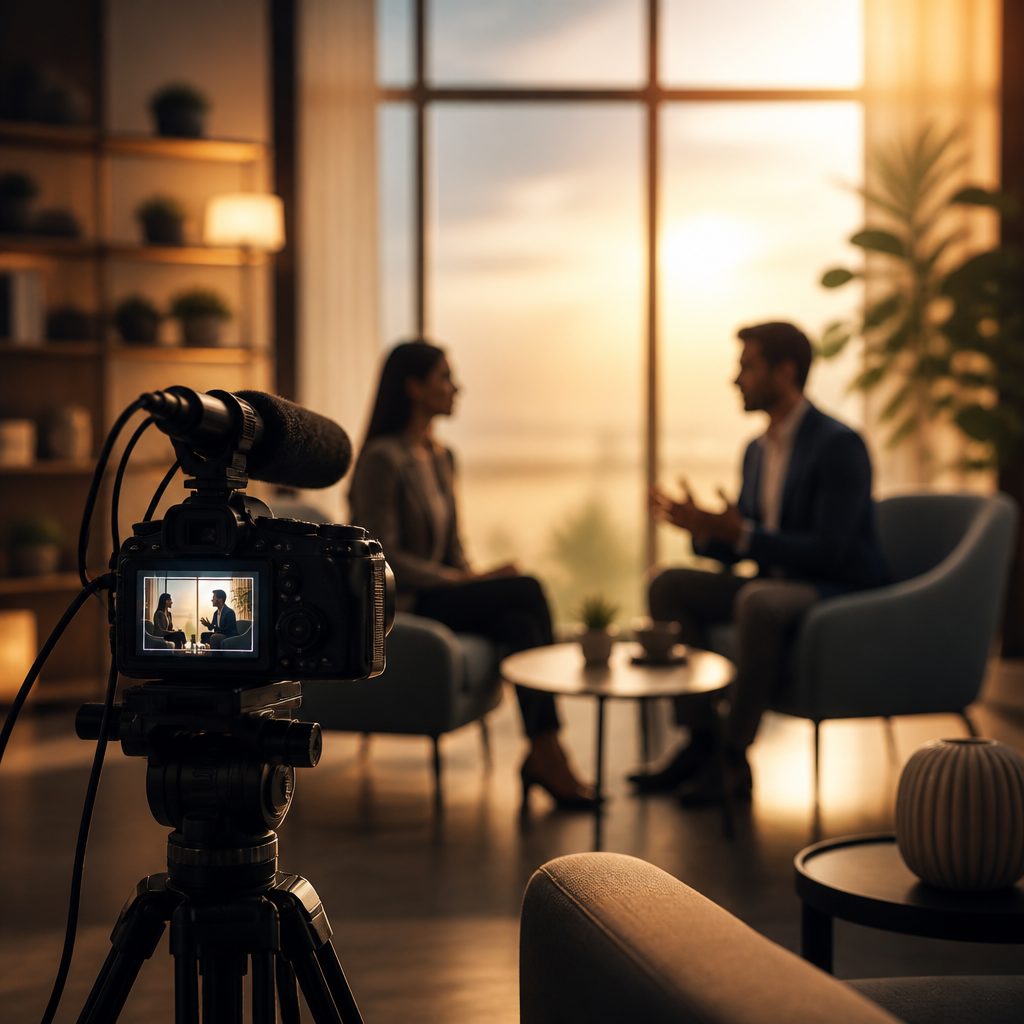
Build the story around a buyer decision
Before arranging cameras, define who must be persuaded and what uncertainty the video should remove. A procurement manager may need assurance about governance and implementation, while an operational leader may care about disruption, adoption and support. Choose one primary audience and one clear message. Trying to address every sector, feature and stakeholder usually produces a vague film.
Write a one-sentence sales purpose, such as: “Help facilities leaders trust that a complex rollout can be managed safely across active sites.” Then identify where the asset will appear: a proposal, sales presentation, landing page, email follow-up or social campaign. The channel affects duration, framing and the call to action.
Choose the right customer
A good participant has a relevant problem, direct experience of the project and permission to speak candidly. Fame matters less than clarity and credibility. Look for a customer whose situation resembles the prospects you want to reach, but avoid presenting one experience as universal proof. Results vary by organisation, scope, timing and market conditions. Secure written approvals early, including agreed claims, locations, branding and review responsibilities.
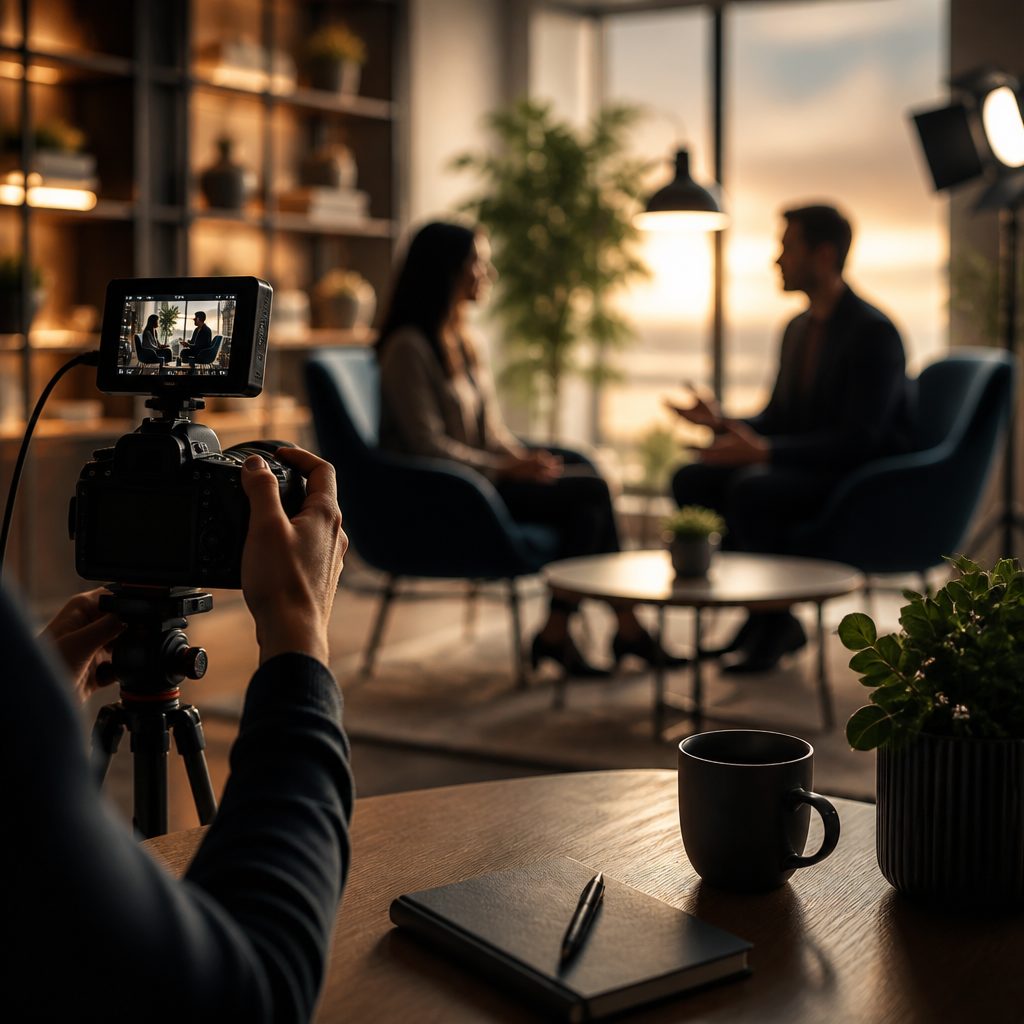
Shape an interview that sounds authentic
The interview should feel conversational, yet its structure must be deliberate. Send themes rather than a script, because memorised answers often sound promotional. During a pre-interview, confirm the timeline, terminology, sensitive subjects and evidence that can be supported. Explain that answers should restate the question so the editor can remove the interviewer.
Use questions that reveal change
- “What was happening before the project, and why did it matter?”
- “What alternatives did you consider, and what influenced the decision?”
- “What was implementation actually like, including any challenges?”
- “What changed, and what evidence can you responsibly share?”
Follow broad answers with “Can you give an example?” or “What did that mean day to day?” Useful detail comes from specifics, not superlatives. If numbers are confidential or cannot be verified, use precise qualitative evidence, such as a simpler handover or clearer internal process, with appropriate context. Never pressure a customer to make claims they cannot approve.
Problem
Establish the commercial or operational pressure in language a similar buyer recognises.
Choice
Explain why the customer selected the approach without turning the answer into an advertisement.
Delivery
Show the people, process and compromises involved, because execution is often where buyer risk sits.
Outcome
Describe supported change and its practical meaning, while acknowledging relevant boundaries.

Film evidence, not only an interview
A talking head alone rarely demonstrates delivery. Capture relevant b-roll: the customer’s environment, people using the solution, safe work practices, meetings, interfaces and details that make the account tangible. Each shot should support something said in the interview, rather than acting as decoration. Record clean sound, allow enough time for natural activity and obtain releases from identifiable people.
Production may be limited by privacy, safety, security or operational access. In health, education, government and infrastructure settings, approvals can shape what is filmed. Re-enactments should be labelled or avoided if they could mislead. Animation, approved screen recordings or carefully framed detail shots can communicate a process when live filming is unsuitable. Visionair Media also provides drone filming, but aerial footage should serve the story and only be used where permissions, conditions and safety allow.

Edit one story into useful sales assets
A strong main edit commonly follows problem, decision, delivery, outcome and next step. Open with the tension or result, not a long company introduction. Keep branding restrained and use captions for silent viewing. On-screen claims must match approved wording, while music and pacing should support the customer’s tone rather than manufacture emotion.
Do not expect one duration to work everywhere. Create a complete case study, shorter objection-handling cuts, vertical social versions and concise extracts for proposals. A salesperson can introduce a relevant clip in context, which is usually more persuasive than sending an unexplained link. Host the complete film on a focused page with a written summary and accessible transcript.
Connect the ending to the next decision
The call to action should fit the viewer’s readiness: explore a comparable project, review the delivery process, discuss scope or request pricing. Buyers still researching may prefer Visionair’s case study video production overview and Projects and Portfolio examples before contacting sales.
For budgeting, the video production pricing guide explains the factors that influence scope. Organisations needing broader campaign support can also review Visionair’s corporate video production services.
Measure sales usefulness and improve distribution
Views alone do not show whether a case study supports revenue. Agree practical measures before release: proposal usage, completion rate, landing-page enquiries, influenced opportunities and qualitative feedback from sales conversations. Connect results carefully; a video may assist an opportunity without being its sole cause.
Create a simple distribution plan naming the owner, audience, channel, date and intended action for every edit. Equip sales staff with suggested introductions and notes on which customer problem each clip addresses. Review performance after several genuine uses, then refine thumbnails, opening lines, page copy or placement before assuming the production failed. Record where each version is used, by whom and when.
How to compare case study video providers
Compare providers on their ability to uncover a commercially relevant story, manage customer stakeholders and film safely in real workplaces. Ask to see complete examples, not just a showreel, and examine interview quality, narrative clarity, sound, captions and consistency across edits. Their portfolio should demonstrate appropriate experience without relying on unverified claims.
Also compare scope boundaries, travel, revision processes, ownership and delivery dates. A lower quote may exclude strategy, extra versions, transcripts or location requirements; a larger crew may add capability but can feel intrusive for a nervous interviewee. The right choice depends on risk, audience, access and how extensively the assets will be used. Visionair Media is an Australian production company headquartered in Sydney, with offices in Melbourne, Brisbane, Canberra and Auckland. Its video testimonial service may also suit a shorter, endorsement-led brief.
Turn credible customer experience into a practical sales tool
Start with one buyer audience, one defensible customer outcome and one planned sales use. Then build an honest interview, supporting footage and a set of edits around that purpose. If you need help shaping, filming and delivering the project, request a tailored quote from Visionair Media to discuss scope, access and distribution in detail.
About The Author
